Wildlife Conservation Internship:
This is a special program for biologists and/or
biology students.
Individuals with specific knowledge in the field of
Biology can support the organization by investigating and documenting different
species of flora and fauna. We work in scientific research with local
professionals on monitoring physical and biological variables and on the
preservation of threatened species and protecting their ecosystems. The
relevant information and findings will be displayed in a form of a report at iNaturalist website. This will contribute to the
conservation of the biodiversity in the area as well as to global databases.
Intern support
The participation of interns represents a strategic component for the
comprehensive management of the Ballesteros Concession Area and the Codo del
Pozuzo Nature Reserve. This strengthens biodiversity monitoring and
documentation capacity and generates high quality scientific information that
supports conservation decision making. Their participation strengthens research
through the development and application of methodologies, providing crucial
data for the development of management plans and ecological restoration
strategies, including reforestation projects in local schools. Furthermore,
their involvement in environmental education programs facilitates the social
appropriation of scientific knowledge, consolidating the link between science,
conservation, and sustainable development.
Our internship program
at the Ballesteros Concession and Codo del Pozuzo Nature Reserve is a
comprehensive experience that combines scientific research, community
conservation, and professional training. The application of methodologies
ensures reliable and useful information for the management of the conservation
area. Collaboration between researchers, local communities, and interns
strengthens the sustainability of the research work.
Program Objectives
General Objective:
To strengthen biodiversity conservation in the Ballesteros Concession
and the Codo del Pozuzo Nature Reserve through research and monitoring of
wildlife flora and fauna, as well as through conservation and environmental
education programs that integrate science and community participation to ensure
sustainable ecosystem management.
Specific objectives:
• Assess the diversity and abundance of birdlife through systematic
observations at sampling points during peak bird activity times, identifying
resident and migratory species.
• Generate information on the presence of medium and large sized mammals
through footprint recording, plaster molds, and camera traps, as non-invasive
methods that complement research and provide input for adaptive management.
• Strengthen the technical capacities of interns in identification and
conservation using mobile applications and digital records in iNaturalist
website.
• Monitor wildlife in plots and trails through taxonomic identification
and phenological recording of ecologically and culturally important forest
species.
• Expand knowledge of nocturnal fauna through expeditions and acoustic
recordings of birds and amphibians, as well as direct observation of mammals
and arthropods, prioritizing cryptic and nocturnal species.
• Integrate conservation activities with environmental education and
responsible tourism, through hiking trails, excursions to viewpoints and
waterfalls, and the use of digital tools that promote appreciation of natural
heritage.
Logistics
Each workday involves traveling by motorcycle or tuk tuk (we provide
helmet), followed by daily walks of approximately 1 to 2 hours from the town of
Codo del Pozuzo to the sampling sites. This allows for preliminary observations
of fauna and flora to be recorded along the route. Overnight stays at the work
site are optional to facilitate access to more remote areas and optimize
research time. Activities are supported using specialized materials, including:
• Camera traps for passive recording of fauna.
• Photographic camera
• GPS for georeferencing
• Flashlights for night observation
• Sound recorders for recording wildlife vocalizations.
• Binoculars/monocular
• Clinometer to calculate tree heights and assess terrain slopes to
classify habitats or sampling areas.
• Portable environmental monitors for real-time measurement of
environmental parameters such as temperature, humidity, wind speed, UV
radiation, or CO₂ levels.
• Portable water quality kits for analyzing parameters such as pH.
• Entomological nets for capturing flying insects.
• Botanical presses for collecting, pressing, and drying plant samples
to properly preserve them for identification, cataloging, and taxonomic study,
supporting research in botany, plant monitoring, and environmental education.
• Entomological boxes and collection jars for storing and transporting
insects or other small organisms collected in the field, keeping them in
suitable conditions for subsequent analysis, conservation, or taxonomic
identification in the laboratory.
• Binocular microscopes for the analysis and processing of biological
samples (blood, tissues, parasites, plants, etc.) under controlled laboratory
conditions.
• Modern translation devices for our biologist and for the interns in
case they don't speak Spanish.
• Field guides and cartographic materials for orientation and mobile
applications.
Inventories by Taxonomic Group
Mammals
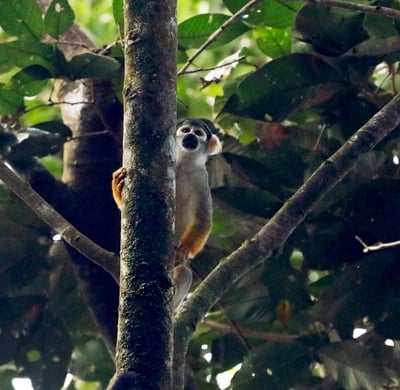
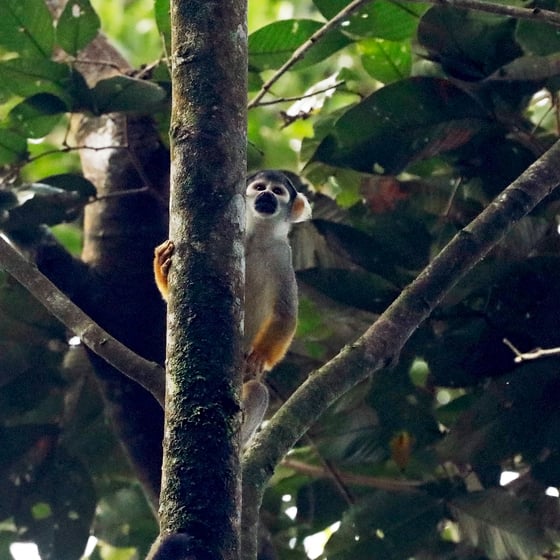
Monitoring of medium and large sized mammals will be carried out through
a combination of direct and indirect sightings, complemented using
strategically distributed camera traps, five for each habitat type assessed.
Line transects measuring 1 to 2 km on sloping terrain will allow for systematic
records of the fauna, optimizing the detection of tracks, footprints, scat, and
other signs of presence. Assessments will be conducted during key times: 8:00
a.m.–11:00 a.m., coinciding with peak morning activity, and 6:00 p.m.–10:00
p.m., which encompass the beginning of twilight and nocturnal activity. This
methodological design seeks to maximize the probability of detecting both
diurnal and nocturnal species, ensuring representative and robust sampling for
the analysis of the diversity and relative abundance of mammals in the study
area.
Birds
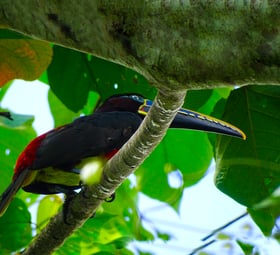
Monitoring will be carried out using standardized methodologies that
allow for a comprehensive characterization of species diversity and relative
abundance. Count points with detection radius between 25 m and 100 m will be
used, recording all birds seen or heard for periods of 10 to 15 minutes,
facilitating comparisons between different habitats and environmental
conditions. Additionally, linear transects of 2 to 4 km will be conducted at a
steady pace during peak activity times (5:30 a.m.–10:00 a.m. and 4:30 p.m.–6:30
p.m.) to obtain data on species richness, frequency, and habitat use patterns.
Mobile applications such as Merlin Bird ID and eBird will also be used; these
applications are useful for recording birds in different types of vegetation.
Finally, censuses will be conducted in permanent plots of 1 ha to 3 ha, where
the composition and relative abundance of species will be recorded, providing
key information on population dynamics and community structure over time.
Amphibians
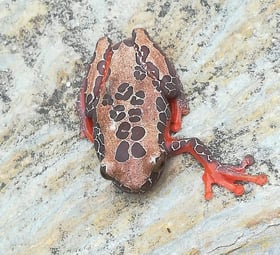
Sampling will be conducted using Visual Encounter Surveys (VES), 5 m–10
m fixed-band transects, leaf litter plots, and diversion fences with pitfall
traps, allowing for the recording of active and cryptic species. All records
will be documented and uploaded to iNaturalist website for taxonomic
verification and contribution to global databases.
Reptiles
Sampling will be conducted using nocturnal visual transects,
systematically walking along trails and streams to record active individuals,
effective for capturing terrestrial and aquatic species. In addition, direct
observations will be made in bodies of water, tree trunks, shrubs, and other
microhabitats to detect species associated with specific environments. All
observations will be documented through photographs and field notes,
contributing to the assessment of reptile species richness and habitat use patterns
in the study area. They will be recorded on iNaturalist website.