Login

Selezionare le date di viaggio per vedere i prezzi

Fantastico 4.54rating (29)

Lemur & Rainforest Biodiversity Research

location
1 - 8 settimane  ·  Età 17 - 50+
Verificato

Punti Salienti

  • Work in one of the most biodiverse places on Earth - Madagascar's wildlife is roughly 90% endemic, meaning most of what you survey exists nowhere else.
  • Get trained properly in species identification, field survey design, equipment setup and data collection by professional conservationists.
  • Survey black lemurs, chameleons, geckos, snakes and birds on foot, by day and by night, using transects, pitfall traps and vocal identification.

Punti Salienti

  • Work in one of the most biodiverse places on Earth - Madagascar's wildlife is roughly 90% endemic, meaning most of what you survey exists nowhere else.
  • Get trained properly in species identification, field survey design, equipment setup and data collection by professional conservationists.
  • Survey black lemurs, chameleons, geckos, snakes and birds on foot, by day and by night, using transects, pitfall traps and vocal identification.
  • Plant mangrove seedlings as part of a seasonal reforestation effort - mangroves protect the coast, shelter huge numbers of species and lock up carbon.
  • Build an inventory of Nosy Komba's butterflies and moths, in a place where the invertebrate record is still largely unwritten.

  • Non devi ancora pagare nulla

    Particolarmente adatto per

    Età 17+
    Singoli
    Coppie
    Gruppi
    50+

    Sul programma

    Survey lemurs, reptiles and birds in one of the world's most biodiverse forests, and plant mangroves on a Madagascan island, trained by professional conservationists.

    Why Madagascar

    Madagascar separated from the African mainland roughly 88 million years ago, and almost everything living on it evolved in isolation afterwards. The result is one of the highest concentrations of endemic species anywhere on the planet, and one of the least completely documented. On an ...

    Sul programma

    Why Madagascar

    Madagascar separated from the African mainland roughly 88 million years ago, and almost everything living on it evolved in isolation afterwards. The result is one of the highest concentrations of endemic species anywhere on the planet, and one of the least completely documented. On an island like Nosy Komba, careful survey work still turns up things that are not properly recorded.

    That is the work you are joining. Not conservation as a gesture, but the unglamorous, methodical business of finding out what is actually there.

    The survey work

    You will be trained in and then use a range of field techniques:

    • Species identification and behavioural monitoring
    • Population assessments and comparison studies
    • Transect surveys and active forest searches, by day and by night
    • Pitfall traps for ground-dwelling species
    • Visual and vocal identification of birds, with the potential for mist-netting
    • Invertebrate inventory work – specifically building a record of the island's butterfly and moth species

    Nosy Komba's best-known residents are its black lemurs, which live in the forest immediately behind camp and are entirely habituated to people. Chameleons, geckos, boa constrictors and a great deal of birdlife are all within walking distance.

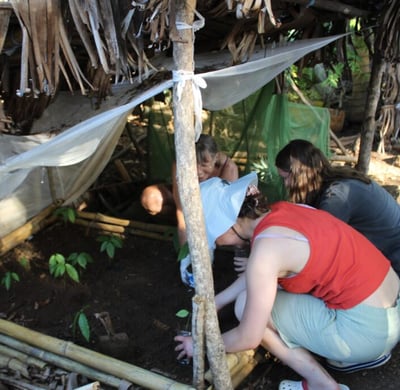
    Mangrove reforestation

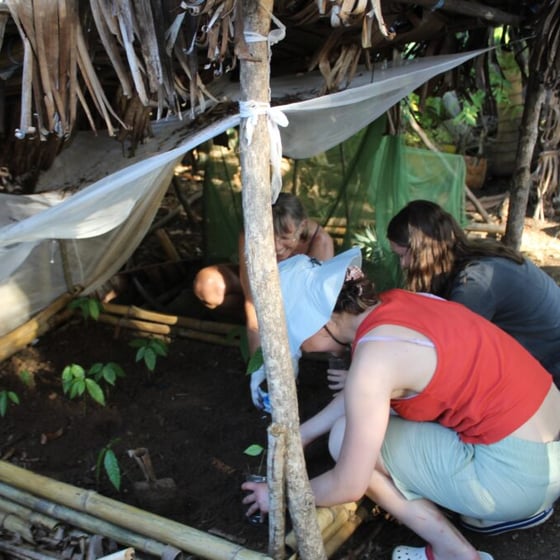
    A core part of the forest programme is restoring and expanding mangrove ecosystems by planting seedlings on a seasonal basis. Mangroves matter disproportionately: they protect coastlines from erosion and storms, provide nursery habitat for an enormous range of marine species, and sequester carbon at rates that outstrip most terrestrial forest. It is muddy, physical work and among the most directly useful things you will do here.

    Training and supervision

    You are trained on arrival and work under professional conservationists throughout. No scientific background is required – plenty of volunteers arrive with none – but if you are studying biology, ecology or environmental science, this is genuine field experience for a CV.

    Giornata tipica

    Early morning

    Surveys often start at first light, when the forest is most active. Breakfast at the camp canteen, then out with your team and equipment.

    Forest work

    A day might be a transect survey along a fixed route recording every species encountered, checking and resetting pitfall traps, a bird ...

    Giornata tipica

    Early morning

    Surveys often start at first light, when the forest is most active. Breakfast at the camp canteen, then out with your team and equipment.

    Forest work

    A day might be a transect survey along a fixed route recording every species encountered, checking and resetting pitfall traps, a bird point-count session, or behavioural observation on a lemur group. Data goes into the database at the end of every session – the recording matters as much as the sighting.

    Terrain on Nosy Komba is steep and volcanic, and it is hot and humid. A reasonable level of fitness makes the work much more enjoyable.

    Mangrove days

    Seasonally, days are given over to collecting and planting mangrove seedlings in the tidal mud. Wet, heavy and satisfying.

    Night surveys

    A good deal of Madagascar's wildlife is nocturnal, so some sessions run after dark with head torches – which is when you find the chameleons and geckos most easily.

    Evenings at camp

    Back on the main deck with the teaching, marine and turtle teams. Data entry, food, and a night sky with essentially no light pollution.


    Attività del tempo libero

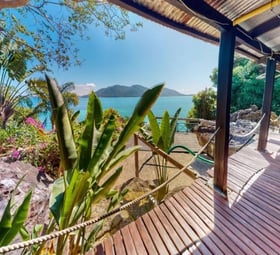
    Camp sits on the beach on Nosy Komba, so free time here looks different from most placements - there is no town to go into, and that turns out to be the appeal.

    In the water

    Snorkelling straight off the beach, and the reefs around Nosy Komba and Nosy Tanikely are excellent. The marine team on camp ...

    Attività del tempo libero

    Camp sits on the beach on Nosy Komba, so free time here looks different from most placements - there is no town to go into, and that turns out to be the appeal.

    In the water

    Snorkelling straight off the beach, and the reefs around Nosy Komba and Nosy Tanikely are excellent. The marine team on camp will point you at the best spots. Between July and September humpback whales pass through on migration, and boat trips to see them are one of the highlights of the year.

    On land

    You are already working in the forest, but days off are for walking it differently - up the volcanic slopes for the views, or along the coast to the villages. The black lemurs are habituated and easy to find, and once you have been trained to spot chameleons you will not be able to stop.

    Island hopping

    Nosy Be is a short boat ride and has restaurants, markets and a proper town. Nosy Tanikely is a marine reserve with the best snorkelling in the area. Nosy Iranja, where a sandbar joins two islands at low tide, is a full day out and worth it.

    At camp

    Evenings are on the main deck. No light pollution, so the night sky is remarkable, and volunteers from the forest, teaching, marine and turtle programmes all eat and socialise together.


    Requisiti

    Requisiti

    Età minima: 17 anni

    Per partecipare al programma è necessario avere almeno 17 anni alla data di inizio del programma.

    Controllo dei precedenti penali

    necessario

    Documenti necessari

    Criminal background check

    Restrizioni sulla nazionalità

    Nessuna restrizione. Gli aiuti da tutto il mondo sono benvenuti.

    Altre competenze

    No scientific background is required - you are trained on arrival. If you are studying biology, ecology, zoology or environmental science this is real field experience, and worth saying so on your application. A reasonable level of fitness matters here: the terrain is steep, volcanic and humid, and surveys involve walking, some of it after dark. Camp life is basic and shared.

    Impegno di tempo

    Il vostro aiuto sarà richiesto lunedì, martedì, mercoledì, giovedì e venerdì

    Servizi inclusi

    Servizi inclusi

    Servizi in loco

    Included

    • Airport pickup at Nosy Be (Fascene, NOS) and the boat transfer on to camp
    • Accommodation on camp for the whole of your stay
    • Three meals a day, seven days a week, at the camp canteen
    • Transport to and from all programme sites
    • Orientation, plus training in survey techniques, species ID and data collection
    • Supervision by professional conservation staff
    • Comprehensive pre-departure information
    • Certificate of participation, on request

    Not included

    • Flights
    • Airport drop-off at the end of your programme
    • Visa costs – payable in cash on arrival for most nationalities
    • Travel and health insurance – mandatory, and available through us at extra cost
    • Personal items, and trips taken on your days off

    The price shown already includes your application fee – there is nothing further to pay us on arrival. Programme fees can be paid in interest-free instalments, with the balance due 45 days before departure.

    Prelievo dall'aeroporto a Fascene Airport

    Airport pickup at Fascene Airport, Nosy Be (NOS) is included, along with the boat transfer across to camp on Nosy Komba.

    Most people reach Nosy Be via Antananarivo, though there are also seasonal routes through Nairobi, Addis Ababa and Réunion. Send the camp your flight details in advance so they can meet the right boat.

    The airport drop-off at the end of your programme is not included – budget for it, or arrange it with the camp team while you are there.

    Visa: Madagascar issues tourist visas on arrival to most nationalities, payable in cash at the airport. Check the current fee before you fly and bring the cash with you.

    Alloggio

    You live on the research camp on Nosy Komba, right on the beach and a short walk from the forest you will be surveying. Accommodation is shared and deliberately simple – this is a field camp on a small Madagascan island, not a hotel.

    The camp has a main deck and a dining area where everyone eats and spends the evenings. The mix of people is one of the best things about it: forest researchers alongside marine biologists, the sea turtle team and the English teaching volunteers.

    Camp staff live on site and supervise throughout. Facilities are basic but adequate, and there is a private room option at additional cost if you would rather not share.

    Come prepared for island life – power and connectivity are limited, and that is part of the experience rather than a fault to be fixed.

    Cibo e Bevande

    Three meals a day, seven days a week, are provided at the camp canteen and included in your fee – which on a remote island is worth more than it sounds, since there is nowhere else to eat.

    Food is simple and largely Malagasy: rice at most meals, beans, vegetables, fresh fish and a lot of tropical fruit. Vegetarians are catered for easily – note any dietary requirements on your application form so the camp can plan for them, as supplies come in by boat and cannot be improvised at short notice.

    On long survey days you will take food out with you. Drinking water is provided at camp; bring a refillable bottle rather than buying plastic on the island.

    Accesso a Internet

    Buon accesso al sito del progetto
    Non devi ancora pagare nulla

    Cosa NON è incluso?

    Cosa NON è incluso?

    Biglietti aerei

    L'aeroporto più vicino è Fascene Airport (NOS) a Nossi-be. Vi aiutiamo a trovare voli economici per Madagascar. TROVARE VOLI ECONOMICI

    Assicurazione di viaggio

    Andare all'estero è un'avventura ed è sempre meglio essere preparati. Malattia o infortunio improvviso, annullamento o furto: un'assicurazione di viaggio per Madagascar offre sicurezza ed è un vantaggio da avere. OTTENERE UN PREZZO

    Vaccini

    Se avete intenzione di fare volontariato a Madagascar dovete chiedere un parere medico prima di iniziare il vostro viaggio sociale. Controllare le vaccinazioni richieste per Madagascar. CHECKER PER I VACCINI

    Dettagli all'arrivo

    Airport: Fascene Airport, Nosy Be (NOS), usually via Antananarivo. Airport pickup is included, along with the boat transfer across to camp on Nosy Komba.

    Airport drop-off at the end is not included – budget for it or arrange it with the camp team.

    Visa: tourist visas are issued on arrival to most nationalities, payable in cash. Check the current fee before you fly and bring cash.

    Health: antimalarials are strongly recommended. Yellow fever vaccination is required if arriving from a country where it is present.

    What to bring: proper closed walking shoes or boots (the terrain is steep and volcanic), long trousers and long sleeves for night surveys, a decent head torch with spare batteries, insect repellent and reef-safe sun cream. A hand lens is useful if you are interested in the invertebrate work.

    Seasonality: mangrove planting is seasonal, so the exact mix of work varies through the year. Survey work runs year-round.

    Disponibilità
    gen feb mar apr mag giu lug ago set ott nov dic

    Tariffe del programma

    $609 tariffe settimanali 1 - 8 settimane Età 17 - 50+

    Modalità di pagamento

    Visa Master Card Maestro American Express PayPal

    NESSUNA COMMISSIONE PER LA CARTA DI CREDITO


    Durata

    1 - 8 settimane

    Deposito

    Prenotate il vostro posto con pochi clic e un piccolo deposito sicuro. È possibile pagare con carta di credito, PayPal o altri metodi convenienti.


    Pagamento Finale

    Il metodo di pagamento finale verrà concordato con l'organizzazione locale durante il processo di candidatura. Il pagamento finale è dovuto solo in prossimità dell'inizio del viaggio.

    Non devi ancora pagare nulla
    4,5
    Selezione top
    Una delle scelte migliori di Volunteer World, secondo i viaggiatori

    Posizione

    Africa > Africa orientale > Madagscar > Nosy Komba

    Incontra il tuo coordinatore di progetto

    Sahil
    29
    reviews
    4,54
    Fantastico
    2007
    Fondata

    Verificato

      Tasso di risposta inferiore alla media
    Viaggia in sicurezza utilizzando Volunteer World per le tue comunicazioni e prenotazioni. In questo modo potrai beneficiare dell'Opzione Flex, della Garanzia di Rimborso e del Supporto alla Risoluzione.

    Potreste essere interessati anche a

    Contattare Sahil
      Tasso di risposta inferiore alla media

    La maggior parte dei volontari chiede


    Hai altre domande? Invia un messaggio a Sahil
    Per favore, non condividere le informazioni di contatto

    Date di viaggio

    1. - 1. gen 1

    Prenota con l'opzione Flex!

    Scegliete nuove date di partenza o passate a un altro programma di volontariato senza costi aggiuntivi entro 12 mesi.

    Supporto completo per ogni volontario!

    Questo ci aiuta a gestire la nostra piattaforma e a offrire servizi essenziali come l'assistenza completa, la garanzia di rimborso, l'opzione Flex senza costi di riprenotazione e la garanzia di prezzo. L'IVA è inclusa.

    Detagli del prezzo