Login

Selecteer reisdata om de prijzen te zien

Briljant 4.72rating (255)

Turtle Conservation and Research

location
1 - 12 weken  ·  Leeftijd 18 - 50+
Geverifieerd

Highlights

  • Engage with the local people and provide education on protecting their environment
  • Perform seagrass surveys during low spring tides
  • Assist with beach clean ups and turtle watches

Highlights

  • Engage with the local people and provide education on protecting their environment
  • Perform seagrass surveys during low spring tides
  • Assist with beach clean ups and turtle watches
  • Help create a new research database in a relatively unstudied area
  • Gain animal handling experience (nesting season only)

  • Je hoeft nog niets te betalen

    Vooral geschikt voor

    Leeftijd 18+
    Alleenstaanden
    Koppels
    Groepen
    50+

    Over het programma

    From November to March, during the nesting season, you'll help identify and monitor key nesting sites, behaviour, and population changes.

    Active Turtle Surveys (ATS) and Facial Recognition Project – Volunteers conduct snorkelling-based turtle surveys in the bay in front of Turtle Cove. They identify and photograph turtles, collect data on species, size, behaviour, and habitat use, and contribute to the ‘In-Water Turtle ...

    Over het programma

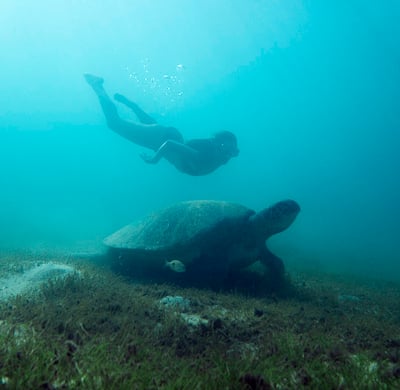
    Active Turtle Surveys (ATS) and Facial Recognition Project – Volunteers conduct snorkelling-based turtle surveys in the bay in front of Turtle Cove. They identify and photograph turtles, collect data on species, size, behaviour, and habitat use, and contribute to the ‘In-Water Turtle Sightings’ database. Volunteers will also use the images of turtle facial patterns to help build a local and global database on the Internet of Turtles to allow researchers to track population trends and movement patterns over time.

    Seagrass Monitoring – Volunteers survey seagrass meadows, a vital foraging ground for Green Turtles, assessing density, health, and biodiversity to monitor environmental changes affecting marine ecosystems.

    Beach & Ocean Cleans – Regular coastal and snorkelling-based clean-ups help remove marine debris and plastic pollution from turtle habitats. Data is logged in the ‘CleanSwell’ app to contribute to global waste research.

    Artificial Reef (AR) Construction & Coral Planting – In collaboration with the Marine Conservation Program, volunteers engage in artificial reef maintenance and out-of-water coral planting sessions, learning coral restoration methodologies.

    Self-Directed Learning & Lectures – Volunteers participate in workshops and discussions covering topics such as:

    • Turtle biology, physiology, and behaviour

    • Marine ecology & conservation strategies

    • Waste management & ocean pollution

    • Coral reef restoration techniques

    • Climate change, El Niño, and human impacts on marine ecosystems

    Eco-Bricks & Waste Management – Volunteers repurpose non-recyclable plastic into eco-bricks for sustainable construction projects, reducing waste and promoting environmental responsibility.

    Bamboo Straws Project – To combat single-use plastics, volunteers harvest and craft bamboo straws, distributing them to local businesses and communities as a sustainable alternative.

    Malagasy Language & Cultural Lessons – Volunteers have the opportunity to learn Malagasy, improving communication with local community members and conservation partners.

    Scientific Paper Group Discussions – Volunteers analyze and discuss new marine conservation research, exploring how findings can be applied to MRCI’s conservation strategies.

    Ampohana Activities

    In Ampohana, in addition to the above activities, volunteers take part in specialised nesting and community engagement projects:

    Beach Patrols for Nesting & Hatching Turtles – Volunteers conduct hourly patrols during high tide to identify new turtle nests, monitor nesting behaviour, and protect hatchlings.

    Turtle Nesting Observations & Data Collection – Volunteers assist in recording species, nest location, environmental factors, and predation risks, sharing data with the Olive Ridley Project and Wildlife Conservation Society.

    Turtle Tracking Skills – Volunteers learn to identify and interpret animal tracks from turtles, crabs, dogs, and other wildlife, essential for nesting site monitoring and habitat protection.

    Turtle Nest Excavations & Hatchling Success Surveys – After hatchlings emerge, volunteers conduct nest excavations to record hatching success rates, deformities, and evidence of predation.

    Turtle Nest Protection – Volunteers take an active role in protecting nests, which may include constructing barriers, monitoring temperature conditions, and relocating at-risk nests.

    English Teaching & Marine Biology Lessons – At the Ampohana school, volunteers teach English with a marine conservation focus, raising awareness about turtle conservation, marine ecosystems, and sustainability.

    Nesting Activities on Nosy Komba When Needed

    While most turtle nesting activities occur in Ampohana, when we receive reports of nesting turtles or active nests on Nosy Komba, volunteers will conduct nesting surveys, data collection, and protection efforts there as well. This ensures that conservation work is not restricted to a single location and can respond dynamically to turtle activity in the region.


    Location

    Nosy Komba, a charming island off the northwest coast of Madagascar, is known for its lush greenery, stunning beaches, and vibrant coral reefs. Often referred to as “Lemur Island,” it is home to a thriving population of lemurs that roam freely. The island’s picturesque villages are inhabited by friendly locals who practice traditional Malagasy crafts and fishing. Our location is fairly remote, being a 30 minute hike over rocky terrain or accessible by boat.

    Dagelijkse activiteiten

    Each program generally includes morning and afternoon activities. After dinner, we hold a briefing to discuss the activities for the following day.

    NOTE: The schedule may vary widely depending on the project, tides, and other factors for that day.

    Sample Schedule:

    • 06:00-08:00: Breakfast at the camp ...

    Dagelijkse activiteiten

    Each program generally includes morning and afternoon activities. After dinner, we hold a briefing to discuss the activities for the following day.

    NOTE: The schedule may vary widely depending on the project, tides, and other factors for that day.

    Sample Schedule:

    • 06:00-08:00: Breakfast at the camp prepared by our in-house cooks
    • 08:00-11:30: Morning activities on the project
    • 12:00: Lunch at the camp prepared by our in-house cooks
    • 13:30: Afternoon activities on the project
    • 16:00-17:00: Volunteer activities for the day usually conclude
    • 18:00: Dinner at the camp prepared by our in-house cooks
    • 18:45: Board briefing to review activities for the following day

    NOTE: There will be varying amounts of downtime during the listed morning and afternoon program activities depending on the day and project.


    Vrijetijdsactiviteiten

    Volunteers have weekends off and can explore various areas of Nosy Komba and the nearby islands during their free time. While volunteers must organize these trips independently, contact information from past volunteers is available at the camp, providing guidance on how to arrange excursions and ...

    Vrijetijdsactiviteiten

    Volunteers have weekends off and can explore various areas of Nosy Komba and the nearby islands during their free time. While volunteers must organize these trips independently, contact information from past volunteers is available at the camp, providing guidance on how to arrange excursions and whom to book through.

    Popular activities and destinations include:

    • Lokobe Forest Reserve
    • Discovery Scuba Dive (with MRCI)
    • Tanikely Natural Reserve
    • Visits to Nosy Iranja or Nosy Sakatia (for swimming and snorkeling)
    • Whale Shark Watching (seasonal from September to November)
    • Sacred Tree or Sacred Waterfall on Nosy Be
    • Hiking up Mount Passot on Nosy Be
    • Visiting Lemur Land Park on Nosy Be or the Lemur Park in Ampang Village on Nosy Komba
    • Ankarana National Park
    • Amber Mountain National Park
    • Plantations on the mainland in the city of Ambanja
    • The city of Diego Suarez

    Voorwaarden

    Voorwaarden

    Minimum leeftijd: 18 jaar

    Om deel te nemen aan het programma dien je tenminste 18 jaar oud te zijn op de startdatum van het programma. Er kunnen uitzonderingen gemaakt worden indien je een bewijs van toestemming kan aantonen van uw wettelijke voogd(en) of samen met je ouders deelneemt.

    Taalkennis

    Je dient over volgende taalkennis te beschikken Engels (basis niveau)

    Bewijs van goed gedrag en zeden

    verplicht

    Nationaliteitsbeperkingen

    Geen beperkingen. Helpende handen van over de hele wereld zijn welkom.

    Tijdsinzet

    Uw helpende hand wordt verwacht op maandag, dinsdag, woensdag, donderdag en vrijdag

    Diensten ingesloten

    Diensten ingesloten

    Diensten op locatie

    • Accommodation
    • 3 meals p/day weekdays / 2 meals p/day weekends
    • Arrival airport transfer (Sat/Sun arrivals)
    • 1 day orientation
    • Daily transportation to project
    • In country 24/7 support & emergency assistance
    • Fundraising support
    • University course credits (where applicable)
    • Certificate of Completion

    Afhaal aan de luchthaven op Fascene Airport

    You must arrive to Fascene Airport (NOS) airport before 12 noon, on the Sunday before your program, in order to go straight to the island. 

    The last boat departs from Nosy Be to Nosy Komba at approximately 3pm daily, so you need to arrive before 12pm to be able to go directly to camp.

    Volunteers arriving between 12 PM and 7 PM on Sunday will be transported from the airport to a hotel/accommodation of your choice in Hellville, but the overnight stay will be at your own cost. You will be able to meet the team at a nearby cafe in Nosy Be the next morning (Monday) and the team will escort you to the boat across to camp on Nosy Komba.

    If you are arriving before 12pm on Saturday, you can still get picked up from Nosy Be airport and be taken stright to the island but will need to pay an additional charge for the Saturday night accommodation.

    Accomodatie

    The primary camp, is located on Nosy Komba Island, about 6 miles from Nosy Be, where the international airport is situated. Our facilities include a main house, staff accommodation, and a dining area, along with cold water showers and flush toilet units. You will stay in single gender open air huts, with two to three double bunks in each. Private room upgrades are also available for an additional cost (subject to availability).

    Every other week on the forest program, volunteers may conduct overnight guided walks in Lokobe Reserve. Accommodation is basic, with tented beach camps on the forest edge. Volunteers can upgrade at an additional cost to private tents with mattresses or private bungalows, subject to availability.

    Volunteers need to bring their own bedding (thin sheet), pillows, pillowcases, bath towels, mosquito nets, and a lightweight sleeping bag (this is suggested for the cooler months of June to August). Outside of these times you can get away with just a thin sheet as it is hot and humid in Madagascar. 

    Power for lights is supplied by solar panels, with a backup generator for the local team that runs 1-2 hours per week. The camp has limited power points available for charging devices and since there is no other electricity at camp, we recommend volunteers bring solar chargers for their devices and to minimise the use of electronic devices. The accommodation is accessible by boat or a 30-minute walk across rocky terrain from the village. WiFi can be found in the local village, and you can also purchase a local SIM card with data when you arrive in Madagascar. The main house accommodates senior staff and serves as a meeting place for volunteers during the day. Large decks line the front of the main house, complete with hammocks, bean bags, and benches. There is also a work area for volunteers, as well as lockable storage boxes available for each hut to store small valuables. Volunteers should bring a padlock to secure personal items in their luggage when not in use.

    Please conserve power and water as much as possible during your stay. This includes not leaving lights on unnecessarily, limiting showers to one per day, and turning off the water when not in direct use (e.g., while brushing teeth or lathering up in the shower).


    Private Room Upgrade: please contact us directly for options and pricing. 

    *Please note: Upgrade prices can change, so please check the price with us first

    Eten & Drank

    Volunteers are served three meals per day, prepared in the traditional Madagascan style by an on-site Malagasy cook.

    Meals are tasty but may be more basic than what you are used to, with rice served most meals. Breakfast ranges from pancakes to eggs or bread with condiments. Lunch is typically rice or pasta-based, while dinner is usually rice with beans and a sauce. Meals will generally include chicken, zebu (beef), or fish, along with vegetables. For programs where you will be away from camp during lunch can arrange for a packed lunch through the local team the night before. Please keep in kind supplies in Madagascar are limited, and meals will change seasonally depending on the ingredients available on Nosy Be.

    Please note that the local team cannot cater to special dietary requirements or requests. Vegans can eat the vegetarian meals, but will may need to buy extra food off site. We ask volunteers to be flexible or prepared to supplement the provided food. If supplementing food, be aware that there is no refrigerator, and the kitchen is not available for volunteer use as it is a traditional kitchen. Volunteers can store non-perishable items at camp or eat out at local restaurants. A small canteen is available on Nosy Komba where volunteers can purchase snacks. Snacks should be stored in containers located in the dining area.

    Je hoeft nog niets te betalen

    Wat is er NIET inbegrepen?

    Wat is er NIET inbegrepen?

    Internet toegang

    Onze excuses, geen toegang op de project site

    Vlucht tickets

    De dichtste luchthaven is Fascene Airport (NOS) in Nossi-be. We assisteren u met het vinden van goedkope vluchten naar Madagaskar. VIND GOEDKOPE VLUCHTEN

    Reisverzekering

    Naar het buitenland reizen is een avontuur en het is best om goed voorbereid te zijn. Plots ziek worden of gewond raken, annulaties of diefstal - een reisverzekering voor Madagaskar biedt zekerheid en is een meerwaarde. KRIJG EEN OFFERTE

    Vaccinaties

    Als je de intentie hebt om als vrijwilliger aan de slag te gaan in Madagaskar dien je eerst medisch advies in te winnen alvorens je eropuit trekt. Kijk de benodigde vaccinaties na voor Madagaskar. VACCINATIE CHECKER

    Gegevens over jouw aankomst

    Program starts every 1st & 3rd Monday of each month. Arrivals on Sat/ Sun. If arriving on Sat, an extra night is charged.

    Beschikbaarheid
    jan. feb. mrt. apr. mei. jun. jul. aug. sep. okt. nov. dec.

    Programmakosten

    $683 per week 1 - 12 weken Leeftijd 18 - 50+

    Betaalmethodes

    Visa Master Card Maestro American Express PayPal

    GEEN CREDITCARDKOSTEN


    Duurtijd

    1 - 12 weken

    Aanbetaling

    Reserveer je plek met slechts een paar klikken en een kleine, veilige aanbetaling. Je kunt betalen met creditcard, PayPal of andere handige methoden.


    Restbetaling

    Tijdens de aanmeldingsprocedure spreek je met de lokale organisatie af hoe je de restbetaling doet. Deze restbetaling is pas verschuldigd dichter bij het begin van je reis.

    Je hoeft nog niets te betalen
    4,7
    Top selectie
    Een van de beste keuzes op Vrijwilligerswereld volgens reizigers
    •
    2025
    I supported a loving team with daily tasks such as keeping the enclosures clean, shredding antelopes and feeding the kittens. Comments on ...
    •
    2025
    Very well organised, had no problem checking in. The work was so nice and the people were wonderful. Staff is also there to help out with ...
    Sarah Damaschin

    School Construction

    Plaats


    Maak kennis met je projectcoördinator

    Lauren
    255
    reviews
    4,72
    Briljant
    1989
    Opgericht

    Geverifieerd

      Zeer hoog Responsgraad
    Gesproken talen: Engels
    Reis veilig door Volunteer World te gebruiken voor je communicatie en boekingen. Op deze manier kun je profiteren van de Flex-optie, Restitutiegarantie en Support bij Resolutie.

    Misschien ben je ook geïnteresseerd in

    Contact Lauren
      Zeer hoog Responsgraad
    Engels

    De meeste vrijwilligers hebben vragen over


    Heb je nog meer vragen? Stuur een bericht naar Lauren
    Deel alsjeblieft geen persoonlijke contactgegevens
    Selecteer reisdata om de prijzen te zien

    Boek met de Flex-Optie!

    Kies nieuwe vertrekdata of wijzig je vrijwilligersproject zonder meerkost binnen 12 maanden.

    Volledige ondersteuning voor elke vrijwilliger!

    Dit helpt ons om ons platform te beheren en essentiële services aan te bieden, zoals uitgebreide ondersteuning, terugbetalingsgarantie, flexoptie zonder omboekingskosten en prijsgarantie. Dit is inclusief btw.

    Prijsgegevens