Login

Velg reisedatoer for å se priser

Fantastisk 4.54rating (29)

Sea Turtle Nest Monitoring & Anti-Poaching

location
1 - 8 uker  ·  Alder 17 - 50+
Verifisert

Høydepunkter

  • Monitor two threatened species: the critically endangered hawksbill turtle and the endangered green turtle, on beaches where almost nobody has counted them before.
  • Work the nesting season (November to April) protecting mothers and nests from poaching, recording data, and relocating nests laid where they will not survive.
  • Work the off-season (May to October) mapping turtle activity, estimating population size and restoring nesting beaches, with seagrass surveys and beach cleans.

Høydepunkter

  • Monitor two threatened species: the critically endangered hawksbill turtle and the endangered green turtle, on beaches where almost nobody has counted them before.
  • Work the nesting season (November to April) protecting mothers and nests from poaching, recording data, and relocating nests laid where they will not survive.
  • Work the off-season (May to October) mapping turtle activity, estimating population size and restoring nesting beaches, with seagrass surveys and beach cleans.
  • Help build a genuinely new research database - this stretch of northern Madagascar is largely unstudied, so the data you collect has real scientific value.
  • Expect early starts, remote beaches reached by boat, and a good number of nights out searching for turtle activity.

  • Du trenger ikke å betale noe ennå

    Spesielt egnet for

    Alder 17+
    Singler
    Par
    Grupper
    50+

    Om programmet

    Track nesting hawksbill and green turtles on remote Madagascan beaches, working against egg poaching and building a research database in a barely studied area.

    The problem

    On the remote beaches around Nosy Be and Nosy Komba, turtle eggs are being taken in large numbers. Hatchlings and fully reproductive adults are harvested for the souvenir trade. Sea turtles already have a naturally very low survival rate – only a tiny fraction of hatchlings reach ...

    Om programmet

    The problem

    On the remote beaches around Nosy Be and Nosy Komba, turtle eggs are being taken in large numbers. Hatchlings and fully reproductive adults are harvested for the souvenir trade. Sea turtles already have a naturally very low survival rate – only a tiny fraction of hatchlings reach adulthood – so losing breeding females and whole clutches has an effect on population numbers out of all proportion to the numbers taken.

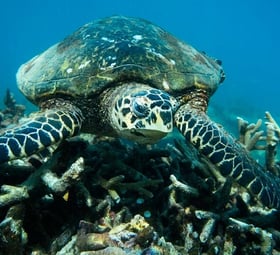
    Two species are monitored here: the critically endangered hawksbill turtle (Eretmochelys imbricata) and the endangered green turtle (Chelonia mydas).

    The programme runs year-round, but the work changes with the season

    Nesting season, November to April. Turtles come ashore to lay. The focus is on preventing the poaching of nesting mothers and their nests, collecting data on the turtles and their eggs, and moving nests laid in places where they have no chance of hatching successfully.

    Off-season, May to October. The focus shifts to establishing where turtles are active, estimating population size and re-establishing nesting beaches. When the tides allow, you will also carry out seagrass surveys, turtle watches and beach cleans.

    Whichever season you come in, you will be out looking for signs of turtle activity most days and a good many nights.

    Why it matters scientifically

    You are helping build a research database for an area that has barely been studied. That is unusual for a volunteer programme and worth understanding properly: the records you help create become the baseline against which future population change gets measured, and they feed into work with local communities and national authorities on protecting these beaches.

    What is asked of you

    Patience, mostly. Turtle work involves long periods of watching and walking, often in the dark, and there will be days when you find nothing. That is the job. When it does happen – a female hauling up the beach to lay, or a nest excavation – it is worth every empty night that came before it.

    Training is given on arrival and you work under professional staff throughout. No scientific background is required.

    Typisk dag

    It depends on the tide and the season, not the clock

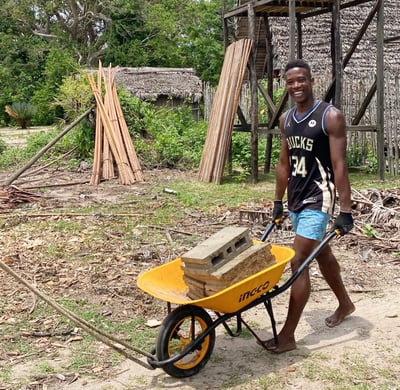
    This is the least routine of our Madagascar programmes. Work is scheduled around tides, moon phase and turtle activity rather than a fixed timetable, so no two weeks look quite the same.

    Beach patrols

    Remote beaches are reached by boat. Patrols ...

    Typisk dag

    It depends on the tide and the season, not the clock

    This is the least routine of our Madagascar programmes. Work is scheduled around tides, moon phase and turtle activity rather than a fixed timetable, so no two weeks look quite the same.

    Beach patrols

    Remote beaches are reached by boat. Patrols involve walking the strand line looking for tracks, body pits and nest sites, recording what you find, and where a nest is at risk, carefully relocating it. During nesting season you may encounter a female coming ashore, in which case you record her measurements and tag data without disturbing her.

    Night work

    Turtles largely nest at night, so expect night patrols during the nesting months. Head torches with red filters, quiet movement, and a lot of waiting.

    Off-season days

    Seagrass surveys in the shallows, turtle watches from boats and shore, beach cleans, and the ongoing work of mapping which beaches are being used and by how many animals.

    Back at camp

    Data entry, which is not glamorous but is the entire point – an observation that never makes it into the database might as well not have happened. Evenings on the main deck with the forest, marine and teaching teams.


    Fritidsaktiviteter

    Camp sits on the beach on Nosy Komba, so free time here looks different from most placements - there is no town to go into, and that turns out to be the appeal. Note that turtle work is scheduled around tides and nesting rather than a fixed week, so your days off move around.

    In the water

    Snorkelling ...

    Fritidsaktiviteter

    Camp sits on the beach on Nosy Komba, so free time here looks different from most placements - there is no town to go into, and that turns out to be the appeal. Note that turtle work is scheduled around tides and nesting rather than a fixed week, so your days off move around.

    In the water

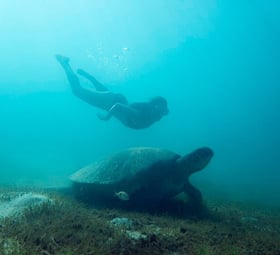
    Snorkelling straight off the beach, and the reefs around Nosy Komba and Nosy Tanikely are excellent. Between July and September humpback whales pass through these waters on migration, and boat trips to see them are one of the highlights of the year.

    On land

    Nosy Komba is famous for its black lemurs, which are entirely habituated and live in the forest right behind camp. Forest trails run up the island's volcanic slopes, and the forest team will happily show you where the chameleons and geckos hide.

    Island hopping

    Nosy Be is a short boat ride and has restaurants, markets and a proper town. Nosy Tanikely is a marine reserve with the best snorkelling in the area. Nosy Iranja - where a sandbar joins two islands at low tide, and itself an important turtle nesting site - is a full day out.

    At camp

    Evenings are on the main deck. No light pollution, so the night sky is remarkable, and volunteers from the turtle, forest, marine and teaching programmes all eat and socialise together.


    Krav

    Krav

    Minimumsalder: 17 år

    For å bli med i programmet må du være minst 17 år gammel på programmets startdato.

    Kontroll av kriminell bakgrunn

    nødvendig

    Påkrevde dokumenter

    Criminal background check

    Nasjonalitetsbegrensninger

    Ingen restriksjoner. Hjelpende hender fra hele verden er velkomne.

    Andre ferdigheter

    No scientific background is required - you are trained on arrival. Biology, ecology and marine science students will find this genuine field experience worth putting on a CV. What matters more is patience and a tolerance for night work and blank days: turtle monitoring involves a lot of walking and watching for no result. Comfort in and around boats helps. Camp life is basic and shared.

    Tidsforpliktelse

    Din hjelpende hånd vil bli påkrevd Mandag, Tirsdag, Onsdag, Torsdag og Fredag

    Hva inngår

    Hva inngår

    Tjenester på stedet

    Included

    • Airport pickup at Nosy Be (Fascene, NOS) and the boat transfer on to camp
    • Accommodation on camp for the whole of your stay
    • Three meals a day, seven days a week, at the camp canteen
    • Boat transport to the remote survey beaches and all programme sites
    • Orientation, plus training in survey technique, species identification and data collection
    • Supervision by professional conservation staff
    • Comprehensive pre-departure information
    • Certificate of participation, on request

    Not included

    • Flights
    • Airport drop-off at the end of your programme
    • Visa costs – payable in cash on arrival for most nationalities
    • Travel and health insurance – mandatory, and available through us at extra cost
    • Personal items, and trips taken on your days off

    The price shown already includes your application fee – there is nothing further to pay us on arrival. Programme fees can be paid in interest-free instalments, with the balance due 45 days before departure.

    Henting fra flyplassen på Fascene Airport

    Airport pickup at Fascene Airport, Nosy Be (NOS) is included, along with the boat transfer across to camp on Nosy Komba.

    Most people reach Nosy Be via Antananarivo, though there are also seasonal routes through Nairobi, Addis Ababa and Réunion. Send the camp your flight details in advance so they can meet the right boat.

    The airport drop-off at the end of your programme is not included – budget for it, or arrange it with the camp team while you are there.

    Visa: Madagascar issues tourist visas on arrival to most nationalities, payable in cash at the airport. Check the current fee before you fly and bring the cash with you.

    Overnatting

    You live on the research camp on Nosy Komba, right on the beach. Accommodation is shared and deliberately simple – this is a field camp on a small Madagascan island, not a hotel, and the trade-off is that you are a few steps from the water and close to the beaches you will be surveying.

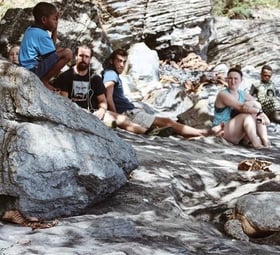
    The camp has a main deck and a dining area where everyone eats and spends the evenings. The mix of people is one of the best things about it: the turtle team alongside forest researchers, marine biologists and the English teaching volunteers.

    Camp staff live on site and supervise throughout. Facilities are basic but adequate, and there is a private room option at additional cost if you would rather not share.

    Come prepared for island life – power and connectivity are limited, and given that a fair amount of turtle work happens at night, a flexible attitude to sleep helps too.

    Mat og drikke

    Three meals a day, seven days a week, are provided at the camp canteen and included in your fee – which on a remote island is worth more than it sounds, since there is nowhere else to eat.

    Food is simple and largely Malagasy: rice at most meals, beans, vegetables, fresh fish and a lot of tropical fruit. Vegetarians are catered for easily – note any dietary requirements on your application form so the camp can plan for them, as supplies come in by boat and cannot be improvised at short notice.

    Night patrols and long beach days mean taking food out with you. Drinking water is provided at camp; bring a refillable bottle rather than buying plastic on the island.

    Internettilgang

    God tilgang på prosjektstedet
    Du trenger ikke å betale noe ennå

    Hva er IKKE inkludert?

    Hva er IKKE inkludert?

    Flybilletter

    Den nærmeste flyplassen er Fascene Airport (NOS) i Nossi-be. Vi hjelper deg med å finne billige flyreiser til Madagaskar. FINN BILLIGE FLYREISER

    Reiseforsikring

    Å reise til utlandet er et eventyr, og det er alltid best å være forberedt. Plutselig sykdom eller skade, avbestilling eller tyveri – en reiseforsikring for Madagaskar gir trygghet og er et pluss å ha. FÅ ET TILBUD

    Vaksiner

    Hvis du har tenkt å jobbe frivillig i Madagaskar bør du søke medisinsk råd før du starter din sosiale reise. Sjekk de nødvendige vaksinasjonene dine for Madagaskar. VAKSINESJEKKER

    Detaljer ved ankomst

    Airport: Fascene Airport, Nosy Be (NOS), usually via Antananarivo. Airport pickup is included, along with the boat transfer across to camp on Nosy Komba.

    Airport drop-off at the end is not included – budget for it or arrange it with the camp team.

    Choosing your dates: if you specifically want to see nesting turtles and hatchlings, come between November and April. Between May and October the work is survey, mapping and restoration – equally valuable, but you are much less likely to encounter a turtle on the beach. Be clear with yourself about which you want before booking.

    Visa: tourist visas are issued on arrival to most nationalities, payable in cash. Check the current fee and bring cash.

    Health: antimalarials are strongly recommended. Yellow fever vaccination is required if arriving from a country where it is present.

    What to bring: a head torch with a red filter is genuinely useful for night patrols, along with closed shoes for the beach, long sleeves for evening insects, reef-safe sun cream and a refillable water bottle.

    Tilgjengelighet
    Jan. Febr. Mars Apr. Mai Jun. Jul. Aug. Sep. Okt. Nov. Des.

    Programgebyrer

    $609 per uke 1 - 8 uker Alder 17 - 50+

    Betalingsmetoder

    Visa Master Card Maestro American Express PayPal

    INGEN KREDITTKORTGEBYRER


    Varighet

    1 - 8 uker

    Depositum

    Reserver plassen din med bare noen få klikk og et lite, sikkert depositum. Du kan betale med kredittkort, PayPal eller andre praktiske metoder.


    Endelig Betaling

    Du blir enig med den lokale organisasjonen din om den endelige betalingsmåten i løpet av søknadsprosessen. Denne sluttbetalingen forfaller først nærmere reisestart.

    Du trenger ikke å betale noe ennå
    4.5
    Topp utvalg
    Et av de beste valgene på Volunteer World, ifølge reisende

    Plassering

    Afrika > Øst-Afrika > Madagaskar > Nosy Komba

    Møt prosjektkoordinatoren din

    Sahil
    29
    reviews
    4.54
    Fantastisk
    2007
    Grunnlagt

    Verifisert

      Svarprosent under gjennomsnittet
    Reis trygt ved å bruke Volunteer World for kommunikasjon og bestillinger. På denne måten kan du dra nytte av Flex-alternativet, refusjonsgarantien og support.

    Du kan også være interessert i

    Ta kontakt med Sahil
      Svarprosent under gjennomsnittet

    De fleste frivillige spør om


    Har du flere spørsmål? Send en melding til Sahil
    Vennligst ikke del personlige kontaktinformasjon

    Reisedatoer

    1. - 1. Jan, 1

    Bestill med Flex Option!

    Velg nye avreisedatoer eller bytt til et annet frivilligprogram uten ekstra kostnader innen 12 måneder.

    Fullstendig støtte for alle frivillige!

    Dette hjelper oss med å drive plattformen vår og tilby viktige tjenester som omfattende kundestøtte, refusjonsgaranti, Flex Option uten ombookingskostnader og prisgaranti. Dette inkluderer merverdiavgift.

    Prisdetaljer