Advance your practice where it matters most. Join Medi Trip’s community medical outreach focused on local women living with chronic conditions and complex social needs. Work alongside our NGO across urban and village communities, delivering supervised care, home visits, education, and referrals that make a direct impact.
Designed for: final-year/advanced students and licensed professionals (medicine, nursing, midwifery, public health, nutrition, physio, psychology).
Groups welcome: tiered group discounts available.
Schedule: flexible and needs-led — daily activities adjust to clinical priorities and outreach logistics.
Why this programWomen-centered care: hypertension, diabetes, maternal health, cervical cancer awareness, family planning counseling, nutrition, mental health first-aid and safe referral.
Go beyond the hospital: outreach days at village dispensaries and community venues; support home visits with local health workers.
Practice with purpose: contribute to screening, education, and linkage-to-care systems that continue after you leave.
Built for advanced learners: targeted learning objectives, case discussions, and reflective practice under local clinical supervision.
What you’ll do (examples, scope-appropriate & supervised)Chronic disease screening & follow-up: BP, BMI/waist, glucose checks; lifestyle counseling; medication adherence support; referral to clinics.
Maternal & child health education: antenatal/postnatal talks, breastfeeding support, growth monitoring, anemia prevention.
Women’s health & prevention: cervical cancer awareness, HPV education, menstrual health workshops, UTI prevention, safe water/hygiene.
Nutrition & NCD management: individualized counseling for diabetes/HTN, low-cost meal planning, anemia and micronutrient education.
Mental health & social support: basic psychoeducation, stigma reduction, GBV and safeguarding signposting; warm handovers to partner NGOs.
Data & QI snapshots: simple data capture for follow-up lists, stock checks, patient-flow mapping with the nursing/matron team.
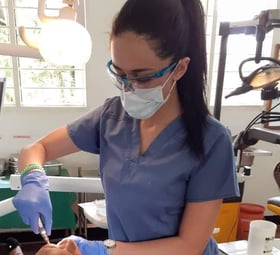
All clinical tasks are performed within your scope, under supervision, and with informed consent. Advanced students observe/assist; licensed professionals may perform more hands-on tasks as permitted by local policy.
Where you’ll workCommunity clinics & dispensaries in Arusha and surrounding villages
Outreach pop-ups at women’s groups, churches, schools, and markets
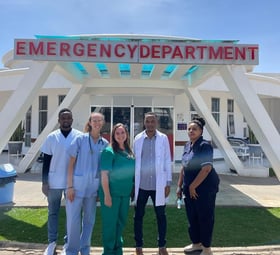
Partner sites may include public facilities (e.g., regional referral hospital departments) for handovers and mentorship blocks
Who should applyFinal-year or advanced students seeking high-impact, supervised exposure
Licensed professionals (MD/DO, RN, Midwife, PH, Dietitian/Nutritionist, Physio, Psych) ready to mentor and upskill local teams
University societies & professional groups — ask about group pricing and tailored objectives
Indicative weekly flow (100% flexible, service-led)Note: Actual activities vary by clinic needs, stock, weather, and community schedules.
Mon: Orientation, safety briefing, scope-of-practice, clinic induction; afternoon BP/glucose screening & counseling.
Project planning: team meeting planning, updating, assessment and implementation;; referrals; case debrief.
Village dispensary outreach (transport provided) — NCD screening, antenatal talks, nutrition stations.
Follow up & Check Up’s: Follow-up clinic & home-visit pair-ups with community health workers.
Office meetings: Interdisciplinary huddle, reflective practice, mini-teaching (e.g., HTN counseling scripts), data tidy-up & referrals list.
Training, supervision & ethicsNamed supervisor + daily check-ins
Brief skills refreshers: BP technique, culturally-adapted counseling, safeguarding & consent, basic data capture
Do-no-harm framework: confidentiality, referral readiness, and escalation protocols
End-of-week reflection linked to your learning goals (CPD/CEU letters available on request)
What’s includedPlacement matching & supervised outreach schedule
Accommodation at one of our four Siret Hostels (private room options per request), breakfast & weekday dinners
Airport pickup & local transport for scheduled outreach
Visa support documents (host invitation) & pre-arrival handbook
Safety briefing, coordinator support, certificate of completion
Not included: flights, visa fees, personal insurance (mandatory), optional safaris/excursions, hospital practice fees where applicable.
Dates & durationStart any week, year-round (subject to clinic calendars)
Typical length: 2–8 weeks (teams often choose 2–4). For research/quality-improvement add-ons, ask about longer stays.
Pricing & group discountsTransparent package pricing; discounts for groups (e.g., universities, hospitals, societies).
Tell us your group size and dates for a tailored quote.
Outcomes you can expectReal-world experience delivering women-focused NCD prevention and health education
Stronger skills in cross-cultural communication, brief interventions, and referral pathways
A tangible contribution: screening tallies, education sessions delivered, and follow-up lists created for continuity of care
Quick eligibility checklistFinal-year/advanced student or licensed professional
Two signed character references
Proof of study/qualification & valid passport
Travel insurance incl. medical care & evacuation
Able to work respectfully within local protocols and resources
Ready to take the next step?FAQsIs the schedule fixed?
No, it’s needs-led. We publish an indicative plan, then adjust to clinic priorities so your time has maximum impact.
Can newly-qualified professionals join?
Yes. You’ll work to your license and local policy, under supervision.
Will I work in rural areas?
Often yes. Village dispensary days are a core feature, weather and staffing permitting.
Can we come as a group?
Absolutely. We set shared objectives, split roles (education, screening, data), and offer group discounts.
Do I need to speak Swahili?
No. Interpreters/coordinators assist. Basic phrases are taught during orientation.
Click to reserve your place or request a group quote today.