Login

Välj resedatum för att se priser

Fantastiskt 4.54rating (29)

Teach English on Two Tropical Islands

location
4 - 8 veckor  ·  Ålder 18 - 50+
Verifierad

Höjdpunkter

  • Teach across 14 different classes on Nosy Komba, from absolute beginners on a structured curriculum to advanced groups where the lesson is really just conversation.
  • Commute to work by boat and tuk-tuk between two islands - transport to every class is included in your fee, as is a packed lunch from the camp canteen.
  • Teach adults as well as children, including staff at the Oceanographic Research Institute on Nosy Be who need English for their work.

Höjdpunkter

  • Teach across 14 different classes on Nosy Komba, from absolute beginners on a structured curriculum to advanced groups where the lesson is really just conversation.
  • Commute to work by boat and tuk-tuk between two islands - transport to every class is included in your fee, as is a packed lunch from the camp canteen.
  • Teach adults as well as children, including staff at the Oceanographic Research Institute on Nosy Be who need English for their work.
  • Get proper training on arrival: you are briefed on every placement and given the basics before you stand in front of a class.
  • Live on a research camp on the beach, with three meals a day, seven days a week, and lemurs in the forest behind you.

  • Du behöver inte betala något ännu

    Särskilt lämplig för

    Ålder 18+
    Singlar
    Par
    Grupper
    50+

    Om programmet

    Teach English to children and adults across 14 classes on two Madagascan islands, travelling to lessons by boat and tuk-tuk from a beachfront research camp.

    Why English matters here

    Tourism is a large part of the economy on Nosy Be and Nosy Komba, and English is what separates a local person from the better jobs in it. There is real appetite on the islands to learn – what there is almost none of is access to native or fluent speakers. That gap is the ...

    Om programmet

    Why English matters here

    Tourism is a large part of the economy on Nosy Be and Nosy Komba, and English is what separates a local person from the better jobs in it. There is real appetite on the islands to learn – what there is almost none of is access to native or fluent speakers. That gap is the entire reason this programme exists.

    What you teach, and to whom

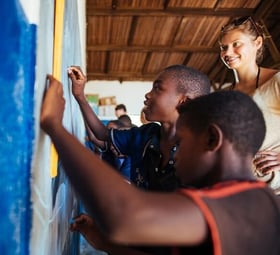
    The local team runs 14 different classes around Nosy Komba, from beginner through to advanced. Beginner classes follow a structured curriculum. Advanced classes are deliberately looser – conversation and practical usage, which is what the students actually need.

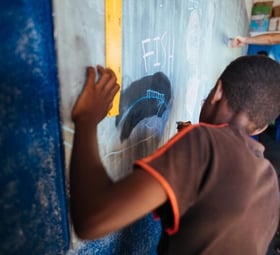
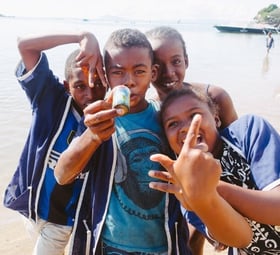
    • Children, 4–12, in small village schools during term time. Energetic, and they respond best when learning is built into games and activities.
    • Teenagers, 11–15, in often large term-time classes. Motivated and keen.
    • Adults in the local communities, including staff at the Oceanographic Research Institute on Nosy Be.
    • Summer classes over the school holidays, mixing English with science – volunteers are encouraged to design their own activities for these.

    Expect to teach between one and four classes a day, at a minimum of an hour each. Because demand is spread across both islands, most volunteers end up teaching in several locations during a week rather than being fixed to one school.

    Getting to class

    You travel to placements by boat and tuk-tuk. Those transport costs are included in your programme fee, and the camp canteen provides a packed lunch. It is, by some distance, the most scenic commute of any placement we run.

    Training

    You are briefed on all the teaching placements when you arrive and given basic training to equip you for teaching in the local communities. No teaching qualification is required.


    Typisk dag

    Morning at camp

    Breakfast at the camp canteen with the other volunteers – a mix of teachers, forest researchers and marine and turtle teams, which makes for good company.

    Out to class

    Depending on where you are teaching that day, you travel by boat between the islands or by tuk-tuk around Nosy Komba. ..

    Typisk dag

    Morning at camp

    Breakfast at the camp canteen with the other volunteers – a mix of teachers, forest researchers and marine and turtle teams, which makes for good company.

    Out to class

    Depending on where you are teaching that day, you travel by boat between the islands or by tuk-tuk around Nosy Komba. Your packed lunch comes with you.

    Teaching

    You will teach somewhere between one and four classes in a day, each at least an hour. With the youngest children, the lesson works best as a game – songs, actions, drawing, repetition. With teenagers there is a curriculum to follow and larger groups to hold. With adults, particularly the Research Institute staff, it is closer to conversation practice aimed at their actual working vocabulary.

    Volunteers are expected to plan their own sessions, especially for the summer classes. Bring ideas, and bring materials if you have room in your bag.

    Back at camp

    Evenings are on the deck. Camp is on the beach and there is no traffic, no crowds and very little light pollution, which means the stars are extraordinary.

    Days off

    Snorkelling, hiking the forest trails to find lemurs and chameleons, and boat trips to the surrounding islands. Nosy Be has more in the way of restaurants and nightlife if you want a change of scene.

    Fritidsaktiviteter

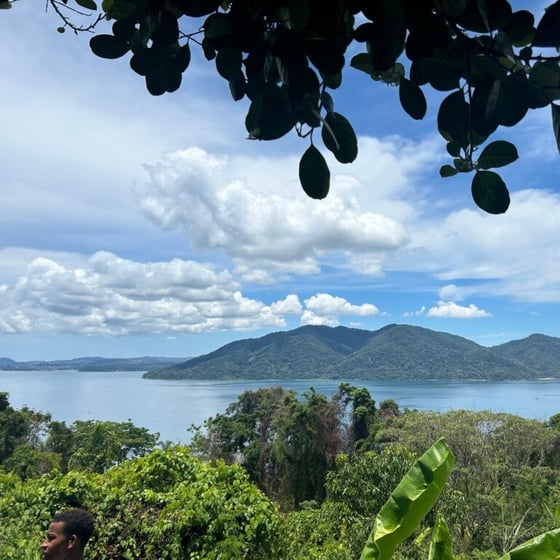
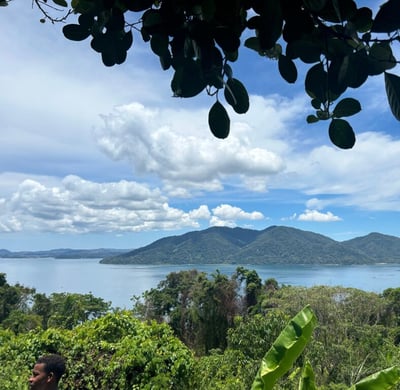
    Camp sits on the beach on Nosy Komba, so free time here looks different from most placements - there is no town to go into, and that turns out to be the appeal.

    In the water

    Snorkelling straight off the beach, and the reefs around Nosy Komba and Nosy Tanikely are excellent. The marine team on camp are ...

    Fritidsaktiviteter

    Camp sits on the beach on Nosy Komba, so free time here looks different from most placements - there is no town to go into, and that turns out to be the appeal.

    In the water

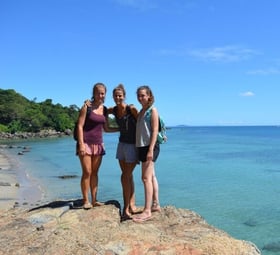
    Snorkelling straight off the beach, and the reefs around Nosy Komba and Nosy Tanikely are excellent. The marine team on camp are usually happy to point you at the best spots. Between July and September humpback whales pass through these waters on migration, and boat trips to see them are one of the highlights of the year.

    On land

    Nosy Komba is famous for its black lemurs, which are entirely used to people and live in the forest right behind camp. Forest trails run up the island's volcanic slopes, and the chameleons, geckos and boa constrictors are easy to find once you know where to look - the forest research team will show you.

    Island hopping

    Nosy Be is a short boat ride and has restaurants, markets, bars and a proper town. Nosy Tanikely is a marine reserve and the best snorkelling in the area. Nosy Iranja, with its sandbar connecting two islands at low tide, is a full day out and worth it.

    At camp

    Evenings are on the main deck. There is no light pollution, so the night sky is remarkable, and volunteers from the teaching, forest, marine and turtle programmes all eat and socialise together - which means you learn a great deal about work you did not sign up for.


    Krav

    Krav

    Minimiålder: 18 år

    För att kunna delta i programmet måste du vara minst 18 år gammal på programmets startdatum. Det kan finnas undantag om du kan visa upp tillstånd från din(a) vårdnadshavare eller om du åtföljs av dina föräldrar.

    Utbildningskrav

    på High school nivå

    Kontroll av kriminell bakgrund

    krävs

    Dokument som krävs

    Criminal background check

    Begränsningar av nationalitet

    Inga begränsningar. Hjälpande händer från hela världen är välkomna.

    Andra Färdigheter

    No teaching qualification is needed - you are trained on arrival. Fluent English is the one real requirement. Some French or Malagasy helps socially but is not expected. Bring lesson ideas and any teaching materials you can fit in your bag; resources on the islands are very limited. Camp life is basic and shared, so come prepared for that rather than expecting a resort.

    Tidsåtgång

    Din hjälp kommer att behövas på Måndag, Tisdag, Onsdag, Torsdag och Fredag

    Vad som ingår

    Vad som ingår

    Tjänster på plats

    Included

    • Airport pickup at Nosy Be (Fascene, NOS) and the boat transfer on to camp
    • Accommodation on camp for the whole of your stay
    • Three meals a day, seven days a week, at the camp canteen
    • All transport to and from your teaching placements – boats and tuk-tuks between the islands
    • A packed lunch on teaching days
    • Orientation, plus training and supervision from the camp staff
    • Comprehensive pre-departure information
    • Certificate of participation, on request

    Not included

    • Flights
    • Airport drop-off at the end of your programme
    • Visa costs – payable in cash on arrival for most nationalities
    • Travel and health insurance – mandatory, and available through us at extra cost
    • Personal items, and trips taken on your days off

    The price shown already includes your application fee – there is nothing further to pay us on arrival. Programme fees can be paid in interest-free instalments, with the balance due 45 days before departure.

    Hämtning på flygplatsen på Fascene Airport

    Airport pickup at Fascene Airport, Nosy Be (NOS) is included, along with the boat transfer across to camp on Nosy Komba.

    Most people reach Nosy Be via Antananarivo, though there are also seasonal routes through Nairobi, Addis Ababa and Réunion. Send the camp your flight details in advance so they can meet the right boat.

    The airport drop-off at the end of your programme is not included – budget for it, or arrange it with the camp team while you are there.

    Visa: Madagascar issues tourist visas on arrival to most nationalities, payable in cash at the airport. Check the current fee before you fly and bring the cash with you; card facilities cannot be relied on.

    Boende

    You live on the research camp on Nosy Komba, right on the beach. Accommodation is shared and deliberately simple – this is a field camp on a small Madagascan island, not a hotel, and the trade-off is that you wake up a few steps from the sea with lemurs in the forest behind you.

    The camp has a main deck and a dining area where everyone eats and spends the evenings, and the mix of people is one of the best things about it: English teachers alongside forest researchers, marine biologists and the sea turtle team, all on the same site.

    Camp staff live on site and supervise throughout. Facilities are basic but adequate, and there is a private room option at additional cost if you would rather not share.

    Come prepared for island life – power and connectivity are limited, and that is part of the experience rather than a fault to be fixed.

    Mat och Dryck

    Three meals a day, seven days a week, are provided at the camp canteen and included in your fee – which on a remote island is worth more than it sounds, since there is nowhere else to eat.

    On teaching days the canteen staff provide you with a packed lunch to take to your classes.

    Food is simple and largely Malagasy: rice at most meals, beans, vegetables, fresh fish, and a lot of tropical fruit. Vegetarians are catered for easily – note any dietary requirements on your application form so the camp can plan for them, as supplies come in by boat and cannot be improvised at short notice.

    Drinking water is provided at camp. Bring a refillable bottle rather than buying plastic on the island.

    Tillgång till Internet

    God tillgång till projektområdet
    Du behöver inte betala något ännu

    Vad ingår INTE?

    Vad ingår INTE?

    Flygbiljetter

    Den närmaste flygplatsen är Fascene Airport (NOS) i Nossi-be. Vi hjälper dig att hitta billiga flyg till Madagaskar. HITTA BILLIGA FLYG

    Reseförsäkring

    Att resa utomlands är ett äventyr och det är alltid bäst att vara förberedd. Plötslig sjukdom eller skada, avbokning eller stöld - en reseförsäkring för Madagaskar ger trygghet och är ett plus att ha. FÅ ETT PRISFÖRSLAG

    Vacciner

    Om du har för avsikt att arbeta som volontär i Madagaskar bör du söka medicinsk rådgivning innan du börjar din sociala resa. Kontrollera vilka vaccinationer som krävs för Madagaskar. KONTROLL AV VACCIN

    Detaljer vid ankomsten

    Airport: Fascene Airport, Nosy Be (NOS). Most people connect through Antananarivo, and some routes come via Nairobi, Addis Ababa or Réunion. Airport pickup at Nosy Be is included, and you will be taken on to camp by boat.

    Airport drop-off at the end is not included – budget for it separately or arrange it with the camp team.

    Visa: Madagascar issues tourist visas on arrival for most nationalities, payable in cash. Check the current fee and duration before you fly, and carry the cash.

    Health: antimalarials are strongly recommended. Yellow fever vaccination is required if you are arriving from a country where it is present.

    Bring with you: teaching materials if you have space – pens, paper, flashcards, picture books. Resources on the islands are limited and anything you leave behind gets used long after you have gone. Reef-safe sun cream, insect repellent and a torch are also worth packing.

    Term time matters: school classes run during Madagascan term time. Over the school holidays the programme shifts to summer classes combining English and science, so you will always have teaching to do – it just looks different depending on when you come.

    Tillgänglighet
    Jan Febr Mars Apr Maj Jun Jul Aug Sept Okt Nov Dec

    Pris för programmet

    $386 per vecka 4 - 8 veckor Ålder 18 - 50+

    Betalningsmetoder

    Visa Master Card Maestro American Express PayPal

    INGA KREDITKORTSAVGIFTER


    Varaktighet

    4 - 8 veckor

    Deposition

    Boka din plats med bara några klick och en liten, säker deposition. Du kan betala med kreditkort, PayPal eller andra smidiga metoder.


    Slutbetalning

    Du kommer överens om den slutliga betalningsmetoden med din lokala organisation under ansökningsprocessen. Denna slutbetalning förfaller först närmare resans början.

    Du behöver inte betala något ännu
    4,5
    Bästa urval
    Ett av de bästa valen på Volunteer World, enligt resenärer

    Plats

    Afrika > Östra Afrika > Madagaskar > Nosy Komba

    Träffa din projektkoordinator

    Sahil
    29
    reviews
    4,54
    Fantastiskt
    2007
    Grundad

    Verifierad

      Svarsfrekvens under genomsnittet
    Res tryggt genom att använda Volunteer World för din kommunikation och dina bokningar. På så sätt kan du dra nytta av Flex Option, Refund Guarantee och Resolution Support.

    Du kanske också är intresserad av

    Kontakta Sahil
      Svarsfrekvens under genomsnittet

    De fleste frivillige spørger om


    Har du flere spørgsmål? Send en besked til Sahil
    Vær venlig ikke at dele personlige kontaktoplysninger

    Datum för resa

    1. - 1. Jan 1

    Boka med Flex Option!

    Välj nya avresedatum eller byt till ett annat volontärprogram utan extra kostnad inom 12 månader.

    Komplett stöd för varje volontär!

    Detta hjälper oss att driva vår plattform och erbjuda viktiga tjänster som omfattande support, återbetalningsgaranti, flexalternativ utan ombokningskostnader och prisgaranti. Detta inkluderar moms.

    Prisinformation