Login

Wähle deine Reisedaten, um einen Preis zu sehen

Fantastisch 4.54rating (29)

Teach English on Two Tropical Islands

location
4 - 8 Wochen  ·  Alter 18 - 50+
Verifiziert

Highlights

  • Teach across 14 different classes on Nosy Komba, from absolute beginners on a structured curriculum to advanced groups where the lesson is really just conversation.
  • Commute to work by boat and tuk-tuk between two islands - transport to every class is included in your fee, as is a packed lunch from the camp canteen.
  • Teach adults as well as children, including staff at the Oceanographic Research Institute on Nosy Be who need English for their work.

Highlights

  • Teach across 14 different classes on Nosy Komba, from absolute beginners on a structured curriculum to advanced groups where the lesson is really just conversation.
  • Commute to work by boat and tuk-tuk between two islands - transport to every class is included in your fee, as is a packed lunch from the camp canteen.
  • Teach adults as well as children, including staff at the Oceanographic Research Institute on Nosy Be who need English for their work.
  • Get proper training on arrival: you are briefed on every placement and given the basics before you stand in front of a class.
  • Live on a research camp on the beach, with three meals a day, seven days a week, and lemurs in the forest behind you.

  • Du musst noch nichts bezahlen

    Besonders geeignet für

    Alter 18+
    Alleinreisend
    Pärchen
    Gruppen
    50+

    Über das Programm

    Teach English to children and adults across 14 classes on two Madagascan islands, travelling to lessons by boat and tuk-tuk from a beachfront research camp.

    Why English matters here

    Tourism is a large part of the economy on Nosy Be and Nosy Komba, and English is what separates a local person from the better jobs in it. There is real appetite on the islands to learn – what there is almost none of is access to native or fluent speakers. That gap is the ...

    Über das Programm

    Why English matters here

    Tourism is a large part of the economy on Nosy Be and Nosy Komba, and English is what separates a local person from the better jobs in it. There is real appetite on the islands to learn – what there is almost none of is access to native or fluent speakers. That gap is the entire reason this programme exists.

    What you teach, and to whom

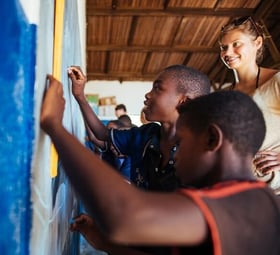
    The local team runs 14 different classes around Nosy Komba, from beginner through to advanced. Beginner classes follow a structured curriculum. Advanced classes are deliberately looser – conversation and practical usage, which is what the students actually need.

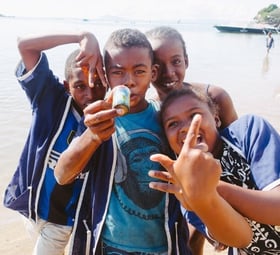
    • Children, 4–12, in small village schools during term time. Energetic, and they respond best when learning is built into games and activities.
    • Teenagers, 11–15, in often large term-time classes. Motivated and keen.
    • Adults in the local communities, including staff at the Oceanographic Research Institute on Nosy Be.
    • Summer classes over the school holidays, mixing English with science – volunteers are encouraged to design their own activities for these.

    Expect to teach between one and four classes a day, at a minimum of an hour each. Because demand is spread across both islands, most volunteers end up teaching in several locations during a week rather than being fixed to one school.

    Getting to class

    You travel to placements by boat and tuk-tuk. Those transport costs are included in your programme fee, and the camp canteen provides a packed lunch. It is, by some distance, the most scenic commute of any placement we run.

    Training

    You are briefed on all the teaching placements when you arrive and given basic training to equip you for teaching in the local communities. No teaching qualification is required.


    Tagesablauf

    Morning at camp

    Breakfast at the camp canteen with the other volunteers – a mix of teachers, forest researchers and marine and turtle teams, which makes for good company.

    Out to class

    Depending on where you are teaching that day, you travel by boat between the islands or by tuk-tuk around Nosy Komba. ..

    Tagesablauf

    Morning at camp

    Breakfast at the camp canteen with the other volunteers – a mix of teachers, forest researchers and marine and turtle teams, which makes for good company.

    Out to class

    Depending on where you are teaching that day, you travel by boat between the islands or by tuk-tuk around Nosy Komba. Your packed lunch comes with you.

    Teaching

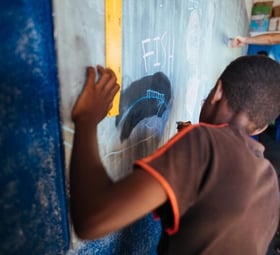
    You will teach somewhere between one and four classes in a day, each at least an hour. With the youngest children, the lesson works best as a game – songs, actions, drawing, repetition. With teenagers there is a curriculum to follow and larger groups to hold. With adults, particularly the Research Institute staff, it is closer to conversation practice aimed at their actual working vocabulary.

    Volunteers are expected to plan their own sessions, especially for the summer classes. Bring ideas, and bring materials if you have room in your bag.

    Back at camp

    Evenings are on the deck. Camp is on the beach and there is no traffic, no crowds and very little light pollution, which means the stars are extraordinary.

    Days off

    Snorkelling, hiking the forest trails to find lemurs and chameleons, and boat trips to the surrounding islands. Nosy Be has more in the way of restaurants and nightlife if you want a change of scene.

    Freizeitaktivitäten

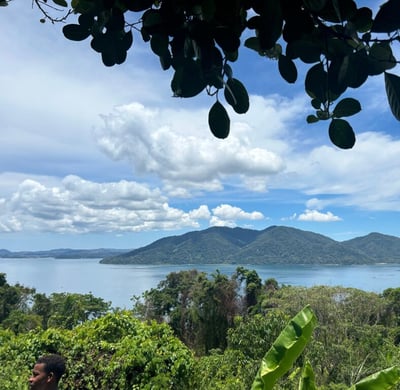
    Camp sits on the beach on Nosy Komba, so free time here looks different from most placements - there is no town to go into, and that turns out to be the appeal.

    In the water

    Snorkelling straight off the beach, and the reefs around Nosy Komba and Nosy Tanikely are excellent. The marine team on camp are ...

    Freizeitaktivitäten

    Camp sits on the beach on Nosy Komba, so free time here looks different from most placements - there is no town to go into, and that turns out to be the appeal.

    In the water

    Snorkelling straight off the beach, and the reefs around Nosy Komba and Nosy Tanikely are excellent. The marine team on camp are usually happy to point you at the best spots. Between July and September humpback whales pass through these waters on migration, and boat trips to see them are one of the highlights of the year.

    On land

    Nosy Komba is famous for its black lemurs, which are entirely used to people and live in the forest right behind camp. Forest trails run up the island's volcanic slopes, and the chameleons, geckos and boa constrictors are easy to find once you know where to look - the forest research team will show you.

    Island hopping

    Nosy Be is a short boat ride and has restaurants, markets, bars and a proper town. Nosy Tanikely is a marine reserve and the best snorkelling in the area. Nosy Iranja, with its sandbar connecting two islands at low tide, is a full day out and worth it.

    At camp

    Evenings are on the main deck. There is no light pollution, so the night sky is remarkable, and volunteers from the teaching, forest, marine and turtle programmes all eat and socialise together - which means you learn a great deal about work you did not sign up for.


    Voraussetzungen

    Voraussetzungen

    Mindestalter: 18 Jahre

    Um an diesem Programm teilzunehmen, musst du zu Programmbeginn mindestens 18 Jahre alt sein. Es kann Ausnahmen geben, wenn du die Erlaubnis deines/r Erziehungsberechtigten vorlegen kannst oder wenn du von deinen Eltern begleitet wirst

    Ausbildung

    auf High school Niveau

    Polizeiliches Führungszeugnis

    erforderlich

    Benötigte Unterlagen

    Criminal background check

    Staatszugehörigkeit

    Es gibt keine Beschränkungen. Helfende Hände aus aller Welt sind willkommen.

    Andere Fähigkeiten

    No teaching qualification is needed - you are trained on arrival. Fluent English is the one real requirement. Some French or Malagasy helps socially but is not expected. Bring lesson ideas and any teaching materials you can fit in your bag; resources on the islands are very limited. Camp life is basic and shared, so come prepared for that rather than expecting a resort.

    Arbeitszeiten

    Deine Hilfe wird an folgenden Tagen benötigt: Montag, Dienstag, Mittwoch, Donnerstag und Freitag

    Leistungen

    Leistungen

    Dienstleistungen vor Ort

    Included

    • Airport pickup at Nosy Be (Fascene, NOS) and the boat transfer on to camp
    • Accommodation on camp for the whole of your stay
    • Three meals a day, seven days a week, at the camp canteen
    • All transport to and from your teaching placements – boats and tuk-tuks between the islands
    • A packed lunch on teaching days
    • Orientation, plus training and supervision from the camp staff
    • Comprehensive pre-departure information
    • Certificate of participation, on request

    Not included

    • Flights
    • Airport drop-off at the end of your programme
    • Visa costs – payable in cash on arrival for most nationalities
    • Travel and health insurance – mandatory, and available through us at extra cost
    • Personal items, and trips taken on your days off

    The price shown already includes your application fee – there is nothing further to pay us on arrival. Programme fees can be paid in interest-free instalments, with the balance due 45 days before departure.

    Abholung vom Flughafen Fascene Airport

    Airport pickup at Fascene Airport, Nosy Be (NOS) is included, along with the boat transfer across to camp on Nosy Komba.

    Most people reach Nosy Be via Antananarivo, though there are also seasonal routes through Nairobi, Addis Ababa and Réunion. Send the camp your flight details in advance so they can meet the right boat.

    The airport drop-off at the end of your programme is not included – budget for it, or arrange it with the camp team while you are there.

    Visa: Madagascar issues tourist visas on arrival to most nationalities, payable in cash at the airport. Check the current fee before you fly and bring the cash with you; card facilities cannot be relied on.

    Unterkunft

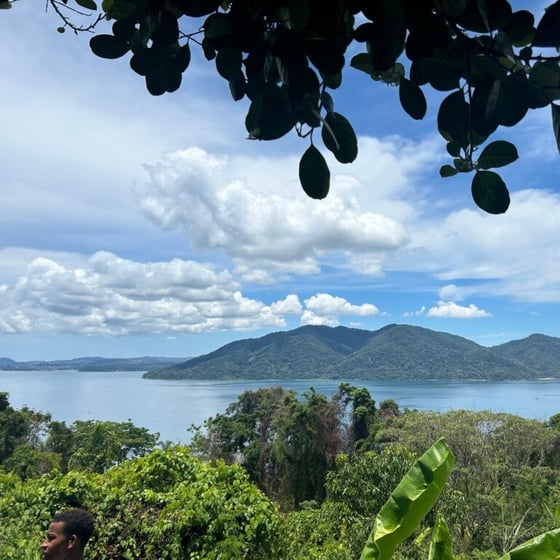
    You live on the research camp on Nosy Komba, right on the beach. Accommodation is shared and deliberately simple – this is a field camp on a small Madagascan island, not a hotel, and the trade-off is that you wake up a few steps from the sea with lemurs in the forest behind you.

    The camp has a main deck and a dining area where everyone eats and spends the evenings, and the mix of people is one of the best things about it: English teachers alongside forest researchers, marine biologists and the sea turtle team, all on the same site.

    Camp staff live on site and supervise throughout. Facilities are basic but adequate, and there is a private room option at additional cost if you would rather not share.

    Come prepared for island life – power and connectivity are limited, and that is part of the experience rather than a fault to be fixed.

    Verpflegung

    Three meals a day, seven days a week, are provided at the camp canteen and included in your fee – which on a remote island is worth more than it sounds, since there is nowhere else to eat.

    On teaching days the canteen staff provide you with a packed lunch to take to your classes.

    Food is simple and largely Malagasy: rice at most meals, beans, vegetables, fresh fish, and a lot of tropical fruit. Vegetarians are catered for easily – note any dietary requirements on your application form so the camp can plan for them, as supplies come in by boat and cannot be improvised at short notice.

    Drinking water is provided at camp. Bring a refillable bottle rather than buying plastic on the island.

    Internetzugriff

    Gute Verbindung vor Ort
    Du musst noch nichts bezahlen

    Was ist NICHT inklusive?

    Was ist NICHT inklusive?

    Flugtickets

    Der nächstgelegene Flughafen ist Fascene Airport (NOS) in Nossi-be. Wir helfen dir günstige Flüge nach Madagaskar zu finden. FINDE GÜNSTIGE FLÜGE

    Reiseversicherung

    Ins Ausland zu gehen ist ein Abenteuer, auf das man sich stets gut vorbereiten sollte. Plötzliche Krankheit oder Verletzung, Stornierung oder Diebstahl - eine Reiseversicherung für Madagaskar bietet die nötige Sicherheit. ANGEBOT EINHOLEN

    Impfungen

    Bevor du deine Freiwilligenarbeit in Madagaskar antrittst, solltest du dich noch einmal von deinem Arzt beraten lassen und deine erforderlichen Impfungen für Madagaskar überprüfen. IMPFSCHUTZ ÜBERPRÜFEN

    Informationen zur Anreise

    Airport: Fascene Airport, Nosy Be (NOS). Most people connect through Antananarivo, and some routes come via Nairobi, Addis Ababa or Réunion. Airport pickup at Nosy Be is included, and you will be taken on to camp by boat.

    Airport drop-off at the end is not included – budget for it separately or arrange it with the camp team.

    Visa: Madagascar issues tourist visas on arrival for most nationalities, payable in cash. Check the current fee and duration before you fly, and carry the cash.

    Health: antimalarials are strongly recommended. Yellow fever vaccination is required if you are arriving from a country where it is present.

    Bring with you: teaching materials if you have space – pens, paper, flashcards, picture books. Resources on the islands are limited and anything you leave behind gets used long after you have gone. Reef-safe sun cream, insect repellent and a torch are also worth packing.

    Term time matters: school classes run during Madagascan term time. Over the school holidays the programme shifts to summer classes combining English and science, so you will always have teaching to do – it just looks different depending on when you come.

    Verfügbarkeit
    Jan Feb Mär Apr Mai Jun Jul Aug Sep Okt Nov Dez

    Programmgebühren

    $386 / Woche 4 - 8 Wochen Alter 18 - 50+

    Zahlungsarten

    Visa Master Card Maestro American Express PayPal

    KEINE KREDITKARTENGEBÜHREN


    Dauer

    4 - 8 Wochen

    Anzahlung

    Reserviere Deinen Platz mit nur wenigen Klicks und einer kleinen, sicheren Anzahlung. Du kannst bequem mit Kreditkarte, PayPal oder anderen Zahlungsmethoden bezahlen.


    Ausstehende Zahlung

    Die Zahlungsweise für die Restzahlung vereinbarst Du während des Bewerbungsprozesses mit Deiner lokalen Organisation. Die Restzahlung wird erst später vor Reisebeginn fällig.

    Du musst noch nichts bezahlen
    4,5
    Top Auswahl
    Laut Reisenden einer der Top-Picks auf Volunteer World

    Lage

    Afrika > Ostafrika > Madagaskar > Nosy Komba

    Lerne deinen Koordinator kennen

    Sahil
    29
    Bewertungen
    4,54
    Fantastisch
    2007
    Gegründet

    Verifiziert

      Unterdurchschnittliche Antwortrate
    Reise sicher, indem du Volunteer World für deine Kommunikation und Buchung nutzt. So profitierst du von der Flex Option, Refund Guarantee und Resolution Support.

    Das könnte dich auch interessieren

    Kontaktiere Sahil
      Unterdurchschnittliche Antwortrate

    Die meisten Freiwilligen erkundigen sich nach


    Hast du noch weitere Fragen? Schreibe Sahil eine Nachricht
    Bitte teile zur Sicherheit keine pers. Kontaktdaten

    Reisedaten

    1. - 1. Jan 1

    Buche mit der Flex-Option!

    Wähle ein neues Abreisedatum oder wechsel zu einem anderen Freiwilligenprogramm ohne zusätzliche Kosten innerhalb von 12 Monaten.

    Umfassende Unterstützung für Freiwillige!

    Damit können wir unsere Plattform betreiben und wichtige Dienstleistungen wie umfassenden Support, Rückerstattungsgarantie, Flex-Option ohne Umbuchungskosten und Preisgarantie anbieten. Darin enthalten ist die Mehrwertsteuer.

    Einzelheiten zum Preis