Login

Vælg rejsedatoer for at se priser

Excellent 4.89rating (1849)

Greece Marine & Conservation Volunteers

location
2 - 4 weeks  ·  Alder 18 - 50+
Bekræftet
Frivilligprojekt med højeste kvalitet. Dette projekt tilbyder den højeste kvalitet, der sætter standarder - langt over gennemsnittet.

Højdepunkter

  • 80% of volunteers are 18-22 years old
  • Undertake hands-on conservation work alongside qualified field assistants
  • Protect posidonia seagrass meadows and sand dune systems

Højdepunkter

  • 80% of volunteers are 18-22 years old
  • Undertake hands-on conservation work alongside qualified field assistants
  • Protect posidonia seagrass meadows and sand dune systems
  • Enjoy the island experience of Kefalonia in your free time
  • Volunteer in a top European location

  • Du behøver ikke at betale noget endnu

    Særligt velegnet til

    Alder 18+
    Singler
    Grupper

    Om programmet

    Protect large seagrass meadows and sand dune systems on a meaningful conservation and research experience in Kefalonia.

    Protect large seagrass meadows and sand dune systems as a Greece marine conservation volunteer. Develop research experience and discover all the marine organisms that thrive within the protected marine plants. and explore the sand dunes and their critical role in climate change. Enjoy a fulfilling ...

    Om programmet

    Protect large seagrass meadows and sand dune systems as a Greece marine conservation volunteer. Develop research experience and discover all the marine organisms that thrive within the protected marine plants. and explore the sand dunes and their critical role in climate change. Enjoy a fulfilling conservation project as you explore the critical role of sand dunes in climate change when you volunteer in Greece.

    BACKGROUND TO THE MARINE & COASTAL CONSERVATION PROGRAM

    Since 2012, we have been actively engaged in conservation and research on the Greek Island of Kefalonia. With origins in sea turtle protection, our conservation efforts have expanded to incorporate marine and coastal conservation. Indeed, the local team has always been monitoring the changes in beach profiles over time due to environmental and human-induced effects.

    As sea turtles are part of both coastal and marine ecosystems, our research has widened to encompass the study of the protected Posidonia oceanica seagrass meadows and the sand dune systems. Both of which are categorised as vulnerable on the Red List. This is a critical indicator that quantifies the health of the world's biodiversity. In addition to these ecosystems being important for the nesting and foraging of endangered sea turtles, they are important biomarkers for climate change.

    Posidonia oceanica is more commonly known as Neptune grass or Mediterranean tapeweed. Specifically, it is a seagrass species that is endemic to the Mediterranean Sea. It forms large underwater meadows that are an important part of the ecosystem. Their conservation status was last assessed in 2018 around the Mediterranean by the European Environment Agency. The outcome for Posidonia was not a positive one. Whilst the habitat is not in danger of disappearing in the immediate future, the European Environment Agency explained how the Posidonia oceanica is in a situation where changes in policy are required for the area to return to the stronger position it requires.

    Therefore, further studying of posed threats to Posidonia is hugely important for the future of the species and the planet. For the Posidonia to achieve and maintain a good environmental status, active conservation and study of the area is required. As a marine conservation volunteer in Greece, you will be at the forefront of helping the protected region to achieve this status.

    It is not only the seagrass meadows that are under threat. Coastal sand-dune habitats are also endangered on the Greek island of Kefalonia. This is important to note because they play a huge role in maintaining plant and animal biodiversity, which contribute to coastal protection. Sadly, there is a lack of research into dune system changes in Kefalonia. As a result, there is a great need for further studies and research within this area. A large part of your volunteer work in Greece will be based on the sand dunes and conducting relevant habitat surveys.

    Volunteer opportunities offer a platform to make a positive impact when you’re volunteering in marine and coastal conservation. When working as a Greece marine conservation volunteer, it is important to maintain energy, enthusiasm and creativity. As a marine conservation volunteer, you will need to donate your time and skills effectively. This is to ensure you can maximise your conservation work and the impact of your field research through a volunteer experience. Greece is our only European destination where you can embark on a wildlife conservation program project.

    MARINE & COASTAL CONSERVATION VOLUNTEER PLACEMENT EXAMPLES

    Your marine and coastal conservation volunteer program will take place in one of two locations. Specifically, the Skala field station is situated in the south and the Svoronata field station is situated on the west coast of the island. Both locations have a Thursday arrival date. Having multiple coastal field stations, allows us to increase the research activities carried out. In turn, protecting more seagrass meadows and sand dune habitats on the island.

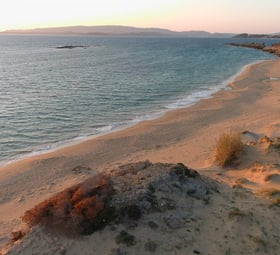
    Skala - Situated in the south of Kefalonia, Skala is a village location that is within walking distance of the sand dunes and seagrass meadows. The traditional small fishing village has now grown into a modern seaside town. The beautiful sandy beach and crystal clear water make it one of the most popular beaches in Kefalonia.

    In Skala, the program studies the Posidonia oceanica seagrass meadows and the sand dunes along southeast Kefalonia within the Skala and Mounda beaches. Specifically, the location focus for the project is the coastal and nearshore marine zone of the Mounda Peninsula.

    Svoronata - Located close to the capital of Argostoli, this field station is within walking distance to the touristic Ammes beach. This quaint beach town comes with everything you need such as mini markets, restaurants and a swimming pool nearby. The local bus stops daily to provide transport for volunteers into and out of Argostoli for leisure activities.

    For those joining in Svoronata, research work on the sand dunes and seagrass meadows is focussed on Ammes Beach. This is a 5 minute walk from the Volunteer House. A key difference between the 2 field stations is that coastal bird surveys are only conducted in Svoronata. They will take place in key monitoring areas and contribute to Cornell University’s e-Bird Citizen Science database. Volunteers will perform timed transects and report incidental sightings of coastal and pelagic birds.

    In both field stations, in-water seagrass meadow surveys remain a core shift activity. Seagrass meadows are a larger carbon sink than the rainforest and play a critical role in mitigating climate change. They form an important ecosystem, providing habitats and nursery grounds for many marine animals as well as other organisms. Sand dunes and their vegetation form a dynamic barrier between sea and land and a specialized ecosystem that is impacted by development and accelerated erosion.

    The coastal and marine study areas will be mapped with a drone at regular intervals. Volunteers will not need to have drone skills but will have an opportunity to learn some of the latest uses of drones for environmental science. Surveys over the sea will help locate seagrass meadows and plan snorkel surveys. On the shore, sand dunes will be surveyed by drone to create both topographic and three-dimensional maps, which will help study the ecosystem and track changes over time.

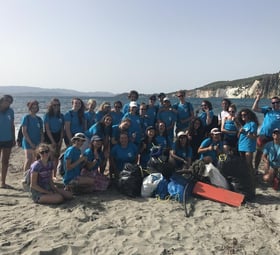
    Snorkelling teams will survey the nearshore area to collect geotagged photographs of the seagrass meadows. These will later be analysed to identify species, the types of meadows, and their current state as well as changes over time. The coastal sand dunes will be mapped and studied with beach profile and species identification surveys. The current state of the dunes will be studied, as well as their trends over time. The presence of plastics and other detrimental factors in both the marine and the coastal ecosystem will be recorded, and some shifts will focus on collecting those for recycling or disposal.

    Participants in the Greece volunteer program will contribute their time and skills to help collect vital data and help support critical marine conservation work and understand how marine ecosystems are impacted by direct human activities and by climate change. Data collected by the project will help create one of the most detailed datasets on the coastal and marine ecosystems in the area.


    OTHER THINGS TO CONSIDER VOLUNTEERING IN GREECE

    Project Focus - This program is very much focused on conservation activities rather than a traditional gap year/volunteer travel experience. This involves working early morning starts and late afternoon shifts daily. There is plenty of downtime, but the team does expect people to be punctual and join all their assigned shifts. You need to have a big passion for marine and coastal conservation and use this as the main motivation for joining the trip. The vast majority of participants have a wonderful experience, but a small number of people can find the program to lack the cultural and travel balance that our other destinations offer.

    Cycling (Skala Only) - The fieldwork covers a range of sand dunes that spans over a large area across the Skala and Mounda beaches. Both beaches are located under 2km from the volunteer accommodation and you will make the short distance to each project site on bikes. Therefore, volunteers must be comfortable cycling a bike on hilly terrain and be able to walk the beaches on hot days. You will always cycle as part of a team leaving at scheduled times. Moreover, you can use your free time to hop on the bike and explore the local area further. Volunteers will be given a bicycle safety briefing. Helmets and safety vests are required and provided. Cycling is only permitted during daylight hours.

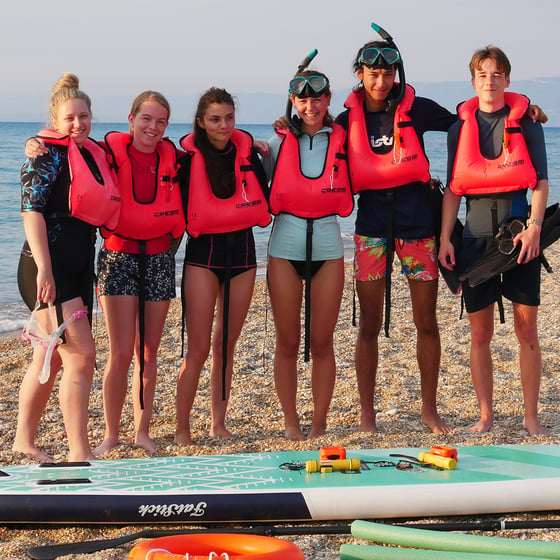
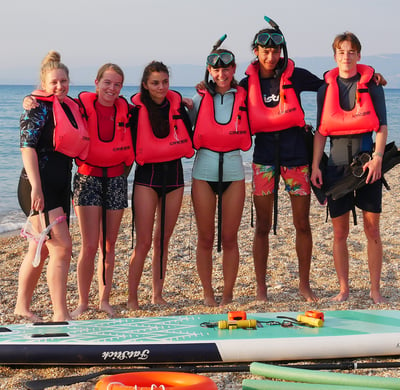
    Swimming and Snorkelling - As most afternoon volunteer activities involve you being in the sea, participants joining this program must be confident swimmers and previous snorkelling experience is highly recommended. Participants must bring their own correctly fitted mask and snorkel to the program. Furthermore, such equipment should be trialled before arriving to Greece in either pool or open water setting. It is recommended that volunteers bring their own fins, although they can be provided by the local team if required. A wet suit is optional. During snorkel survey shifts, volunteers will snorkel within a pre-determined area and will be monitored by a safety supervisor on a paddleboard. The safety supervisor will accompany the research team throughout their in-water shift. All team members will wear a life jacket provided and will rest on land mid-shift before finishing the remaining shift in the sea. All snorkel shifts are weather-dependent and will be cancelled if the sea conditions are deemed unsafe.

    Volunteering with Friends - You are welcome to join the Greece marine and coastal conservation volunteer program with a friend. You can highlight this in the special requirements of the online application. Subsequently, our team can ensure you stay in the same accommodation and project location. Moreover, they will do their best to give you both the same free days each week. However, it is important to note that there is a large range of fieldwork covered each day. Consequently, it is not always possible for our team to place you with your friend in each fieldwork setting.

    Days Off - Your project work in Skala runs for 6 days in your first week and for 5 days in your remaining weeks. This project runs 7 days a week so volunteers are assigned different days off to ensure the project always runs. Therefore, it is likely that your days off will vary across the week and not necessarily be consecutive days off.

    In Svoronata, your project work runs for 5 days each week. The group will usually have the same days off. However, these days off may not be the same days off each week. The team aim for the days off to take place on the windiest days in the week to help prevent any shift cancellations during the working days.

    You are welcome to relax and hang out at the volunteer accommodation on your days off. However, most participants will use this time to travel and explore the island. Check out our Greece Weekend Travel Guide for top tips on how to spend your free days.

    Typisk dag

    YOUR VOLUNTEER ROLE & TYPICAL WORK DAY

    As a volunteer in Greece on the marine and coastal conservation program, there is a range of conservation activities you will engage with. This is all focussed on protecting the seagrass meadows and sand dune habitats within the Skala and Svoronata regions.

    You ...

    Typisk dag

    YOUR VOLUNTEER ROLE & TYPICAL WORK DAY

    As a volunteer in Greece on the marine and coastal conservation program, there is a range of conservation activities you will engage with. This is all focussed on protecting the seagrass meadows and sand dune habitats within the Skala and Svoronata regions.

    You will begin your conservation activities on the day after your arrival and orientation. Your first few days on the volunteer project will be full of hands-on learning. This will be under the guidance of experienced field assistants. You will quickly get acquainted with all aspects of the fieldwork.

    Volunteers will be getting involved with hands-on research that will allow them to demonstrate a standard scientific methodology that can be used in the field. Working with others during their time means they will be building on their teamwork and leadership skills. They will understand the importance of protecting the dune and Posidonia ecosystems around Kefalonia. In addition, will have a clearer understanding of current climate concerns and the impact these can have on both marine and terrestrial environments. This information learnt will allow them to pass on details to others and spread public awareness of current issues.

    Volunteers will split most of their time between exploring the Posidonia meadows and understanding the extensive dune systems found. While surveying both areas, volunteers will be looking into what lives within the systems, creating topographies, and understanding the pressures both ecosystems face. In addition to this, volunteers will be working to keep the beaches of Kefalonia free from trash and debris, as well as taking part in drone surveys and reviewing the footage once the flight is complete. Those joining in the Svoronata field station will also conduct coastal bird surveys.

    Most mornings will involve an early start and will usually be spent on the in-water seagrass studies and Posidonia surveys at each location. Specifically, capturing geotagged photos of seagrass meadows with data reviewed, collected and entered into the database. In the afternoons, volunteers will spend more time on the dunes. For instance, conducting sand dune habitat surveys, vegetation studies, species identification and beach litter collections.

    Other activities across the day include assisting our drone pilot in surveying sand dunes and then reviewing the drone footage to identify threats and problems. Volunteers will also receive training sessions in utilising GPS systems, data entry and photo classifications.

    There will be free time every day and most evenings where volunteers can relax or take part in various activities including film and quiz nights. There will be 1 day off for volunteers in the first week and then 2 days off for the remaining weeks. Those who join at the Svoronata field station will always receive 2 days off each week. Volunteers will be expected to work around 6 hours each day across early morning and afternoon shifts.


    Fritidsaktiviteter

    Your days off are your time to explore the wonders of Kefalonia. Whether you are looking for a relaxing weekend by the beach in Myrtos Beach, some adventure activities, or a more cultural experience in Fiskardo – Greece has it all. As a volunteer in Greece, our team both welcomes and encourages ...

    Fritidsaktiviteter

    Your days off are your time to explore the wonders of Kefalonia. Whether you are looking for a relaxing weekend by the beach in Myrtos Beach, some adventure activities, or a more cultural experience in Fiskardo – Greece has it all. As a volunteer in Greece, our team both welcomes and encourages participants to explore the island’s wonderful treasures. They will be very happy to help you plan your travel opportunities and outline any travel tips.

    Moreover, should you want to embark on personal travel after your time on the project is finished then you are encouraged to spend an extra few days in Kefalonia to explore the island.

    During your first week, there is lots of information and processes to learn quickly with many workshops and seminars to enjoy. Therefore, you will only have 1 day off in your first week. In Svoronata, volunteers typically have 2 days off in their first week. All field station locations will usually enjoy 2 days off per week for the remaining time.

    As the project runs 7 days a week, volunteers are assigned different days off to ensure the project runs at all times. Therefore, it is likely that your days off will vary across the week and not necessarily be consecutive days off. However, participants in Svoronata will typically enjoy the same days off together each week.

    Krav

    Krav

    Minimumsalder: 18 år

    For at kunne deltage i programmet skal du være mindst 18 år gammel på programmets startdato. Der kan være undtagelser, hvis du kan give tilladelse fra din(e) værge(r), eller hvis du ledsages af dine forældre.

    Sprogfærdigheder

    Du skal kunne tale Engelsk (basic level)

    Nationalitetsrestriktioner

    Ingen begrænsninger. Hjælpende hænder fra hele verden er velkomne.

    Andre færdigheder

    You should also be physically fit, as volunteering overseas can be quite strenuous. If you have any medical/mental health conditions that may affect your participation overseas then these must be declared to us during your online application.

    Hvad er inkluderet

    Hvad er inkluderet

    Tjenester på stedet

    • Accommodation 
    • Airport Pick Up & Drop Off
    • Transport to Project
    • In-Country Orientation
    • 24 Hour Support

    Afhentning i lufthavnen i Kefallinia Airport

    You should arrive into Kefalonia International Airport (airport code EFL) on Thursday. Where possible, your flight should arrive into Kefalonia before 6pm so that you can partake in the evening orientation.

    Indkvartering

    During your time on the Greece volunteer program, you will live in a Volunteer House in Kefalonia. This will be in either Skala or Svoronata. Specifically, volunteers will share an apartment in a large villa or apartment complex. 

    The Volunteer House is located close to he main project sites onthe nearby beaches. Subsequently, use your free time to swim, sunbathe and relax on the beaches. On a similar note, the team will arrange a social evening at the houses once a week for volunteers to enjoy.

    Each Volunteer House is located a short journey away from local restaurants mini-marts and pool areas. You’ll be living with other volunteers from around the world, so you’ll make plenty of friends along the way!

    The accommodation is comfortable and clean, fitting up to 6 people per room in shared bedrooms with bunk beds. All accommodation comes equipped with electricity, basic cooking facilities, fridges, a small communal area and hot water. As the hot water is powered by solar energy, this is usually only available during certain hours of the day. The bathrooms are shared, each with a shower and western style toilet.

    There is a washing machine available for when you complete volunteer work in Greece. It costs around 3 Euro per wash and washing lines are also provided. A sleeping bag can be rented locally for 10 EUR if needed. In general, the accommodation tends to be quite cool across most parts of the day. Wi-Fi is usually available in communal areas. However, this is limited to support instant messaging and social media and will be quite intermittent. You can easily pick up a local SIM card or head to a local cafe to get online.

    Field assistants will also live at the houses when you volunteer in Greece. This ensures you have round the clock support and security. You will either cycle, walk or receive a minivan transfer to and from your fieldwork setting each day.


    Internetadgang

    God adgang til projektområdet
    Du behøver ikke at betale noget endnu

    Hvad er IKKE inkluderet?

    Hvad er IKKE inkluderet?

    Mad og drikkevarer

    Mad, snacks og drikkevarer koster ekstra.

    Flybilletter

    Den nærmeste lufthavn er Kefallinia Airport (EFL) i Kefallinia. Vi hjælper dig med at finde billige flybilletter til Grækenland. FINDE BILLIGE FLYBILLETTER

    Rejseforsikring

    At rejse til udlandet er et eventyr, og det er altid bedst at være forberedt. Pludselig sygdom eller skade, aflysning eller tyveri - en rejseforsikring til Grækenland giver sikkerhed og er en fordel at have. FÅ ET TILBUD

    Vacciner

    Hvis du har til hensigt at blive frivillig i Grækenland, bør du søge lægehjælp, før du begynder din sociale rejse. Tjek dine krævede vaccinationer for Grækenland. VACCINE CHECKER

    Oplysninger ved ankomst

    The Skala and Svoronata field locations begin on select Thursdays of each month between May and September.
    Tilgængelighed
    Jan. Febr. Marts April Maj Jun Jul Aug. Sept. Okt. Nov. Dec.

    Programgebyrer

    $569 pr. uge 2 - 4 weeks Alder 18 - 50+

    Betalingsmetoder

    Visa Master Card Maestro American Express PayPal

    INGEN KREDITKORTGEBYRER


    Duration

    2 - 4 weeks

    Deposit

    Reserver din plads med et par klik og et lille, sikkert depositum. Du kan betale med kreditkort, PayPal eller andre praktiske metoder.


    Final Payment

    Du aftaler den endelige betalingsmetode med din lokale organisation under ansøgningsprocessen. Den endelige betaling forfalder først tættere på rejsens start.

    Du behøver ikke at betale noget endnu
    4,9
    Rejse-favorit
    En af de mest elskede frivillige oplevelser, ifølge rejsende

    Fotos af frivillige

    Placering

    Europa > Sydeuropa > Grækenland > Kefalonia

    Mød din projektkoordinator

    Josh
    1849
    reviews
    4,89
    Excellent
    2011
    Grundlagt

    Bekræftet

      Meget høj Svarrate
    Talte sprog: Engelsk
    Rejs sikkert ved at bruge Volunteer World til din kommunikation og dine bookinger. På den måde kan du drage fordel af Flex Option, Refund Guarantee og Resolution Support.

    Du er måske også interesseret i

    Kontakt til Josh
      Meget høj Svarrate
    Engelsk

    De flesta volontärer frågar om


    Har du fler frågor? Skicka ett meddelande till Josh
    Var snäll och dela inte personliga kontaktuppgifter

    Rejsedatoer

    1. - 1. Jan, 1

    Book med Flex Option!

    Vælg nye afrejsedatoer eller skift til et andet volontørprogram uden ekstra omkostninger inden for 12 måneder.

    Komplet støtte til alle frivillige!

    Det hjælper os med at drive vores platform og tilbyde vigtige tjenester som omfattende support, tilbagebetalingsgaranti, flexmulighed uden ombookingsomkostninger og prisgaranti. Dette inkluderer moms.

    Prisdetaljer