Detailed Description:
A Different Kind of Gap Year in Tanzania
The Diploma of Global Citizenship in Community Development – Youth Sports, Football & Wellness is a 12-week immersive Academy experience based in Arusha, northern Tanzania, combining meaningful international volunteering, practical youth development and sports coaching experience, Global Citizenship learning, personal development, cultural immersion and travel.
Think of it as travel, volunteering and learning all rolled into one.
For three months, Tanzania becomes home. You'll live alongside an international Academy cohort, spend your weekdays working consistently within a local school community, coach and mentor children and teenagers, support sports and wellness initiatives, learn from Tanzanian teachers and community partners, take part in practical workshops and cultural experiences, explore your own personal development and work towards a substantial Legacy Project with your placement.
Around all of that, you'll experience the reason Tanzania is such an extraordinary place to spend a gap year. There are safaris and mountains, waterfalls and coffee country, Swahili and local food, cultural experiences and weekend adventures, social nights in Arusha and an escape to the beaches of Zanzibar.
The experience is designed to be fun, social, adventurous and genuinely meaningful, while giving you something substantial to carry forward when you return home.
Alongside the Academy, you'll complete the academic requirements of the relevant Level 3 Diploma in Global Citizenship in Community Development, giving you an accredited outcome alongside three months of international practical experience.
Inspired by the Folk School Experience:
The Academy takes inspiration from the Scandinavian folk school concept: bringing young people together to live, learn, travel and grow through shared real-world experiences rather than making education something that only happens inside a classroom.
We've adapted that philosophy to something we know extremely well — international volunteering and community development in Tanzania.
After years of working with international volunteers, we've learned that ethical volunteering is a collaborative effort. Choosing an ethical, community-led organisation is incredibly important, but the volunteer themselves also plays a major role in whether their contribution is genuinely positive.
Working within another country and culture can be complicated. Development challenges are rarely caused by one simple problem with one obvious solution. They're often interconnected and influenced by economics, education, health, history, culture, access to opportunity, family structures and many other factors. Cultural expectations and ways of communicating can also differ significantly from what you're accustomed to at home.
That's why the Academy doesn't simply send you to a placement each morning.
We provide structured guidance and Global Citizenship education alongside your practical experience, helping you understand cultural context, question assumptions, explore root causes rather than only visible symptoms, build meaningful relationships and think critically about what responsible and sustainable contribution actually looks like.
The goal isn't to tell you what to think. It's to give you the tools, experiences and perspectives to think more deeply about the world you're experiencing firsthand.
Your Youth Sports, Football & Wellness Placement:
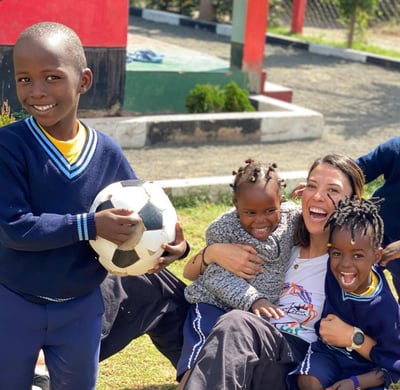
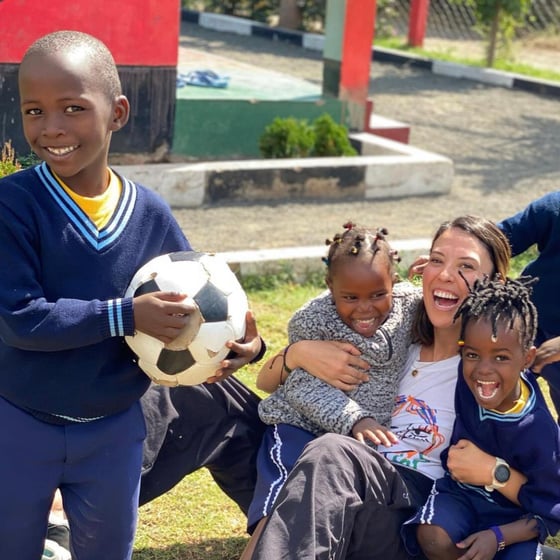
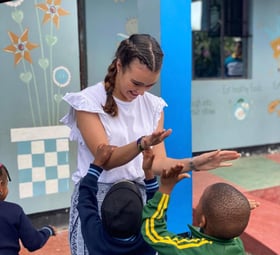
At the heart of your Academy experience is your consistent placement within a local school community in Arusha, working with more than 250 children and young people aged approximately 7–18.
Sport — and football in particular — is enormously popular in Tanzania. On school fields, community pitches and open spaces, you'll find young people playing whenever they have the opportunity. But enthusiasm and talent don't always translate into consistent access to organised sport, coaching, equipment or structured extracurricular activities.
Your role is to work alongside local teachers to help strengthen those opportunities.
Depending on the school timetable, age group and activities taking place, you might support football coaching, basketball, volleyball, athletics, fitness, movement activities, team games and recreational sport. With younger children, sessions may focus on coordination, participation and simply making movement fun. With older students, you may work more closely on football technique, fitness, teamwork, tactical understanding, match preparation and competitive development.
The placement also extends beyond the sports field.
You'll have opportunities to support practical, age-appropriate health and wellness education, exploring areas such as exercise, nutrition, hydration, healthy habits, the human body, sleep and recovery, physical wellbeing and the relationship between movement and health.
Over time, sport becomes much more than the activity itself. It becomes a way to work with young people around confidence, teamwork, communication, discipline, resilience, leadership, inclusion and belonging.
Become Part of the Program, Rather Than Passing Through It:
One of the biggest advantages of the Academy is time.
You're not spending a handful of afternoons running football drills before moving on.
During your first weeks, your priority is to learn. You'll meet teachers and students, understand the school's timetable and facilities, participate across different age groups and activities and begin seeing how sport currently fits within school life.
You'll learn what students enjoy, what equipment and resources are available, which activities already work well and where local staff would genuinely value additional support.
As the weeks progress, your role develops naturally.
You may begin taking greater responsibility for particular age groups, teams or activities, planning structured coaching sessions, helping students prepare for competitions, supporting wellness education or working alongside teachers to organise tournaments and sports events.
You'll also start noticing things that aren't immediately obvious.
Who participates consistently? Who doesn't? Are there barriers preventing some students from joining in? Are there opportunities to encourage greater participation among girls? What happens to talented players who want to progress? What activities can realistically continue when international volunteers aren't there?
That consistency allows you to move beyond simply running sports sessions and become a genuinely useful additional part of the school's wider youth-development program.
Global Citizenship in the Real World:
Your placement is only one part of what you're learning.
Throughout the Academy, you'll participate in practical Global Citizenship sessions exploring some of the bigger questions surrounding international volunteering and development.
What does ethical volunteering actually mean?
Why can well-intentioned projects sometimes cause unintended problems?
What's the difference between addressing a symptom and understanding its root cause?
How do culture, privilege, economics and access to opportunity influence the challenges communities experience?
What is capacity building?
How can international volunteers contribute without taking over?
And how do we ensure local people remain at the centre of decisions affecting their own communities?
These aren't designed as traditional classroom lectures. Sessions are interactive and closely connected to what you're actually experiencing in Tanzania.
Within the Sports pathway, those questions might emerge through something as simple as planning a football program. A great training schedule isn't particularly sustainable if it relies on equipment the school can't replace, coaching capacity that isn't available locally or a timetable that doesn't work once your cohort leaves.
Something you notice at placement might become part of a discussion the following afternoon. A workshop may cause you to reconsider something you interpreted very differently during your first week.
That's where the real learning happens: learning something, experiencing it, questioning it and then taking that new understanding back into the real world.
Work Towards a Meaningful Legacy Project:
As your understanding of the placement grows, you'll begin working collaboratively towards one of the most important components of the Academy: your Legacy Project.
Rather than arriving in Tanzania having already decided what a school or its students need, you'll spend your first weeks coaching, participating, observing and speaking with local teachers and young people.
Then you'll work alongside your placement and other Academy participants to develop something practical that can continue creating value after your cohort leaves.
Within Youth Sports, Football & Wellness, this could involve establishing a recurring football league, developing a term-long coaching program, creating age-specific sports activities, organising an inter-school tournament, strengthening opportunities for girls to participate, developing reusable coaching resources, creating a school sports calendar or producing practical health and wellness activities for teachers to continue using.
You'll have time to develop the idea, trial it in practice, gather feedback from students and staff, make changes and create a proper handover.
A sports program that works brilliantly while international volunteers are present but requires equipment, funding or outside support that isn't available afterwards isn't particularly useful in the long term.
The purpose isn't to produce something that simply looks impressive.
It's to contribute something realistic, culturally relevant, sustainable and genuinely useful to the teachers and students who will continue the work long after you return home.
Personal Growth Is Part of the Journey:
The Academy isn't only about what you can contribute to your placement.
It's also about what happens to you when you spend three months living far outside what is familiar.
For some participants, this will be their first significant experience travelling independently or living away from home. You'll navigate a different culture, build relationships with people from completely different backgrounds, solve problems independently and experience situations that challenge your expectations and perspectives.
Working with young people through sport also gives you plenty of opportunities to develop personally. You'll learn how to lead a group, communicate when language isn't always shared, adapt when a carefully planned activity doesn't work, motivate different personalities and find ways to include young people with very different levels of confidence and ability.
Weekly personal growth, self-awareness and reflection sessions give you space to process that journey.
Through workshops, group discussions and your Global Impact Journal, you'll explore topics such as confidence, independence, identity, values, resilience, communication, leadership, relationships, assumptions, cultural adjustment and future direction.
You won't simply finish the program having experienced a lot.
You'll have been encouraged to think about what those experiences actually taught you.
Learn From Tanzania:
Living somewhere for three months gives you opportunities that simply travelling through for a week cannot.
Cultural immersion is therefore woven throughout the Academy.
You'll learn practical Swahili, experience Tanzanian cooking, participate in cultural workshops and learn from local professionals, community partners and guest speakers.
Depending on the Academy schedule, cultural sessions may involve local art, music and dance, Maasai-led experiences, history, food and other opportunities to understand more about the communities and cultures surrounding you.
But some of the most important cultural learning will happen without you even noticing.
It happens when you begin using Swahili words naturally. When you learn your way around Arusha. When you understand something at placement that completely confused you during Week 1. When you've learned the names and personalities of the students you coach. When you discover your favourite local food, restaurant or café. When you make a cultural mistake and learn from it.
And, particularly on this pathway, when you realise that sometimes you don't need to speak exactly the same language to understand the universal frustration of missing an open goal.
Over time, Tanzania starts feeling less like somewhere you're visiting and more like somewhere you're actually living.
Experience One of the World's Great Adventure Destinations:
And while the Academy has genuine educational and community-development foundations, we haven't forgotten one very important thing:
You're spending your gap year in Tanzania.
Arusha places you at the heart of northern Tanzania, surrounded by some of East Africa's most extraordinary landscapes and within reach of safari country, Mount Meru, Kilimanjaro, waterfalls, coffee-growing regions, lakes, villages and cultural communities.
Travel and adventure are built into the Academy experience.
Across your program, you'll head out on regular Adventure Days and experiences that may include waterfall hikes, coffee plantations, Chagga cultural experiences, Maasai communities, cycling through villages and banana plantations, Lake Manyara, canoeing, hot springs, local food experiences, cultural activities and adventures around Mount Meru and the Kilimanjaro region.
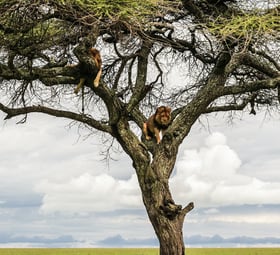
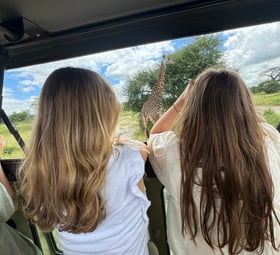
You'll also experience one of Tanzania's greatest adventures: safari through the northern safari circuit.
And during the 12-week Academy, you'll swap the northern highlands for an entirely different side of Tanzania with a trip to Zanzibar — experiencing Swahili coastal culture, the Indian Ocean and tropical island life with your Academy cohort.
You won't have to choose between doing something meaningful and having the adventure you dreamed about when you decided to take a gap year.
The two are intentionally built together.
Live the Experience Together:
A huge part of the Academy is the people you'll share it with.
Unlike our regular rolling volunteer programs, Academy participants join on set intake dates, meaning you'll arrive and progress through the experience alongside your cohort.
You'll live together at our comfortable Academy home base in Arusha while participants complete different internship pathways across community development, health, animal welfare and other fields.
Everyone's placement experience may be different, but you'll come together throughout the week for workshops, cultural activities, adventures and social events.
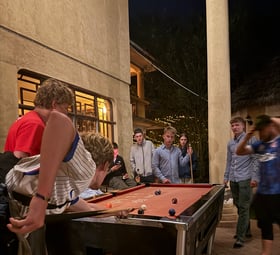
There'll be shared dinners, games and movie nights, free afternoons, weekend adventures, spontaneous plans and regular social events.
Thursday evening is generally our main debrief and social night, giving everyone a chance to catch up on the week before heading out or enjoying an event together at home.
And you'll still have independence.
There is downtime built into the program, particularly on Friday afternoons and Sundays, giving you time to explore Arusha, meet friends, relax, organise your own activities or occasionally do absolutely nothing.
Finish With Experience You Can Carry Forward:
Alongside everything you're experiencing in Tanzania, you'll be completing the academic components of your Level 3 Diploma in Global Citizenship in Community Development.
Subject to successfully completing the relevant academic requirements, you'll graduate with an accredited qualification alongside the practical experience accumulated throughout your three months in Tanzania.
You'll also develop skills that extend well beyond sport: leadership, youth engagement, coaching and facilitation, cross-cultural communication, teamwork, adaptability, critical thinking, program development, community engagement, independence and responsible international practice.
You'll gain practical experience working with children and teenagers across different ages and abilities, learn how to plan and adapt activities, explore the relationship between sport and positive youth development and gain insight into how sustainable community programs are developed alongside local partners.
For participants considering future study or careers in sports coaching, physical education, teaching, youth work, community development, health promotion, exercise and sports science, physiotherapy, psychology, social work, international development or related fields, the placement provides particularly relevant practical exposure.
But you don't need to be a professional coach, elite athlete or have your future figured out before you arrive.
A genuine interest in sport, young people and learning is a pretty good place to start.
That's part of what a gap year can be for.
Boresha Global Academy gives you three months to get out into the world, experience a different way of life, challenge yourself, learn from Tanzanian professionals and communities, make friends from around the world and discover more about where you might want to go next.
It's not just a sports placement. It's not just a course. And it's definitely not just a holiday.
It's a travel, volunteering and learning experience all in one — giving you the adventure of a gap year, the depth of living abroad, the purpose of meaningful youth and community engagement and the future value of an accredited Global Citizenship qualification.