Login

Seleccione las fechas de viaje para ver los precios

Brillante 4.72rating (255)

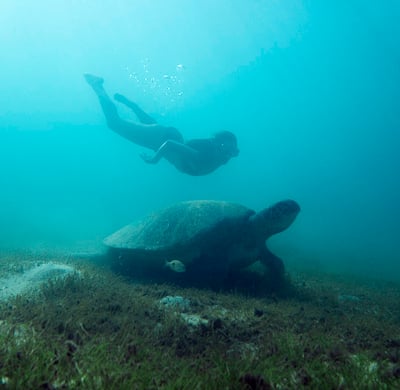
Turtle Conservation and Research

location
1 - 12 semanas  ·  Edad 18 - 50+
Verificado

Puntos Relevantes

  • Engage with the local people and provide education on protecting their environment
  • Perform seagrass surveys during low spring tides
  • Assist with beach clean ups and turtle watches

Puntos Relevantes

  • Engage with the local people and provide education on protecting their environment
  • Perform seagrass surveys during low spring tides
  • Assist with beach clean ups and turtle watches
  • Help create a new research database in a relatively unstudied area
  • Gain animal handling experience (nesting season only)

  • Todavía no tienes que pagar nada

    Especialmente adecuado para

    Edad 18+
    Solteros y solteras
    Parejas
    Grupos
    50+

    Sobre el programa

    From November to March, during the nesting season, you'll help identify and monitor key nesting sites, behaviour, and population changes.

    Active Turtle Surveys (ATS) and Facial Recognition Project – Volunteers conduct snorkelling-based turtle surveys in the bay in front of Turtle Cove. They identify and photograph turtles, collect data on species, size, behaviour, and habitat use, and contribute to the ‘In-Water Turtle ...

    Sobre el programa

    Active Turtle Surveys (ATS) and Facial Recognition Project – Volunteers conduct snorkelling-based turtle surveys in the bay in front of Turtle Cove. They identify and photograph turtles, collect data on species, size, behaviour, and habitat use, and contribute to the ‘In-Water Turtle Sightings’ database. Volunteers will also use the images of turtle facial patterns to help build a local and global database on the Internet of Turtles to allow researchers to track population trends and movement patterns over time.

    Seagrass Monitoring – Volunteers survey seagrass meadows, a vital foraging ground for Green Turtles, assessing density, health, and biodiversity to monitor environmental changes affecting marine ecosystems.

    Beach & Ocean Cleans – Regular coastal and snorkelling-based clean-ups help remove marine debris and plastic pollution from turtle habitats. Data is logged in the ‘CleanSwell’ app to contribute to global waste research.

    Artificial Reef (AR) Construction & Coral Planting – In collaboration with the Marine Conservation Program, volunteers engage in artificial reef maintenance and out-of-water coral planting sessions, learning coral restoration methodologies.

    Self-Directed Learning & Lectures – Volunteers participate in workshops and discussions covering topics such as:

    • Turtle biology, physiology, and behaviour

    • Marine ecology & conservation strategies

    • Waste management & ocean pollution

    • Coral reef restoration techniques

    • Climate change, El Niño, and human impacts on marine ecosystems

    Eco-Bricks & Waste Management – Volunteers repurpose non-recyclable plastic into eco-bricks for sustainable construction projects, reducing waste and promoting environmental responsibility.

    Bamboo Straws Project – To combat single-use plastics, volunteers harvest and craft bamboo straws, distributing them to local businesses and communities as a sustainable alternative.

    Malagasy Language & Cultural Lessons – Volunteers have the opportunity to learn Malagasy, improving communication with local community members and conservation partners.

    Scientific Paper Group Discussions – Volunteers analyze and discuss new marine conservation research, exploring how findings can be applied to MRCI’s conservation strategies.

    Ampohana Activities

    In Ampohana, in addition to the above activities, volunteers take part in specialised nesting and community engagement projects:

    Beach Patrols for Nesting & Hatching Turtles – Volunteers conduct hourly patrols during high tide to identify new turtle nests, monitor nesting behaviour, and protect hatchlings.

    Turtle Nesting Observations & Data Collection – Volunteers assist in recording species, nest location, environmental factors, and predation risks, sharing data with the Olive Ridley Project and Wildlife Conservation Society.

    Turtle Tracking Skills – Volunteers learn to identify and interpret animal tracks from turtles, crabs, dogs, and other wildlife, essential for nesting site monitoring and habitat protection.

    Turtle Nest Excavations & Hatchling Success Surveys – After hatchlings emerge, volunteers conduct nest excavations to record hatching success rates, deformities, and evidence of predation.

    Turtle Nest Protection – Volunteers take an active role in protecting nests, which may include constructing barriers, monitoring temperature conditions, and relocating at-risk nests.

    English Teaching & Marine Biology Lessons – At the Ampohana school, volunteers teach English with a marine conservation focus, raising awareness about turtle conservation, marine ecosystems, and sustainability.

    Nesting Activities on Nosy Komba When Needed

    While most turtle nesting activities occur in Ampohana, when we receive reports of nesting turtles or active nests on Nosy Komba, volunteers will conduct nesting surveys, data collection, and protection efforts there as well. This ensures that conservation work is not restricted to a single location and can respond dynamically to turtle activity in the region.


    Location

    Nosy Komba, a charming island off the northwest coast of Madagascar, is known for its lush greenery, stunning beaches, and vibrant coral reefs. Often referred to as “Lemur Island,” it is home to a thriving population of lemurs that roam freely. The island’s picturesque villages are inhabited by friendly locals who practice traditional Malagasy crafts and fishing. Our location is fairly remote, being a 30 minute hike over rocky terrain or accessible by boat.

    Día típico

    Each program generally includes morning and afternoon activities. After dinner, we hold a briefing to discuss the activities for the following day.

    NOTE: The schedule may vary widely depending on the project, tides, and other factors for that day.

    Sample Schedule:

    • 06:00-08:00: Breakfast at the camp ...

    Día típico

    Each program generally includes morning and afternoon activities. After dinner, we hold a briefing to discuss the activities for the following day.

    NOTE: The schedule may vary widely depending on the project, tides, and other factors for that day.

    Sample Schedule:

    • 06:00-08:00: Breakfast at the camp prepared by our in-house cooks
    • 08:00-11:30: Morning activities on the project
    • 12:00: Lunch at the camp prepared by our in-house cooks
    • 13:30: Afternoon activities on the project
    • 16:00-17:00: Volunteer activities for the day usually conclude
    • 18:00: Dinner at the camp prepared by our in-house cooks
    • 18:45: Board briefing to review activities for the following day

    NOTE: There will be varying amounts of downtime during the listed morning and afternoon program activities depending on the day and project.


    Actividades de tiempo libre

    Volunteers have weekends off and can explore various areas of Nosy Komba and the nearby islands during their free time. While volunteers must organize these trips independently, contact information from past volunteers is available at the camp, providing guidance on how to arrange excursions and ...

    Actividades de tiempo libre

    Volunteers have weekends off and can explore various areas of Nosy Komba and the nearby islands during their free time. While volunteers must organize these trips independently, contact information from past volunteers is available at the camp, providing guidance on how to arrange excursions and whom to book through.

    Popular activities and destinations include:

    • Lokobe Forest Reserve
    • Discovery Scuba Dive (with MRCI)
    • Tanikely Natural Reserve
    • Visits to Nosy Iranja or Nosy Sakatia (for swimming and snorkeling)
    • Whale Shark Watching (seasonal from September to November)
    • Sacred Tree or Sacred Waterfall on Nosy Be
    • Hiking up Mount Passot on Nosy Be
    • Visiting Lemur Land Park on Nosy Be or the Lemur Park in Ampang Village on Nosy Komba
    • Ankarana National Park
    • Amber Mountain National Park
    • Plantations on the mainland in the city of Ambanja
    • The city of Diego Suarez

    Requisitos

    Requisitos

    Edad mínima: 18 años

    Para participar en el programa debes tener al menos 18 años en la fecha de inicio del programa. Puede haber excepciones si muestras el permiso de tu(s) tutor(es) legal(es) o si vas acompañado de tus padres.

    Conocimientos lingüísticos

    Tienes que hablar (nivel básico) Inglés

    Verificación de antecedentes penales

    obligatorio

    Restricciones de nacionalidad

    Sin restricciones. Las manos amigas de todo el mundo son bienvenidas.

    Tiempo dedicado

    Necesitaremos tu ayuda los Lunes, Martes, Miércoles, Jueves y Viernes

    Servicios incluidos

    Servicios incluidos

    Servicios in situ

    • Accommodation
    • 3 meals p/day weekdays / 2 meals p/day weekends
    • Arrival airport transfer (Sat/Sun arrivals)
    • 1 day orientation
    • Daily transportation to project
    • In country 24/7 support & emergency assistance
    • Fundraising support
    • University course credits (where applicable)
    • Certificate of Completion

    Recogida en el aeropuerto Fascene Airport

    You must arrive to Fascene Airport (NOS) airport before 12 noon, on the Sunday before your program, in order to go straight to the island. 

    The last boat departs from Nosy Be to Nosy Komba at approximately 3pm daily, so you need to arrive before 12pm to be able to go directly to camp.

    Volunteers arriving between 12 PM and 7 PM on Sunday will be transported from the airport to a hotel/accommodation of your choice in Hellville, but the overnight stay will be at your own cost. You will be able to meet the team at a nearby cafe in Nosy Be the next morning (Monday) and the team will escort you to the boat across to camp on Nosy Komba.

    If you are arriving before 12pm on Saturday, you can still get picked up from Nosy Be airport and be taken stright to the island but will need to pay an additional charge for the Saturday night accommodation.

    Alojamiento

    The primary camp, is located on Nosy Komba Island, about 6 miles from Nosy Be, where the international airport is situated. Our facilities include a main house, staff accommodation, and a dining area, along with cold water showers and flush toilet units. You will stay in single gender open air huts, with two to three double bunks in each. Private room upgrades are also available for an additional cost (subject to availability).

    Every other week on the forest program, volunteers may conduct overnight guided walks in Lokobe Reserve. Accommodation is basic, with tented beach camps on the forest edge. Volunteers can upgrade at an additional cost to private tents with mattresses or private bungalows, subject to availability.

    Volunteers need to bring their own bedding (thin sheet), pillows, pillowcases, bath towels, mosquito nets, and a lightweight sleeping bag (this is suggested for the cooler months of June to August). Outside of these times you can get away with just a thin sheet as it is hot and humid in Madagascar. 

    Power for lights is supplied by solar panels, with a backup generator for the local team that runs 1-2 hours per week. The camp has limited power points available for charging devices and since there is no other electricity at camp, we recommend volunteers bring solar chargers for their devices and to minimise the use of electronic devices. The accommodation is accessible by boat or a 30-minute walk across rocky terrain from the village. WiFi can be found in the local village, and you can also purchase a local SIM card with data when you arrive in Madagascar. The main house accommodates senior staff and serves as a meeting place for volunteers during the day. Large decks line the front of the main house, complete with hammocks, bean bags, and benches. There is also a work area for volunteers, as well as lockable storage boxes available for each hut to store small valuables. Volunteers should bring a padlock to secure personal items in their luggage when not in use.

    Please conserve power and water as much as possible during your stay. This includes not leaving lights on unnecessarily, limiting showers to one per day, and turning off the water when not in direct use (e.g., while brushing teeth or lathering up in the shower).


    Private Room Upgrade: please contact us directly for options and pricing. 

    *Please note: Upgrade prices can change, so please check the price with us first

    Comida y bebida

    Volunteers are served three meals per day, prepared in the traditional Madagascan style by an on-site Malagasy cook.

    Meals are tasty but may be more basic than what you are used to, with rice served most meals. Breakfast ranges from pancakes to eggs or bread with condiments. Lunch is typically rice or pasta-based, while dinner is usually rice with beans and a sauce. Meals will generally include chicken, zebu (beef), or fish, along with vegetables. For programs where you will be away from camp during lunch can arrange for a packed lunch through the local team the night before. Please keep in kind supplies in Madagascar are limited, and meals will change seasonally depending on the ingredients available on Nosy Be.

    Please note that the local team cannot cater to special dietary requirements or requests. Vegans can eat the vegetarian meals, but will may need to buy extra food off site. We ask volunteers to be flexible or prepared to supplement the provided food. If supplementing food, be aware that there is no refrigerator, and the kitchen is not available for volunteer use as it is a traditional kitchen. Volunteers can store non-perishable items at camp or eat out at local restaurants. A small canteen is available on Nosy Komba where volunteers can purchase snacks. Snacks should be stored in containers located in the dining area.

    Todavía no tienes que pagar nada

    ¿Qué NO está incluido?

    ¿Qué NO está incluido?

    Acceso a Internet

    Lo sentimos, no hay acceso en el lugar del proyecto

    Boletos de avión

    El aeropuerto más cercano es Fascene Airport (NOS) en Nossi-be. Te ayudamos a encontrar vuelos baratos a Madagascar. ENCONTRAR VUELOS BARATOS

    Seguro de viaje

    Ir al extranjero es una aventura y siempre es mejor estar preparado. Enfermedad o lesión repentina, cancelación o robo: un seguro de viaje para Madagascar proporciona seguridad y es una ventaja tenerlo. OBTENER UN PRESUPUESTO

    Vacunas

    Si tiene intención de realizar un voluntariado en Madagascar, debe solicitar asesoramiento médico antes de iniciar su viaje social. Comprueba las vacunas que necesitas para Madagascar. COMPROBADOR DE VACUNAS

    Detalles a la llegada

    Program starts every 1st & 3rd Monday of each month. Arrivals on Sat/ Sun. If arriving on Sat, an extra night is charged.

    Disponibilidad
    Enero Feb. Marzo Abr. Mayo Jun Jul Agosto Set. Oct. Nov. Dic.

    Cuotas del programa

    $683 tarifa semanal 1 - 12 semanas Edad 18 - 50+

    Métodos de pago

    Visa Master Card Maestro American Express PayPal

    SIN GASTOS DE TARJETA DE CRÉDITO


    Duración

    1 - 12 semanas

    Depósito

    Reserve su plaza con unos pocos clics y un pequeño depósito seguro. Puede pagar con tarjeta de crédito, PayPal u otros métodos convenientes.


    Pago final

    Acordarás el método de pago final con tu organización local durante el proceso de solicitud. Este pago final solo deberá efectuarse cuando se acerque el inicio del viaje.

    Todavía no tienes que pagar nada
    4,7
    Top selección
    Una de las mejores elecciones del Mundo de los Voluntarios, según los viajeros
    •
    2025
    I supported a loving team with daily tasks such as keeping the enclosures clean, shredding antelopes and feeding the kittens. Comments on ...
    •
    2025
    Very well organised, had no problem checking in. The work was so nice and the people were wonderful. Staff is also there to help out with ...
    Sarah Damaschin

    School Construction

    Ubicación


    Conoce a tu coordinador de proyecto

    Lauren
    255
    reviews
    4,72
    Brillante
    1989
    Fundada

    Verificado

      Ratio de respuesta muy alto
    Idiomas hablados: Inglés
    Viaja con seguridad utilizando Volunteer World para tus comunicaciones y reservas. De este modo, podrás beneficiarte de la Opción Flex, la Garantía de Reembolso y la Asistencia para Resoluciones.

    También te puede interesar

    Contacto Lauren
      Ratio de respuesta muy alto
    Inglés

    La mayoría de los voluntarios preguntan por


    ¿Tienes más preguntas? Envía un mensaje a Lauren
    Por favor, no compartas datos de contacto personales
    Seleccione las fechas de viaje para ver los precios

    ¡Reserva con la opción Flex!

    Elije nuevas fechas de salida o cambia a un programa de voluntariado diferente sin costes adicionales en un plazo de 12 meses.

    Apoyo completo a todos los voluntarios

    Esto nos ayuda a gestionar nuestra plataforma y a ofrecer servicios esenciales como asistencia completa, garantía de reembolso, opción flexible sin costes de cambio de reserva y garantía de precio. Esto incluye el IVA.

    Detalles del precio