Login

Seleccionar datas de viagem para ver preços

Extraordinário 4.90rating (8)

Native Forest Conservation in a Kiwi Sanctuary

location
2 - 26 semanas  ·  Idade 18 - 50+
Verificado

Destaques

  • Learn how to protect endangered species
  • Get real life experience in the conservation field
  • Experience living in a rain forest

Destaques

  • Learn how to protect endangered species
  • Get real life experience in the conservation field
  • Experience living in a rain forest
  • Live off grid in a sustainable way
  • Connect with like-minded people

  • Ainda não tens de pagar nada

    Especialmente adequado para

    Idade 18+
    Solteiros
    Casais
    Grupos

    Sobre o programa

    Help protect this beautiful jungle-like forest and to create a safe environment for the kiwi!

    Across New Zealand, an estimated 27 kiwi are killed by introduced predators every week. Pupu Rangi is one of the organizations working to change that number. Predators - stoats, possums, and rats - arrived recently with humans in a world where the kiwi lived in forests with no mammals for over 80 ...

    Sobre o programa

    Across New Zealand, an estimated 27 kiwi are killed by introduced predators every week. Pupu Rangi is one of the organizations working to change that number. Predators - stoats, possums, and rats - arrived recently with humans in a world where the kiwi lived in forests with no mammals for over 80 million years. Today, these introduced species are modifying the landscape and they are endangering the survival of 75% of the New Zealand native species.  

    Pupu Rangi is a 100-hectare off-grid sanctuary on the Kauri Coast, Northland — 250 km from the nearest city, 50 km from the nearest supermarket, and 1.5 km from the nearest neighbour. A maximum of eight participants at any one time are doing serious conservation work to protect all native species that live within. This is not an injured wildlife sanctuary near a city. It is an off grid camp next to forests where no one has walked in generations. You will be among the first people to enter it.

    You should come and join us!

    What you can expect

    The Pupu Rangi Nature Sanctuary welcomes you to this place of learning: about the forest and its creatures, about conservation, about what is important in life, and about yourself. You will be challenged on many fronts: living off-the-grid, working in a dense rainforest forest, questioning the need for many of the things that we take for granted. You will meet people from various countries and different backgrounds and together with them you will experience something that is rare these days: the expanse of an uncharted forest which you and your fellow volunteers will help preserve.

    While at the sanctuary you will have the opportunity to learn about different aspects of life (living in tune with nature, discovering what is really important to you, what other cultures value most), to get some practical skills (planning, setting priorities, using creativity to find solutions within the available means), to learn about New Zealand native species and the different ways to protect it, to understand what it takes to live in a sustainable way, and to explore the attractions in the surrounding region. Body and mind will both be exercised and enriched.

    The program

    This program has three components: the conservation work that we do in the forest, the manual work that we do around the sanctuary, and the sightseeing that we do around the region.

    Volunteer work

    Some of the tasks that you will complete are:

    • cutting and marking tracks
    • installing, refilling, and monitoring bait stations
    • installing and monitoring traps
    • kiwi, kokako, and rodent monitoring
    • seed collection
    • weed control and planting of native plants
    • data entry

    The conservation tasks that we perform in our sanctuary and on the behalf of the Department of Conservation (DOC) are performed at a professional level, and you will receive the training necessary to reach the required high standard. 

    Week 1–2: You learn the protocols. Navigate the dense forest, look after your safety, predator control, trail camera kiwi monitoring using DOC methodology. You'll be working alongside an experienced conservationist from day one — not observing.

    Week 3–4: You know the forest. You're running trap checks by yourself, you can confidently go further in the forest, you spend the nights alone in the forest listening for kiwi. Participants consistently say week three is when the experience changes.

    Week 5+: For those who want to go further, extended stays and formal internship pathways are available — including a university placement letter and skills log.

    Manual work

    The manual work part of the program refers mostly to the activities that we have to perform to maintain and enhance the living area. It is most likely that most of the tasks that you will have to perform will be new to you. We will train you and you will use your creativity and previous skills to find ways of completing the tasks.

    Tasks include:

    • weeding and maintaining the herb garden
    • building maintenance tasks (i.e. painting walls, setting up walls)
    • landscaping
    • chopping wood
    • general help around the place

    Previous volunteers helped us paint the accommodation buildings, start a herb garden, paved a patio area, built sheds, erected fences, and built an outdoor bath.

    Every month, week, and day has its own target tasks to complete be it monitoring, track cutting, or some facility improvement. In general, we aim to find a balance between the conservation and maintenance tasks.

    Relaxation

    The third component of the program consists of the relaxation activities that are so important to recharge one's batteries. We believe that it is important for each volunteer to see the extent of their contribution in the wider context of the Kauri Coast region. We are also proud of the beauty of this land and it will be our pleasure to share it with you. 

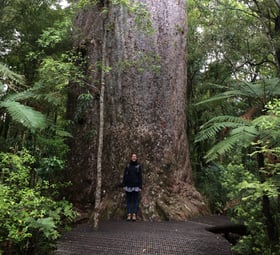
    At night we might go on a safari looking for kiwi, these three hour night walks are an amazing opportunity to hear the sounds of the forest and let the stars guide us. Sometimes we also go deep in our forest to visit the glowworms that live near one of the waterfalls. There is nothing as magic as sitting in the dark by the creek and watch the tiny blue lights of these amazing creatures. One day a week we head to the lakes for some swimming or SUP practice, or we head for a long beach walk (or mountain climb), or we visit the amazing two thousand year old Tane Mahuta - the oldest and biggest tree in New Zealand.

    Why Pupu Rangi, not Australia or another New Zealand programme? Australia's conservation programmes put you near a city, caring for animals in enclosures. Other New Zealand programmes are city-based rotations in Auckland or Christchurch. Pupu Rangi is field conservation in the animals' actual wild habitat — predator control, kiwi monitoring, habitat management — in a forest closed to the public. The methodology you'll learn is used nowhere else on Earth.


    Dia típico

    Typical Day at Work 

    • 8am - 9am breakfast
    • 9am - 10am cleanup
    • 10am - 12pm morning working activity
    • 12pm - 1pm lunch/picnic
    • 1pm - 4pm afternoon working activity
    • 4pm - 6pm leisure activities (free time)
    • 6pm - 8pm dinner
    • 8pm - 10pm leisure activities (sunset watching, dusk bird chorus, and/or searching for ...

    Dia típico

    Typical Day at Work 

    • 8am - 9am breakfast
    • 9am - 10am cleanup
    • 10am - 12pm morning working activity
    • 12pm - 1pm lunch/picnic
    • 1pm - 4pm afternoon working activity
    • 4pm - 6pm leisure activities (free time)
    • 6pm - 8pm dinner
    • 8pm - 10pm leisure activities (sunset watching, dusk bird chorus, and/or searching for kiwis on a night safari) 
    Each working morning, depending on the weather, we clarify which tasks will be performed for the day. As a rule of thumb: if it is windy, we go in the forest (where there is protection and warmth), if it is calm, we stay in the living area. We always work in a group for safety and for the pleasure of each other's company.

    Please note that generally Monday is a day off. Depending on the weather, we will pick a day during the week during which we will go sightseeing around the region. 


    Actividades em tempo livre

    Due to our remote location, there are no opportunities to go to town or to the cinema during the free time. However, we have a cinema on site!

    During the free time, the volunteers are encouraged to explore our forest. 

    We always eat together and sometimes we invite the DOC rangers or the neighbours ...

    Actividades em tempo livre

    Due to our remote location, there are no opportunities to go to town or to the cinema during the free time. However, we have a cinema on site!

    During the free time, the volunteers are encouraged to explore our forest. 

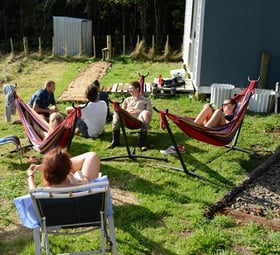
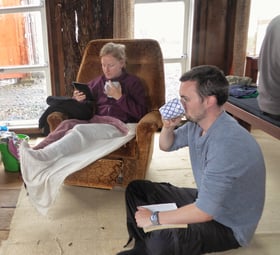
    We always eat together and sometimes we invite the DOC rangers or the neighbours for dinner. At night we can organize a movie night in our recreational room. 

    Monday is almost always a free day and the volunteers might have the opportunity to relax around the sanctuary.

    One day a week, we will head out on an adventure either to to swim at the nearby Kai Iwi lakes, go for a walk on the beach, or visit the two thousand year old kauri tree that lives close to the sanctuary.


    Requisitos

    Requisitos

    Idade mínima: 18 anos

    Para aderir ao programa é necessário ter pelo menos 18 anos de idade na data de início do programa. Poderá haver excepções se puder fornecer a permissão do(s) seu(s) tutor(es) legal(ais) ou se estiver acompanhado pelos seus pais.

    Habilidades linguísticas

    Precisa de falar Inglês (nível intermédio)

    Documentos Necessários

    Letter of Motivation (not AI generated) and CV

    Restrições de Nacionalidade

    Sem restrições. São bem-vindas as mãos que ajudam de todo o mundo.

    Outras Competências

    Building skills or outdoor guiding skills will be an asset

    Compromisso de tempo

    A tua mão auxiliadora será necessária na Terça-feira, Quarta-feira, Quinta-feira, Sexta-feira e Domingo de 09:00 - 16:00

    Serviços incluídos

    Serviços incluídos

    Serviços no local

    The fees include accommodation, meals, training, safety equipment, all transportation while with us, sightseeing trips around the region (to the lake, beach, etc...), and transfers to/from the closest town (Dargaville).

    Volunteers will be responsible for their flight costs, airport transfers, transportation to Dargavile, and accommodation before the start of the program.

    Alojamento

    Our facilities are basic but functional. One of the principles behind our sanctuary is to be as kind to the environment as possible. We are off-the-grid and we try to use as little resources as possible. The main facilities (kitchen, showers, dinning room) are housed in recycled shipping containers. We reuse as much second hand material or furniture as we can find. 

    The accommodation is in a small cabin and consists of bunk beds. 

    Small items can be washed in the sinks and we do a load of washing once a week. The cleaning of the facilities is part of the daily tasks that each participant has to complete.

    Please note that we are off the grid and do not have electricity or running water. It is best to work on the assumption that you will be able to charge your mobile phone only once a week. Please note that the use of mobile phones is not allowed between 8am and 4pm (except for taking pictures).

    Alimentos e Bebidas

    Breakfast, lunch, and dinner are provided. Most of the meat that we eat is organic beef, and we also have organic milk, butter, and cheese. We also have honey that was produced from the trees in our forest.

    We accommodate vegetarians and gluten free diets. Please note that we are not able to cater to vegans due to the high level of energy required by the participation in our program.

    The drinking water is from filtered rain water. Volunteers are encouraged to plan on bringing their own snacks or any non-alchoolic drinks that they will require.

    Please note that alcohol is not permitted in the sanctuary.

    We are not able to accommodate smokers due to the risk of fire to the forest.

    Acesso à Internet

    Acesso limitado no local do projecto
    Ainda não tens de pagar nada

    O que NÃO está incluído?

    O que NÃO está incluído?

    Recepção no aeroporto em Auckland Airport

    Uma recolha no aeroporto também não está incluída nas taxas do programa.

    Bilhetes de avião

    O aeroporto mais próximo é Auckland Airport (AKL) em Auckland. Ajudamo-lo a encontrar voos baratos para Nova Zelândia. ENCONTRAR VOOS BARATOS

    Seguro de viagem

    Ir para o estrangeiro é uma aventura e é sempre melhor estar preparado. Doença ou lesão súbita, cancelamento ou roubo - um seguro de viagem para Nova Zelândia proporciona segurança e é uma vantagem a ter. OBTENHA UMA COTAÇÃO

    Vacinas

    Se pretende ser voluntário em Nova Zelândia deve procurar aconselhamento médico antes de iniciar a sua viagem social. Verifique as vacinas necessárias para Nova Zelândia. VERIFICADOR DE VACINAS

    Detalhes à chegada

    The nature sanctuary is open from the first Monday in November until end of March. Due to our remote location, you can join (or leave) the program on Mondays only.

    The start dates are on the first and third Monday of every month.

    The pick-up time is on Mondays at 16:30 and the drop-off time is on Mondays at 7:00, both in Dargaville, the closest town with public transport


    Disponibilidade
    Jan Feb Março Abril Maio Jun Jul Ago Set Out Nov Dez

    Preços do programa

    $618 por semana 2 - 26 semanas Idade 18 - 50+

    Métodos de Pagamento

    Visa Master Card Maestro American Express PayPal

    SEM TAXAS DE CARTÃO DE CRÉDITO


    Duração

    2 - 26 semanas

    Depósito

    Reserve o seu lugar com apenas alguns cliques e um pequeno depósito seguro. Pode pagar com cartão de crédito, PayPal ou outros métodos convenientes.


    Pagamento final

    O método de pagamento final será acordado com a sua organização local durante o processo de candidatura. Este pagamento final só é devido mais perto do início da sua viagem.

    Ainda não tens de pagar nada

    4,90
    ・
    8 reviews

    Localização


    Conhece o teu coordenador de projeto

    Octavian
    8
    reviews
    4,90
    Extraordinário
    2008
    Fundada

    Verificado

      taxa de resposta excelente
    Línguas faladas: Inglês
    Viaja em segurança, utilizando a Volunteer World para as tuas comunicações e reservas. Desta forma, podes beneficiar da Opção Flex, da Garantia de Reembolso e do Apoio à Resolução.

    Pode também estar interessado em

    Contacto Octavian
      taxa de resposta excelente
    Inglês

    A maioria dos voluntários pergunta sobre


    Tens mais alguma pergunta? Envia uma mensagem para Octavian
    Por favor, não compartilhe dados de contato pessoal
    Seleccionar datas de viagem para ver preços

    Reserve com a Flex Option!

    Escolha novas datas de partida ou mude para um programa de voluntariado diferente, sem custos adicionais no prazo de 12 meses.

    Apoio completo para cada voluntário!

    Isto ajuda-nos a gerir a nossa plataforma e a oferecer serviços essenciais, tais como apoio abrangente, garantia de reembolso, opção flexível sem custos de remarcação e garantia de preço. Isto inclui IVA.

    Detalhes do preço