Why Madagascar
Madagascar separated from the African mainland roughly 88 million years ago, and almost everything living on it evolved in isolation afterwards. The result is one of the highest concentrations of endemic species anywhere on the planet, and one of the least completely documented. On an island like Nosy Komba, careful survey work still turns up things that are not properly recorded.
That is the work you are joining. Not conservation as a gesture, but the unglamorous, methodical business of finding out what is actually there.
The survey work
You will be trained in and then use a range of field techniques:
- Species identification and behavioural monitoring
- Population assessments and comparison studies
- Transect surveys and active forest searches, by day and by night
- Pitfall traps for ground-dwelling species
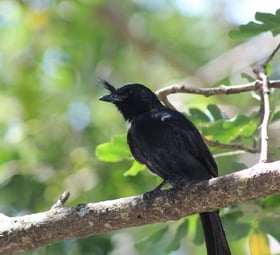
- Visual and vocal identification of birds, with the potential for mist-netting
- Invertebrate inventory work – specifically building a record of the island's butterfly and moth species
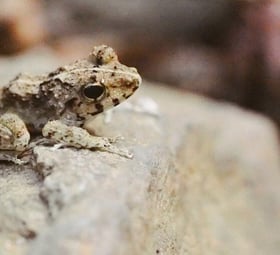
Nosy Komba's best-known residents are its black lemurs, which live in the forest immediately behind camp and are entirely habituated to people. Chameleons, geckos, boa constrictors and a great deal of birdlife are all within walking distance.
Mangrove reforestation
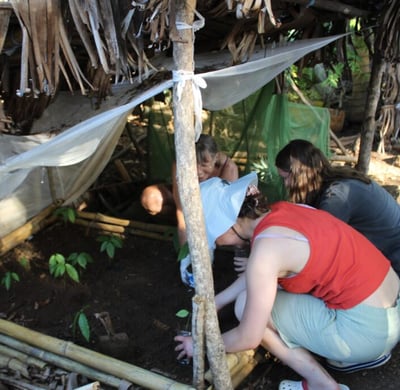
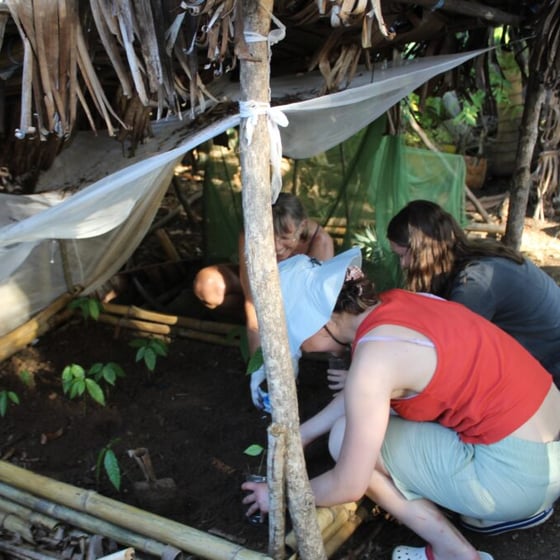
A core part of the forest programme is restoring and expanding mangrove ecosystems by planting seedlings on a seasonal basis. Mangroves matter disproportionately: they protect coastlines from erosion and storms, provide nursery habitat for an enormous range of marine species, and sequester carbon at rates that outstrip most terrestrial forest. It is muddy, physical work and among the most directly useful things you will do here.
Training and supervision
You are trained on arrival and work under professional conservationists throughout. No scientific background is required – plenty of volunteers arrive with none – but if you are studying biology, ecology or environmental science, this is genuine field experience for a CV.