Login

Wähle deine Reisedaten, um einen Preis zu sehen

Herausragend 4.90rating (8)

Native Forest Conservation in a Kiwi Sanctuary

location
2 - 26 Wochen  ·  Alter 18 - 50+
Verifiziert

Highlights

  • Learn how to protect endangered species
  • Get real life experience in the conservation field
  • Experience living in a rain forest

Highlights

  • Learn how to protect endangered species
  • Get real life experience in the conservation field
  • Experience living in a rain forest
  • Live off grid in a sustainable way
  • Connect with like-minded people

  • Du musst noch nichts bezahlen

    Besonders geeignet für

    Alter 18+
    Alleinreisend
    Pärchen
    Gruppen

    Über das Programm

    Help protect this beautiful jungle-like forest and to create a safe environment for the kiwi!

    Across New Zealand, an estimated 27 kiwi are killed by introduced predators every week. Pupu Rangi is one of the organizations working to change that number. Predators - stoats, possums, and rats - arrived recently with humans in a world where the kiwi lived in forests with no mammals for over 80 ...

    Über das Programm

    Across New Zealand, an estimated 27 kiwi are killed by introduced predators every week. Pupu Rangi is one of the organizations working to change that number. Predators - stoats, possums, and rats - arrived recently with humans in a world where the kiwi lived in forests with no mammals for over 80 million years. Today, these introduced species are modifying the landscape and they are endangering the survival of 75% of the New Zealand native species.  

    Pupu Rangi is a 100-hectare off-grid sanctuary on the Kauri Coast, Northland — 250 km from the nearest city, 50 km from the nearest supermarket, and 1.5 km from the nearest neighbour. A maximum of eight participants at any one time are doing serious conservation work to protect all native species that live within. This is not an injured wildlife sanctuary near a city. It is an off grid camp next to forests where no one has walked in generations. You will be among the first people to enter it.

    You should come and join us!

    What you can expect

    The Pupu Rangi Nature Sanctuary welcomes you to this place of learning: about the forest and its creatures, about conservation, about what is important in life, and about yourself. You will be challenged on many fronts: living off-the-grid, working in a dense rainforest forest, questioning the need for many of the things that we take for granted. You will meet people from various countries and different backgrounds and together with them you will experience something that is rare these days: the expanse of an uncharted forest which you and your fellow volunteers will help preserve.

    While at the sanctuary you will have the opportunity to learn about different aspects of life (living in tune with nature, discovering what is really important to you, what other cultures value most), to get some practical skills (planning, setting priorities, using creativity to find solutions within the available means), to learn about New Zealand native species and the different ways to protect it, to understand what it takes to live in a sustainable way, and to explore the attractions in the surrounding region. Body and mind will both be exercised and enriched.

    The program

    This program has three components: the conservation work that we do in the forest, the manual work that we do around the sanctuary, and the sightseeing that we do around the region.

    Volunteer work

    Some of the tasks that you will complete are:

    • cutting and marking tracks
    • installing, refilling, and monitoring bait stations
    • installing and monitoring traps
    • kiwi, kokako, and rodent monitoring
    • seed collection
    • weed control and planting of native plants
    • data entry

    The conservation tasks that we perform in our sanctuary and on the behalf of the Department of Conservation (DOC) are performed at a professional level, and you will receive the training necessary to reach the required high standard. 

    Week 1–2: You learn the protocols. Navigate the dense forest, look after your safety, predator control, trail camera kiwi monitoring using DOC methodology. You'll be working alongside an experienced conservationist from day one — not observing.

    Week 3–4: You know the forest. You're running trap checks by yourself, you can confidently go further in the forest, you spend the nights alone in the forest listening for kiwi. Participants consistently say week three is when the experience changes.

    Week 5+: For those who want to go further, extended stays and formal internship pathways are available — including a university placement letter and skills log.

    Manual work

    The manual work part of the program refers mostly to the activities that we have to perform to maintain and enhance the living area. It is most likely that most of the tasks that you will have to perform will be new to you. We will train you and you will use your creativity and previous skills to find ways of completing the tasks.

    Tasks include:

    • weeding and maintaining the herb garden
    • building maintenance tasks (i.e. painting walls, setting up walls)
    • landscaping
    • chopping wood
    • general help around the place

    Previous volunteers helped us paint the accommodation buildings, start a herb garden, paved a patio area, built sheds, erected fences, and built an outdoor bath.

    Every month, week, and day has its own target tasks to complete be it monitoring, track cutting, or some facility improvement. In general, we aim to find a balance between the conservation and maintenance tasks.

    Relaxation

    The third component of the program consists of the relaxation activities that are so important to recharge one's batteries. We believe that it is important for each volunteer to see the extent of their contribution in the wider context of the Kauri Coast region. We are also proud of the beauty of this land and it will be our pleasure to share it with you. 

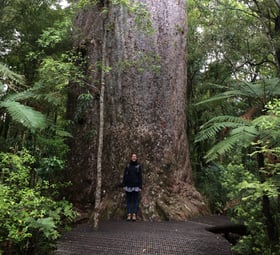
    At night we might go on a safari looking for kiwi, these three hour night walks are an amazing opportunity to hear the sounds of the forest and let the stars guide us. Sometimes we also go deep in our forest to visit the glowworms that live near one of the waterfalls. There is nothing as magic as sitting in the dark by the creek and watch the tiny blue lights of these amazing creatures. One day a week we head to the lakes for some swimming or SUP practice, or we head for a long beach walk (or mountain climb), or we visit the amazing two thousand year old Tane Mahuta - the oldest and biggest tree in New Zealand.

    Why Pupu Rangi, not Australia or another New Zealand programme? Australia's conservation programmes put you near a city, caring for animals in enclosures. Other New Zealand programmes are city-based rotations in Auckland or Christchurch. Pupu Rangi is field conservation in the animals' actual wild habitat — predator control, kiwi monitoring, habitat management — in a forest closed to the public. The methodology you'll learn is used nowhere else on Earth.


    Tagesablauf

    Typical Day at Work 

    • 8am - 9am breakfast
    • 9am - 10am cleanup
    • 10am - 12pm morning working activity
    • 12pm - 1pm lunch/picnic
    • 1pm - 4pm afternoon working activity
    • 4pm - 6pm leisure activities (free time)
    • 6pm - 8pm dinner
    • 8pm - 10pm leisure activities (sunset watching, dusk bird chorus, and/or searching for ...

    Tagesablauf

    Typical Day at Work 

    • 8am - 9am breakfast
    • 9am - 10am cleanup
    • 10am - 12pm morning working activity
    • 12pm - 1pm lunch/picnic
    • 1pm - 4pm afternoon working activity
    • 4pm - 6pm leisure activities (free time)
    • 6pm - 8pm dinner
    • 8pm - 10pm leisure activities (sunset watching, dusk bird chorus, and/or searching for kiwis on a night safari) 
    Each working morning, depending on the weather, we clarify which tasks will be performed for the day. As a rule of thumb: if it is windy, we go in the forest (where there is protection and warmth), if it is calm, we stay in the living area. We always work in a group for safety and for the pleasure of each other's company.

    Please note that generally Monday is a day off. Depending on the weather, we will pick a day during the week during which we will go sightseeing around the region. 


    Freizeitaktivitäten

    Due to our remote location, there are no opportunities to go to town or to the cinema during the free time. However, we have a cinema on site!

    During the free time, the volunteers are encouraged to explore our forest. 

    We always eat together and sometimes we invite the DOC rangers or the neighbours ...

    Freizeitaktivitäten

    Due to our remote location, there are no opportunities to go to town or to the cinema during the free time. However, we have a cinema on site!

    During the free time, the volunteers are encouraged to explore our forest. 

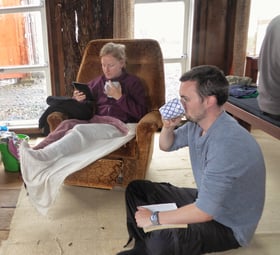
    We always eat together and sometimes we invite the DOC rangers or the neighbours for dinner. At night we can organize a movie night in our recreational room. 

    Monday is almost always a free day and the volunteers might have the opportunity to relax around the sanctuary.

    One day a week, we will head out on an adventure either to to swim at the nearby Kai Iwi lakes, go for a walk on the beach, or visit the two thousand year old kauri tree that lives close to the sanctuary.


    Voraussetzungen

    Voraussetzungen

    Mindestalter: 18 Jahre

    Um an diesem Programm teilzunehmen, musst du zu Programmbeginn mindestens 18 Jahre alt sein. Es kann Ausnahmen geben, wenn du die Erlaubnis deines/r Erziehungsberechtigten vorlegen kannst oder wenn du von deinen Eltern begleitet wirst

    Sprachkenntnisse

    Du brauchst folgende Sprachkenntnisse: Englisch (Fortgeschritten)

    Benötigte Unterlagen

    Letter of Motivation (not AI generated) and CV

    Staatszugehörigkeit

    Es gibt keine Beschränkungen. Helfende Hände aus aller Welt sind willkommen.

    Andere Fähigkeiten

    Building skills or outdoor guiding skills will be an asset

    Arbeitszeiten

    Deine Hilfe wird an folgenden Tagen benötigt: Dienstag, Mittwoch, Donnerstag, Freitag und Sonntag von 09:00 - 16:00

    Leistungen

    Leistungen

    Dienstleistungen vor Ort

    The fees include accommodation, meals, training, safety equipment, all transportation while with us, sightseeing trips around the region (to the lake, beach, etc...), and transfers to/from the closest town (Dargaville).

    Volunteers will be responsible for their flight costs, airport transfers, transportation to Dargavile, and accommodation before the start of the program.

    Unterkunft

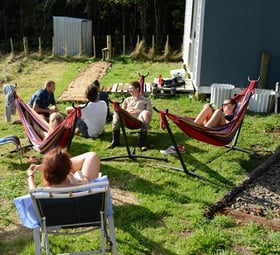
    Our facilities are basic but functional. One of the principles behind our sanctuary is to be as kind to the environment as possible. We are off-the-grid and we try to use as little resources as possible. The main facilities (kitchen, showers, dinning room) are housed in recycled shipping containers. We reuse as much second hand material or furniture as we can find. 

    The accommodation is in a small cabin and consists of bunk beds. 

    Small items can be washed in the sinks and we do a load of washing once a week. The cleaning of the facilities is part of the daily tasks that each participant has to complete.

    Please note that we are off the grid and do not have electricity or running water. It is best to work on the assumption that you will be able to charge your mobile phone only once a week. Please note that the use of mobile phones is not allowed between 8am and 4pm (except for taking pictures).

    Verpflegung

    Breakfast, lunch, and dinner are provided. Most of the meat that we eat is organic beef, and we also have organic milk, butter, and cheese. We also have honey that was produced from the trees in our forest.

    We accommodate vegetarians and gluten free diets. Please note that we are not able to cater to vegans due to the high level of energy required by the participation in our program.

    The drinking water is from filtered rain water. Volunteers are encouraged to plan on bringing their own snacks or any non-alchoolic drinks that they will require.

    Please note that alcohol is not permitted in the sanctuary.

    We are not able to accommodate smokers due to the risk of fire to the forest.

    Internetzugriff

    Limitierte Verbindung vor Ort
    Du musst noch nichts bezahlen

    Was ist NICHT inklusive?

    Was ist NICHT inklusive?

    Abholung vom Flughafen Auckland Airport

    Das Abholen vom Flughafen ist auch nicht in den Programmgebühren enthalten.

    Flugtickets

    Der nächstgelegene Flughafen ist Auckland Airport (AKL) in Auckland. Wir helfen dir günstige Flüge nach Neuseeland zu finden. FINDE GÜNSTIGE FLÜGE

    Reiseversicherung

    Ins Ausland zu gehen ist ein Abenteuer, auf das man sich stets gut vorbereiten sollte. Plötzliche Krankheit oder Verletzung, Stornierung oder Diebstahl - eine Reiseversicherung für Neuseeland bietet die nötige Sicherheit. ANGEBOT EINHOLEN

    Impfungen

    Bevor du deine Freiwilligenarbeit in Neuseeland antrittst, solltest du dich noch einmal von deinem Arzt beraten lassen und deine erforderlichen Impfungen für Neuseeland überprüfen. IMPFSCHUTZ ÜBERPRÜFEN

    Informationen zur Anreise

    The nature sanctuary is open from the first Monday in November until end of March. Due to our remote location, you can join (or leave) the program on Mondays only.

    The start dates are on the first and third Monday of every month.

    The pick-up time is on Mondays at 16:30 and the drop-off time is on Mondays at 7:00, both in Dargaville, the closest town with public transport


    Verfügbarkeit
    Jan Feb Mär Apr Mai Jun Jul Aug Sep Okt Nov Dez

    Programmgebühren

    $618 / Woche 2 - 26 Wochen Alter 18 - 50+

    Zahlungsarten

    Visa Master Card Maestro American Express PayPal

    KEINE KREDITKARTENGEBÜHREN


    Dauer

    2 - 26 Wochen

    Anzahlung

    Reserviere Deinen Platz mit nur wenigen Klicks und einer kleinen, sicheren Anzahlung. Du kannst bequem mit Kreditkarte, PayPal oder anderen Zahlungsmethoden bezahlen.


    Ausstehende Zahlung

    Die Zahlungsweise für die Restzahlung vereinbarst Du während des Bewerbungsprozesses mit Deiner lokalen Organisation. Die Restzahlung wird erst später vor Reisebeginn fällig.

    Du musst noch nichts bezahlen

    4,90
    ・
    8 Bewertungen

    Lage


    Lerne deinen Koordinator kennen

    Octavian
    8
    Bewertungen
    4,90
    Herausragend
    2008
    Gegründet

    Verifiziert

      Ausgezeichnete Antwortrate
    Gesprochene Sprachen: Englisch
    Reise sicher, indem du Volunteer World für deine Kommunikation und Buchung nutzt. So profitierst du von der Flex Option, Refund Guarantee und Resolution Support.

    Das könnte dich auch interessieren

    Kontaktiere Octavian
      Ausgezeichnete Antwortrate
    Englisch

    Die meisten Freiwilligen erkundigen sich nach


    Hast du noch weitere Fragen? Schreibe Octavian eine Nachricht
    Bitte teile zur Sicherheit keine pers. Kontaktdaten
    Wähle deine Reisedaten, um einen Preis zu sehen

    Buche mit der Flex-Option!

    Wähle ein neues Abreisedatum oder wechsel zu einem anderen Freiwilligenprogramm ohne zusätzliche Kosten innerhalb von 12 Monaten.

    Umfassende Unterstützung für Freiwillige!

    Damit können wir unsere Plattform betreiben und wichtige Dienstleistungen wie umfassenden Support, Rückerstattungsgarantie, Flex-Option ohne Umbuchungskosten und Preisgarantie anbieten. Darin enthalten ist die Mehrwertsteuer.

    Einzelheiten zum Preis