Login

Selezionare le date di viaggio per vedere i prezzi

Eccellente 4.84rating (5)

Wildlife Conservation/Amazon Rainforest/Internship

location
2 - 12 settimane  ·  Età 18 - 50+
Verificato

Punti Salienti

  • Explore the Amazon Rainforest with other volunteers/interns!
  • Improve your Spanish skills with our 4 hours a week Spanish lessons!
  • Learn how to make artisanal chocolate!

Punti Salienti

  • Explore the Amazon Rainforest with other volunteers/interns!
  • Improve your Spanish skills with our 4 hours a week Spanish lessons!
  • Learn how to make artisanal chocolate!
  • Enjoy camping trips and the beautiful nature of the Amazon jungle!
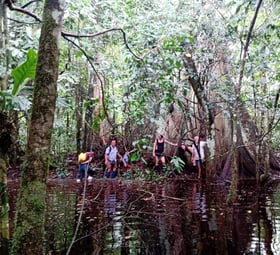
  • Visit Indigenous Communities, Boiling River, local plantations, crystal water streams and much more!

  • Non devi ancora pagare nulla

    Particolarmente adatto per

    Età 18+
    Singoli
    Coppie
    Gruppi
    50+

    Sul programma

    We will work on monitoring physical and biological variables and on the preservation of threatened species and protecting their ecosystems.

    Wildlife Conservation Internship:

    This is a special program for biologists and/or biology students.

    Individuals with specific knowledge in the field of Biology can support the organization by investigating and documenting different species of flora and fauna. We work in scientific research with ...

    Sul programma

    Wildlife Conservation Internship:

    This is a special program for biologists and/or biology students.

    Individuals with specific knowledge in the field of Biology can support the organization by investigating and documenting different species of flora and fauna. We work in scientific research with local professionals on monitoring physical and biological variables and on the preservation of threatened species and protecting their ecosystems. The relevant information and findings will be displayed in a form of a report at iNaturalist website. This will contribute to the conservation of the biodiversity in the area as well as to global databases.


    Intern support

    The participation of interns represents a strategic component for the comprehensive management of the Ballesteros Concession Area and the Codo del Pozuzo Nature Reserve. This strengthens biodiversity monitoring and documentation capacity and generates high quality scientific information that supports conservation decision making. Their participation strengthens research through the development and application of methodologies, providing crucial data for the development of management plans and ecological restoration strategies, including reforestation projects in local schools. Furthermore, their involvement in environmental education programs facilitates the social appropriation of scientific knowledge, consolidating the link between science, conservation, and sustainable development.

    Our internship program at the Ballesteros Concession and Codo del Pozuzo Nature Reserve is a comprehensive experience that combines scientific research, community conservation, and professional training. The application of methodologies ensures reliable and useful information for the management of the conservation area. Collaboration between researchers, local communities, and interns strengthens the sustainability of the research work.


    Program Objectives

    General Objective:

    To strengthen biodiversity conservation in the Ballesteros Concession and the Codo del Pozuzo Nature Reserve through research and monitoring of wildlife flora and fauna, as well as through conservation and environmental education programs that integrate science and community participation to ensure sustainable ecosystem management.

    Specific objectives:

    • Assess the diversity and abundance of birdlife through systematic observations at sampling points during peak bird activity times, identifying resident and migratory species.

    • Generate information on the presence of medium and large sized mammals through footprint recording, plaster molds, and camera traps, as non-invasive methods that complement research and provide input for adaptive management.

    • Strengthen the technical capacities of interns in identification and conservation using mobile applications and digital records in iNaturalist website.

    • Monitor wildlife in plots and trails through taxonomic identification and phenological recording of ecologically and culturally important forest species.

    • Expand knowledge of nocturnal fauna through expeditions and acoustic recordings of birds and amphibians, as well as direct observation of mammals and arthropods, prioritizing cryptic and nocturnal species.

    • Integrate conservation activities with environmental education and responsible tourism, through hiking trails, excursions to viewpoints and waterfalls, and the use of digital tools that promote appreciation of natural heritage.


    Logistics

    Each workday involves traveling by motorcycle or tuk tuk (we provide helmet), followed by daily walks of approximately 1 to 2 hours from the town of Codo del Pozuzo to the sampling sites. This allows for preliminary observations of fauna and flora to be recorded along the route. Overnight stays at the work site are optional to facilitate access to more remote areas and optimize research time. Activities are supported using specialized materials, including:

    • Camera traps for passive recording of fauna.

    • Photographic camera

    • GPS for georeferencing

    • Flashlights for night observation

    • Sound recorders for recording wildlife vocalizations.

    • Binoculars/monocular

    • Clinometer to calculate tree heights and assess terrain slopes to classify habitats or sampling areas.

    • Portable environmental monitors for real-time measurement of environmental parameters such as temperature, humidity, wind speed, UV radiation, or CO₂ levels.

    • Portable water quality kits for analyzing parameters such as pH.

    • Entomological nets for capturing flying insects.

    • Botanical presses for collecting, pressing, and drying plant samples to properly preserve them for identification, cataloging, and taxonomic study, supporting research in botany, plant monitoring, and environmental education.

    • Entomological boxes and collection jars for storing and transporting insects or other small organisms collected in the field, keeping them in suitable conditions for subsequent analysis, conservation, or taxonomic identification in the laboratory.

    • Binocular microscopes for the analysis and processing of biological samples (blood, tissues, parasites, plants, etc.) under controlled laboratory conditions.

    • Modern translation devices for our biologist and for the interns in case they don't speak Spanish.

    • Field guides and cartographic materials for orientation and mobile applications. 


    Inventories by Taxonomic Group

    Mammals

    Monitoring of medium and large sized mammals will be carried out through a combination of direct and indirect sightings, complemented using strategically distributed camera traps, five for each habitat type assessed. Line transects measuring 1 to 2 km on sloping terrain will allow for systematic records of the fauna, optimizing the detection of tracks, footprints, scat, and other signs of presence. Assessments will be conducted during key times: 8:00 a.m.–11:00 a.m., coinciding with peak morning activity, and 6:00 p.m.–10:00 p.m., which encompass the beginning of twilight and nocturnal activity. This methodological design seeks to maximize the probability of detecting both diurnal and nocturnal species, ensuring representative and robust sampling for the analysis of the diversity and relative abundance of mammals in the study area.

    Birds

    Monitoring will be carried out using standardized methodologies that allow for a comprehensive characterization of species diversity and relative abundance. Count points with detection radius between 25 m and 100 m will be used, recording all birds seen or heard for periods of 10 to 15 minutes, facilitating comparisons between different habitats and environmental conditions. Additionally, linear transects of 2 to 4 km will be conducted at a steady pace during peak activity times (5:30 a.m.–10:00 a.m. and 4:30 p.m.–6:30 p.m.) to obtain data on species richness, frequency, and habitat use patterns. Mobile applications such as Merlin Bird ID and eBird will also be used; these applications are useful for recording birds in different types of vegetation. Finally, censuses will be conducted in permanent plots of 1 ha to 3 ha, where the composition and relative abundance of species will be recorded, providing key information on population dynamics and community structure over time.

    Amphibians

    Sampling will be conducted using Visual Encounter Surveys (VES), 5 m–10 m fixed-band transects, leaf litter plots, and diversion fences with pitfall traps, allowing for the recording of active and cryptic species. All records will be documented and uploaded to iNaturalist website for taxonomic verification and contribution to global databases.


    Reptiles

    Sampling will be conducted using nocturnal visual transects, systematically walking along trails and streams to record active individuals, effective for capturing terrestrial and aquatic species. In addition, direct observations will be made in bodies of water, tree trunks, shrubs, and other microhabitats to detect species associated with specific environments. All observations will be documented through photographs and field notes, contributing to the assessment of reptile species richness and habitat use patterns in the study area. They will be recorded on iNaturalist website.


    Giornata tipica

    Working Schedule

    Working hours are flexible and adapt to the intern's needs. Participation in field activities will be coordinated in a timely and concise manner, considering the weather conditions, which may modify the daily schedule. This allows for optimized monitoring tasks and ensures staff ...

    Giornata tipica

    Working Schedule

    Working hours are flexible and adapt to the intern's needs. Participation in field activities will be coordinated in a timely and concise manner, considering the weather conditions, which may modify the daily schedule. This allows for optimized monitoring tasks and ensures staff and interns safety.

    Morning shift

    • Site-specific bird monitoring: Systematic bird observation at various sampling points to assess diversity and abundance (5:30 a.m. – 9:00 a.m.).

    • Recording the tracks of medium and large sized mammals to obtain relevant data is a non-invasive technique that complements research and provides key input for the conservation and adaptive management of wildlife (8:00 a.m. – 11:30 a.m.).

    • Learn to identify and preserve terrestrial mammal footprints using plaster molds as an educational and scientific tool (9:00 am – 11:00 am)

    • Camera trap installation and inspection: Strategic placement to passively record the presence of terrestrial mammals and birds (8:00 am – 12:00 pm)

    • Walks along trails to detect wildlife, recording visual and auditory evidence (8:00 am – 12:00 pm)

    • Register on iNaturalist website: Digitally document at least one species per day, uploading photos and information to the collaborative scientific platform (8:00 am – 11:00 am)

    Afternoon shift

    • Botanical identification: Recognition of forest species with the help of SERFOR guides and taxonomic keys (2:00 pm – 4:00 pm)

    • Botanical inventories on trails: Plant identification with the help of mobile applications and compilation of lists for scientific purposes (2:00 pm – 4:00 pm)

    • Twilight bird watching: Species that increase their activity in the hours before dusk (5:00 pm – 6:00 pm)

    Night Shift

    • Nighttime amphibian and arachnid expeditions: Walk trails and paths using flashlights to record species of interest through active visual search (7:30 pm – 9:30 pm)

    • Nighttime wildlife observation: Identify nocturnal mammals and other nighttime organisms on each expedition (7:30 pm – 9:30 pm)

    • Record the sounds of nocturnal birds and amphibians using recorders or identification apps (7:00 pm – 9:00 pm)

    • Check camera traps to visualize animal behavior from photographs and videos captured (8:00 pm – 9:00 pm)


    Attività del tempo libero

    The following activities for volunteers are included:

    -Hiking at the Amazon rainforest - Swimming at local streams and rivers -Visit local plantations -Trek to local caves

    -Camping in the rainforest, fishing, bonfire, exploring, documenting, etc. - Fishing at local stream with local fisherman using a ...

    Attività del tempo libero

    The following activities for volunteers are included:

    -Hiking at the Amazon rainforest - Swimming at local streams and rivers -Visit local plantations -Trek to local caves

    -Camping in the rainforest, fishing, bonfire, exploring, documenting, etc. - Fishing at local stream with local fisherman using a net.


     Volunteers can also do the following activities during their free time:

     -Explore the Amazon rainforest - Play sports with locals such as soccer or volleyball - Fruit picking around the village - Bonfire around the Pachitea riverside - Fishing -Swimming - Birdwatching - Visit Austro-German Community (Included in package)


    Ayahuasca Ceremony with local shaman - Visit the Boiling River - Visit indigenous communities - Boat trips - Yoga, and more.                                  (Not included in package)


    Requisiti

    Requisiti

    Età minima: 18 anni

    Per partecipare al programma è necessario avere almeno 18 anni alla data di inizio del programma. Potrebbero esserci delle esenzioni se si è in grado di fornire il permesso del proprio tutore legale o se si è accompagnati dai propri genitori.

    Competenze linguistiche

    È necessario parlare di Inglese (livello intermedio)

    Requisiti di formazione

    Biololgy, Biotechnology, Environmental, Zoology, Botany a livello University

    Documenti necessari

    CV

    Restrizioni sulla nazionalità

    Nessuna restrizione. Gli aiuti da tutto il mondo sono benvenuti.

    Altre competenze

    -Photography -Team work -Introspection -Camping -Scout -First aid -Survival -Communication and navigation techniques

    Impegno di tempo

    Il vostro aiuto sarà richiesto lunedì, martedì, mercoledì, giovedì e venerdì

    Servizi inclusi

    Servizi inclusi

    Servizi in loco

    We are a non-profit organization and as such we do not distribute any surplus income as profit or dividends. Nonetheless, just as a for-profit organization, we have costs for our operations which we need to cover in order to be able to exist. By being a non-profit, we can keep costs down and make our placements more accessible than other programs. We aim to keep our operational costs as low as possible by working efficiently, ensuring that we can make a real and positive impact in the present and are able to keep the organization moving forward into the future. One of our main sources of regular income are the financial contributions from our volunteer/interns for their placements, without these we would not be able to pay our staff or sustain our organization. Your financial contribution also directly funds our projects, so you are having a positive impact just by signing up. 

    PROGRAM FEE INCLUDES:

    -Transportation from/to the airport of Pucallpa or bus station. This ride to/from our village takes 5 hours approximately.

    -Food (breakfast & lunch) from Monday to Friday.

    -Spanish lessons (4 hours a week). Volunteers/interns have the option to require more hours of Spanish lessons for an extra fee (US$10.00 dollars per extra hour).

    -Week Of Adventure Package: (5 trips to different spots in the rainforest including a camping trip). 

    -Volunteers will participate in our artisanal making chocolate workshop.

    -Fruit picking: Volunteers/interns will participate in fruit picking activities with our Crew.

    -Transportation fees during the Week of Adventure package are included.

    -Certificate of participation at NGO Semillas Life.

    Prelievo dall'aeroporto a Capitan Rolden Airport

    Our Personnel will meet volunteers/interns at David Abensur Rengifo airport or bus station in the city of Pucallpa and bring them to our village. We will provide a photo of the driver to the volunteers/interns so, they can recognize the driver. This ride from Pucallpa our village takes approximately 5 hours.

    Alloggio

    -Accommodation: Volunteer/interns stay in one of our shared huts (cabins).

    -A flushing toilette and shower are located in our backyard.        

    -We will provide photos of the accommodation if required. 

    -A kitchen is provided where volunteers/interns can prepare their own food at any time. 

    -Depending on availability, a bedroom can be shared by three/two volunteers/interns or private for one volunteer/intern. We provide a bed, mattress, bedsheets, blanket, pillow and mosquito net. We also provide hammocks for relaxing time as well as tents for camping trips. 

    -Wi Fi is provided 24/7 in our hut/cabin.

    Cibo e Bevande

    Food:


    Breakfast and lunch are provided from Monday to Friday.

    Breakfast: consists of coffee or milk, porridge, bread, butter, jam, eggs and fruits.

    Lunch: consists of one entry dish. it can be a soup or salad. The main course is served either with chicken, fish, beef, pork, etc. Refreshment juice is also served.

    Vegetarian and Vegan food can be prepared if required.

    Accesso a Internet

    Accesso limitato al sito del progetto
    Non devi ancora pagare nulla

    Cosa NON è incluso?

    Cosa NON è incluso?

    Biglietti aerei

    L'aeroporto più vicino è Capitan Rolden Airport (PCL) a Pucallpa. Vi aiutiamo a trovare voli economici per Perù. TROVARE VOLI ECONOMICI

    Assicurazione di viaggio

    Andare all'estero è un'avventura ed è sempre meglio essere preparati. Malattia o infortunio improvviso, annullamento o furto: un'assicurazione di viaggio per Perù offre sicurezza ed è un vantaggio da avere. OTTENERE UN PREZZO

    Vaccini

    Se avete intenzione di fare volontariato a Perù dovete chiedere un parere medico prima di iniziare il vostro viaggio sociale. Controllare le vaccinazioni richieste per Perù. CHECKER PER I VACCINI

    Dettagli all'arrivo

    Arrival & Orientation:

    Our Personnel will meet volunteers/interns at David Abensur Rengifo airport or bus station in the city of Pucallpa and bring them to our village. This ride from Pucallpa to our village, takes approximately 5 hours. We recommend volunteers/interns to arrive on weekends (Friday, Saturday, or Sunday) (optional), so together we can explore the village and get to know some of our village attractions before starting volunteering on Monday. 

    Volunteer / Interns schedule:

    Day One: Our local coordinator/staff will give volunteers/interns an orientation and will accompany them to their program. Volunteers/interns will be shown how to manage the commute (tuk tuks, walking, colectivos). Volunteers/interns will be introduced to the site director and discuss their role in the project.

    Disponibilità
    gen feb mar apr mag giu lug ago set ott nov dic

    Tariffe del programma

    $503 tariffe settimanali 2 - 12 settimane Età 18 - 50+

    Modalità di pagamento

    Visa Master Card Maestro American Express PayPal

    NESSUNA COMMISSIONE PER LA CARTA DI CREDITO


    Durata

    2 - 12 settimane

    Deposito

    Prenotate il vostro posto con pochi clic e un piccolo deposito sicuro. È possibile pagare con carta di credito, PayPal o altri metodi convenienti.


    Pagamento Finale

    Il metodo di pagamento finale verrà concordato con l'organizzazione locale durante il processo di candidatura. Il pagamento finale è dovuto solo in prossimità dell'inizio del viaggio.

    Non devi ancora pagare nulla

    4,84
    ・
    5 reviews

    Posizione

    America > Sud America > Perù > Codo Del Pozuzo, Puerto Inca, Huanuco

    Incontra il tuo coordinatore di progetto

    Christian
    5
    reviews
    4,84
    Eccellente
    2018
    Fondata

    Verificato

      Tasso di risposta buono
    Viaggia in sicurezza utilizzando Volunteer World per le tue comunicazioni e prenotazioni. In questo modo potrai beneficiare dell'Opzione Flex, della Garanzia di Rimborso e del Supporto alla Risoluzione.

    Potreste essere interessati anche a

    Contattare Christian
      Tasso di risposta buono

    La maggior parte dei volontari chiede


    Hai altre domande? Invia un messaggio a Christian
    Per favore, non condividere le informazioni di contatto
    Selezionare le date di viaggio per vedere i prezzi

    Prenota con l'opzione Flex!

    Scegliete nuove date di partenza o passate a un altro programma di volontariato senza costi aggiuntivi entro 12 mesi.

    Supporto completo per ogni volontario!

    Questo ci aiuta a gestire la nostra piattaforma e a offrire servizi essenziali come l'assistenza completa, la garanzia di rimborso, l'opzione Flex senza costi di riprenotazione e la garanzia di prezzo. L'IVA è inclusa.

    Detagli del prezzo