Login

Wähle deine Reisedaten, um einen Preis zu sehen

Ausgezeichnet 4.84rating (5)

Wildlife Conservation/Amazon Rainforest/Internship

location
2 - 12 Wochen  ·  Alter 18 - 50+
Verifiziert

Highlights

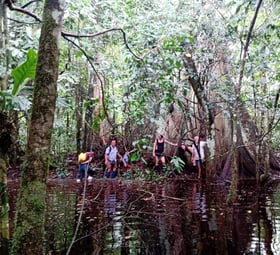
  • Explore the Amazon Rainforest with other volunteers/interns!
  • Improve your Spanish skills with our 4 hours a week Spanish lessons!
  • Learn how to make artisanal chocolate!

Highlights

  • Explore the Amazon Rainforest with other volunteers/interns!
  • Improve your Spanish skills with our 4 hours a week Spanish lessons!
  • Learn how to make artisanal chocolate!
  • Enjoy camping trips and the beautiful nature of the Amazon jungle!
  • Visit Indigenous Communities, Boiling River, local plantations, crystal water streams and much more!

  • Du musst noch nichts bezahlen

    Besonders geeignet für

    Alter 18+
    Alleinreisend
    Pärchen
    Gruppen
    50+

    Über das Programm

    We will work on monitoring physical and biological variables and on the preservation of threatened species and protecting their ecosystems.

    Wildlife Conservation Internship:

    This is a special program for biologists and/or biology students.

    Individuals with specific knowledge in the field of Biology can support the organization by investigating and documenting different species of flora and fauna. We work in scientific research with ...

    Über das Programm

    Wildlife Conservation Internship:

    This is a special program for biologists and/or biology students.

    Individuals with specific knowledge in the field of Biology can support the organization by investigating and documenting different species of flora and fauna. We work in scientific research with local professionals on monitoring physical and biological variables and on the preservation of threatened species and protecting their ecosystems. The relevant information and findings will be displayed in a form of a report at iNaturalist website. This will contribute to the conservation of the biodiversity in the area as well as to global databases.


    Intern support

    The participation of interns represents a strategic component for the comprehensive management of the Ballesteros Concession Area and the Codo del Pozuzo Nature Reserve. This strengthens biodiversity monitoring and documentation capacity and generates high quality scientific information that supports conservation decision making. Their participation strengthens research through the development and application of methodologies, providing crucial data for the development of management plans and ecological restoration strategies, including reforestation projects in local schools. Furthermore, their involvement in environmental education programs facilitates the social appropriation of scientific knowledge, consolidating the link between science, conservation, and sustainable development.

    Our internship program at the Ballesteros Concession and Codo del Pozuzo Nature Reserve is a comprehensive experience that combines scientific research, community conservation, and professional training. The application of methodologies ensures reliable and useful information for the management of the conservation area. Collaboration between researchers, local communities, and interns strengthens the sustainability of the research work.


    Program Objectives

    General Objective:

    To strengthen biodiversity conservation in the Ballesteros Concession and the Codo del Pozuzo Nature Reserve through research and monitoring of wildlife flora and fauna, as well as through conservation and environmental education programs that integrate science and community participation to ensure sustainable ecosystem management.

    Specific objectives:

    • Assess the diversity and abundance of birdlife through systematic observations at sampling points during peak bird activity times, identifying resident and migratory species.

    • Generate information on the presence of medium and large sized mammals through footprint recording, plaster molds, and camera traps, as non-invasive methods that complement research and provide input for adaptive management.

    • Strengthen the technical capacities of interns in identification and conservation using mobile applications and digital records in iNaturalist website.

    • Monitor wildlife in plots and trails through taxonomic identification and phenological recording of ecologically and culturally important forest species.

    • Expand knowledge of nocturnal fauna through expeditions and acoustic recordings of birds and amphibians, as well as direct observation of mammals and arthropods, prioritizing cryptic and nocturnal species.

    • Integrate conservation activities with environmental education and responsible tourism, through hiking trails, excursions to viewpoints and waterfalls, and the use of digital tools that promote appreciation of natural heritage.


    Logistics

    Each workday involves traveling by motorcycle or tuk tuk (we provide helmet), followed by daily walks of approximately 1 to 2 hours from the town of Codo del Pozuzo to the sampling sites. This allows for preliminary observations of fauna and flora to be recorded along the route. Overnight stays at the work site are optional to facilitate access to more remote areas and optimize research time. Activities are supported using specialized materials, including:

    • Camera traps for passive recording of fauna.

    • Photographic camera

    • GPS for georeferencing

    • Flashlights for night observation

    • Sound recorders for recording wildlife vocalizations.

    • Binoculars/monocular

    • Clinometer to calculate tree heights and assess terrain slopes to classify habitats or sampling areas.

    • Portable environmental monitors for real-time measurement of environmental parameters such as temperature, humidity, wind speed, UV radiation, or CO₂ levels.

    • Portable water quality kits for analyzing parameters such as pH.

    • Entomological nets for capturing flying insects.

    • Botanical presses for collecting, pressing, and drying plant samples to properly preserve them for identification, cataloging, and taxonomic study, supporting research in botany, plant monitoring, and environmental education.

    • Entomological boxes and collection jars for storing and transporting insects or other small organisms collected in the field, keeping them in suitable conditions for subsequent analysis, conservation, or taxonomic identification in the laboratory.

    • Binocular microscopes for the analysis and processing of biological samples (blood, tissues, parasites, plants, etc.) under controlled laboratory conditions.

    • Modern translation devices for our biologist and for the interns in case they don't speak Spanish.

    • Field guides and cartographic materials for orientation and mobile applications. 


    Inventories by Taxonomic Group

    Mammals

    Monitoring of medium and large sized mammals will be carried out through a combination of direct and indirect sightings, complemented using strategically distributed camera traps, five for each habitat type assessed. Line transects measuring 1 to 2 km on sloping terrain will allow for systematic records of the fauna, optimizing the detection of tracks, footprints, scat, and other signs of presence. Assessments will be conducted during key times: 8:00 a.m.–11:00 a.m., coinciding with peak morning activity, and 6:00 p.m.–10:00 p.m., which encompass the beginning of twilight and nocturnal activity. This methodological design seeks to maximize the probability of detecting both diurnal and nocturnal species, ensuring representative and robust sampling for the analysis of the diversity and relative abundance of mammals in the study area.

    Birds

    Monitoring will be carried out using standardized methodologies that allow for a comprehensive characterization of species diversity and relative abundance. Count points with detection radius between 25 m and 100 m will be used, recording all birds seen or heard for periods of 10 to 15 minutes, facilitating comparisons between different habitats and environmental conditions. Additionally, linear transects of 2 to 4 km will be conducted at a steady pace during peak activity times (5:30 a.m.–10:00 a.m. and 4:30 p.m.–6:30 p.m.) to obtain data on species richness, frequency, and habitat use patterns. Mobile applications such as Merlin Bird ID and eBird will also be used; these applications are useful for recording birds in different types of vegetation. Finally, censuses will be conducted in permanent plots of 1 ha to 3 ha, where the composition and relative abundance of species will be recorded, providing key information on population dynamics and community structure over time.

    Amphibians

    Sampling will be conducted using Visual Encounter Surveys (VES), 5 m–10 m fixed-band transects, leaf litter plots, and diversion fences with pitfall traps, allowing for the recording of active and cryptic species. All records will be documented and uploaded to iNaturalist website for taxonomic verification and contribution to global databases.


    Reptiles

    Sampling will be conducted using nocturnal visual transects, systematically walking along trails and streams to record active individuals, effective for capturing terrestrial and aquatic species. In addition, direct observations will be made in bodies of water, tree trunks, shrubs, and other microhabitats to detect species associated with specific environments. All observations will be documented through photographs and field notes, contributing to the assessment of reptile species richness and habitat use patterns in the study area. They will be recorded on iNaturalist website.


    Tagesablauf

    Working Schedule

    Working hours are flexible and adapt to the intern's needs. Participation in field activities will be coordinated in a timely and concise manner, considering the weather conditions, which may modify the daily schedule. This allows for optimized monitoring tasks and ensures staff ...

    Tagesablauf

    Working Schedule

    Working hours are flexible and adapt to the intern's needs. Participation in field activities will be coordinated in a timely and concise manner, considering the weather conditions, which may modify the daily schedule. This allows for optimized monitoring tasks and ensures staff and interns safety.

    Morning shift

    • Site-specific bird monitoring: Systematic bird observation at various sampling points to assess diversity and abundance (5:30 a.m. – 9:00 a.m.).

    • Recording the tracks of medium and large sized mammals to obtain relevant data is a non-invasive technique that complements research and provides key input for the conservation and adaptive management of wildlife (8:00 a.m. – 11:30 a.m.).

    • Learn to identify and preserve terrestrial mammal footprints using plaster molds as an educational and scientific tool (9:00 am – 11:00 am)

    • Camera trap installation and inspection: Strategic placement to passively record the presence of terrestrial mammals and birds (8:00 am – 12:00 pm)

    • Walks along trails to detect wildlife, recording visual and auditory evidence (8:00 am – 12:00 pm)

    • Register on iNaturalist website: Digitally document at least one species per day, uploading photos and information to the collaborative scientific platform (8:00 am – 11:00 am)

    Afternoon shift

    • Botanical identification: Recognition of forest species with the help of SERFOR guides and taxonomic keys (2:00 pm – 4:00 pm)

    • Botanical inventories on trails: Plant identification with the help of mobile applications and compilation of lists for scientific purposes (2:00 pm – 4:00 pm)

    • Twilight bird watching: Species that increase their activity in the hours before dusk (5:00 pm – 6:00 pm)

    Night Shift

    • Nighttime amphibian and arachnid expeditions: Walk trails and paths using flashlights to record species of interest through active visual search (7:30 pm – 9:30 pm)

    • Nighttime wildlife observation: Identify nocturnal mammals and other nighttime organisms on each expedition (7:30 pm – 9:30 pm)

    • Record the sounds of nocturnal birds and amphibians using recorders or identification apps (7:00 pm – 9:00 pm)

    • Check camera traps to visualize animal behavior from photographs and videos captured (8:00 pm – 9:00 pm)


    Freizeitaktivitäten

    The following activities for volunteers are included:

    -Hiking at the Amazon rainforest - Swimming at local streams and rivers -Visit local plantations -Trek to local caves

    -Camping in the rainforest, fishing, bonfire, exploring, documenting, etc. - Fishing at local stream with local fisherman using a ...

    Freizeitaktivitäten

    The following activities for volunteers are included:

    -Hiking at the Amazon rainforest - Swimming at local streams and rivers -Visit local plantations -Trek to local caves

    -Camping in the rainforest, fishing, bonfire, exploring, documenting, etc. - Fishing at local stream with local fisherman using a net.


     Volunteers can also do the following activities during their free time:

     -Explore the Amazon rainforest - Play sports with locals such as soccer or volleyball - Fruit picking around the village - Bonfire around the Pachitea riverside - Fishing -Swimming - Birdwatching - Visit Austro-German Community (Included in package)


    Ayahuasca Ceremony with local shaman - Visit the Boiling River - Visit indigenous communities - Boat trips - Yoga, and more.                                  (Not included in package)


    Voraussetzungen

    Voraussetzungen

    Mindestalter: 18 Jahre

    Um an diesem Programm teilzunehmen, musst du zu Programmbeginn mindestens 18 Jahre alt sein. Es kann Ausnahmen geben, wenn du die Erlaubnis deines/r Erziehungsberechtigten vorlegen kannst oder wenn du von deinen Eltern begleitet wirst

    Sprachkenntnisse

    Du brauchst folgende Sprachkenntnisse: Englisch (Fortgeschritten)

    Ausbildung

    Biololgy, Biotechnology, Environmental, Zoology, Botany auf University Niveau

    Benötigte Unterlagen

    CV

    Staatszugehörigkeit

    Es gibt keine Beschränkungen. Helfende Hände aus aller Welt sind willkommen.

    Andere Fähigkeiten

    -Photography -Team work -Introspection -Camping -Scout -First aid -Survival -Communication and navigation techniques

    Arbeitszeiten

    Deine Hilfe wird an folgenden Tagen benötigt: Montag, Dienstag, Mittwoch, Donnerstag und Freitag

    Leistungen

    Leistungen

    Dienstleistungen vor Ort

    We are a non-profit organization and as such we do not distribute any surplus income as profit or dividends. Nonetheless, just as a for-profit organization, we have costs for our operations which we need to cover in order to be able to exist. By being a non-profit, we can keep costs down and make our placements more accessible than other programs. We aim to keep our operational costs as low as possible by working efficiently, ensuring that we can make a real and positive impact in the present and are able to keep the organization moving forward into the future. One of our main sources of regular income are the financial contributions from our volunteer/interns for their placements, without these we would not be able to pay our staff or sustain our organization. Your financial contribution also directly funds our projects, so you are having a positive impact just by signing up. 

    PROGRAM FEE INCLUDES:

    -Transportation from/to the airport of Pucallpa or bus station. This ride to/from our village takes 5 hours approximately.

    -Food (breakfast & lunch) from Monday to Friday.

    -Spanish lessons (4 hours a week). Volunteers/interns have the option to require more hours of Spanish lessons for an extra fee (US$10.00 dollars per extra hour).

    -Week Of Adventure Package: (5 trips to different spots in the rainforest including a camping trip). 

    -Volunteers will participate in our artisanal making chocolate workshop.

    -Fruit picking: Volunteers/interns will participate in fruit picking activities with our Crew.

    -Transportation fees during the Week of Adventure package are included.

    -Certificate of participation at NGO Semillas Life.

    Abholung vom Flughafen Capitan Rolden Airport

    Our Personnel will meet volunteers/interns at David Abensur Rengifo airport or bus station in the city of Pucallpa and bring them to our village. We will provide a photo of the driver to the volunteers/interns so, they can recognize the driver. This ride from Pucallpa our village takes approximately 5 hours.

    Unterkunft

    -Accommodation: Volunteer/interns stay in one of our shared huts (cabins).

    -A flushing toilette and shower are located in our backyard.        

    -We will provide photos of the accommodation if required. 

    -A kitchen is provided where volunteers/interns can prepare their own food at any time. 

    -Depending on availability, a bedroom can be shared by three/two volunteers/interns or private for one volunteer/intern. We provide a bed, mattress, bedsheets, blanket, pillow and mosquito net. We also provide hammocks for relaxing time as well as tents for camping trips. 

    -Wi Fi is provided 24/7 in our hut/cabin.

    Verpflegung

    Food:


    Breakfast and lunch are provided from Monday to Friday.

    Breakfast: consists of coffee or milk, porridge, bread, butter, jam, eggs and fruits.

    Lunch: consists of one entry dish. it can be a soup or salad. The main course is served either with chicken, fish, beef, pork, etc. Refreshment juice is also served.

    Vegetarian and Vegan food can be prepared if required.

    Internetzugriff

    Limitierte Verbindung vor Ort
    Du musst noch nichts bezahlen

    Was ist NICHT inklusive?

    Was ist NICHT inklusive?

    Flugtickets

    Der nächstgelegene Flughafen ist Capitan Rolden Airport (PCL) in Pucallpa. Wir helfen dir günstige Flüge nach Peru zu finden. FINDE GÜNSTIGE FLÜGE

    Reiseversicherung

    Ins Ausland zu gehen ist ein Abenteuer, auf das man sich stets gut vorbereiten sollte. Plötzliche Krankheit oder Verletzung, Stornierung oder Diebstahl - eine Reiseversicherung für Peru bietet die nötige Sicherheit. ANGEBOT EINHOLEN

    Impfungen

    Bevor du deine Freiwilligenarbeit in Peru antrittst, solltest du dich noch einmal von deinem Arzt beraten lassen und deine erforderlichen Impfungen für Peru überprüfen. IMPFSCHUTZ ÜBERPRÜFEN

    Informationen zur Anreise

    Arrival & Orientation:

    Our Personnel will meet volunteers/interns at David Abensur Rengifo airport or bus station in the city of Pucallpa and bring them to our village. This ride from Pucallpa to our village, takes approximately 5 hours. We recommend volunteers/interns to arrive on weekends (Friday, Saturday, or Sunday) (optional), so together we can explore the village and get to know some of our village attractions before starting volunteering on Monday. 

    Volunteer / Interns schedule:

    Day One: Our local coordinator/staff will give volunteers/interns an orientation and will accompany them to their program. Volunteers/interns will be shown how to manage the commute (tuk tuks, walking, colectivos). Volunteers/interns will be introduced to the site director and discuss their role in the project.

    Verfügbarkeit
    Jan Feb Mär Apr Mai Jun Jul Aug Sep Okt Nov Dez

    Programmgebühren

    $503 / Woche 2 - 12 Wochen Alter 18 - 50+

    Zahlungsarten

    Visa Master Card Maestro American Express PayPal

    KEINE KREDITKARTENGEBÜHREN


    Dauer

    2 - 12 Wochen

    Anzahlung

    Reserviere Deinen Platz mit nur wenigen Klicks und einer kleinen, sicheren Anzahlung. Du kannst bequem mit Kreditkarte, PayPal oder anderen Zahlungsmethoden bezahlen.


    Ausstehende Zahlung

    Die Zahlungsweise für die Restzahlung vereinbarst Du während des Bewerbungsprozesses mit Deiner lokalen Organisation. Die Restzahlung wird erst später vor Reisebeginn fällig.

    Du musst noch nichts bezahlen

    4,84
    ・
    5 Bewertungen

    Lage

    Amerika > Südamerika > Peru > Codo Del Pozuzo, Puerto Inca, Huanuco

    Lerne deinen Koordinator kennen

    Christian
    5
    Bewertungen
    4,84
    Ausgezeichnet
    2018
    Gegründet

    Verifiziert

      Gute Antwortrate
    Reise sicher, indem du Volunteer World für deine Kommunikation und Buchung nutzt. So profitierst du von der Flex Option, Refund Guarantee und Resolution Support.

    Das könnte dich auch interessieren

    Kontaktiere Christian
      Gute Antwortrate

    Die meisten Freiwilligen erkundigen sich nach


    Hast du noch weitere Fragen? Schreibe Christian eine Nachricht
    Bitte teile zur Sicherheit keine pers. Kontaktdaten
    Wähle deine Reisedaten, um einen Preis zu sehen

    Buche mit der Flex-Option!

    Wähle ein neues Abreisedatum oder wechsel zu einem anderen Freiwilligenprogramm ohne zusätzliche Kosten innerhalb von 12 Monaten.

    Umfassende Unterstützung für Freiwillige!

    Damit können wir unsere Plattform betreiben und wichtige Dienstleistungen wie umfassenden Support, Rückerstattungsgarantie, Flex-Option ohne Umbuchungskosten und Preisgarantie anbieten. Darin enthalten ist die Mehrwertsteuer.

    Einzelheiten zum Preis